Decentralized exchanges are supposed to give you control. You connect your wallet, you swap tokens, and you keep your keys. Sounds simple enough. But when you look at the smaller players in the ecosystem, things get murky. KLAYswap is one of those platforms. It sits squarely within the Klaytn blockchain ecosystem, promising fast swaps and cross-chain liquidity. But does it actually deliver for everyday traders, or is it just another protocol collecting dust?
I’ve spent time looking into how KLAYswap operates, its fee structure, and whether it’s worth your attention in 2026. The short answer? It’s a solid tool if you’re already deep in the Klaytn network, but it has significant limitations compared to giants like Uniswap. Let’s break down exactly what you get, what you lose, and who this platform is actually for.
What Exactly Is KLAYswap?
KLAYswap is a decentralized exchange (DEX) built on the Klaytn blockchain. Unlike centralized exchanges where a company holds your funds, KLAYswap uses an Automated Market Maker (AMM) model. This means there are no order books. Instead, you trade against liquidity pools-large reserves of tokens provided by other users.
The platform was launched in 2020 by Ozys Pte Ltd, a Singapore-based fintech firm. While it started as part of the broader DeFi boom, its identity is tightly bound to Klaytn. If you aren’t familiar with Klaytn, think of it as a high-performance blockchain often used in South Korea and Southeast Asia. KLAYswap serves as the primary hub for swapping tokens on this network.
As of mid-2023 data which still reflects its core positioning, KLAYswap supported around 28 cryptocurrencies and 64 trading pairs. That number might sound small compared to Binance or Coinbase, but for a niche DEX, it covers the essentials. The most active pair tends to be KLAY/OXRP, showing where the real volume lies.
Fees and Costs: What Will You Pay?
Let’s talk money. Every transaction costs something. On KLAYswap, the standard fee for any swap is 0.30%. This is a flat rate. It doesn’t matter if you’re buying or selling; the fee stays the same. Where does that 0.30% go? It goes directly to the Liquidity Providers (LPs)-the people who deposited their crypto into the pools to make these trades possible.
This fee structure is identical to Uniswap, one of the biggest DEXs in the world. However, there’s a catch. On top of the 0.30% swap fee, you must pay network gas fees. Since KLAYswap runs on Klaytn, these gas fees are generally much lower than Ethereum’s notorious costs. But they aren’t zero. During periods of high congestion, even Klaytn’s fees can spike slightly.
Here is how KLAYswap compares to other major DEXs:
| Platform | Swap Fee | Network | Key Feature |
|---|---|---|---|
| KLAYswap | 0.30% | Klaytn | Cross-chain via Orbit Bridge |
| Uniswap | 0.05% - 1% | Ethereum + L2s | Highest Liquidity |
| PancakeSwap | 0.05% - 0.25% | BSC | Low Gas Fees |
Liquidity Provision: How to Earn APY
If you aren’t just swapping tokens, you might want to provide liquidity. This is where KLAYswap gets interesting. The platform offers three distinct ways to deposit assets:
- Single Side Deposit: You deposit just one asset (like ETH or USDT). The system handles the rest. This is great for beginners because it reduces the risk of impermanent loss associated with holding two volatile assets simultaneously.
- Pair Deposit: The traditional method. You deposit two tokens in equal value (e.g., 50% KLAY and 50% USDT). You earn fees from every trade made in that pool.
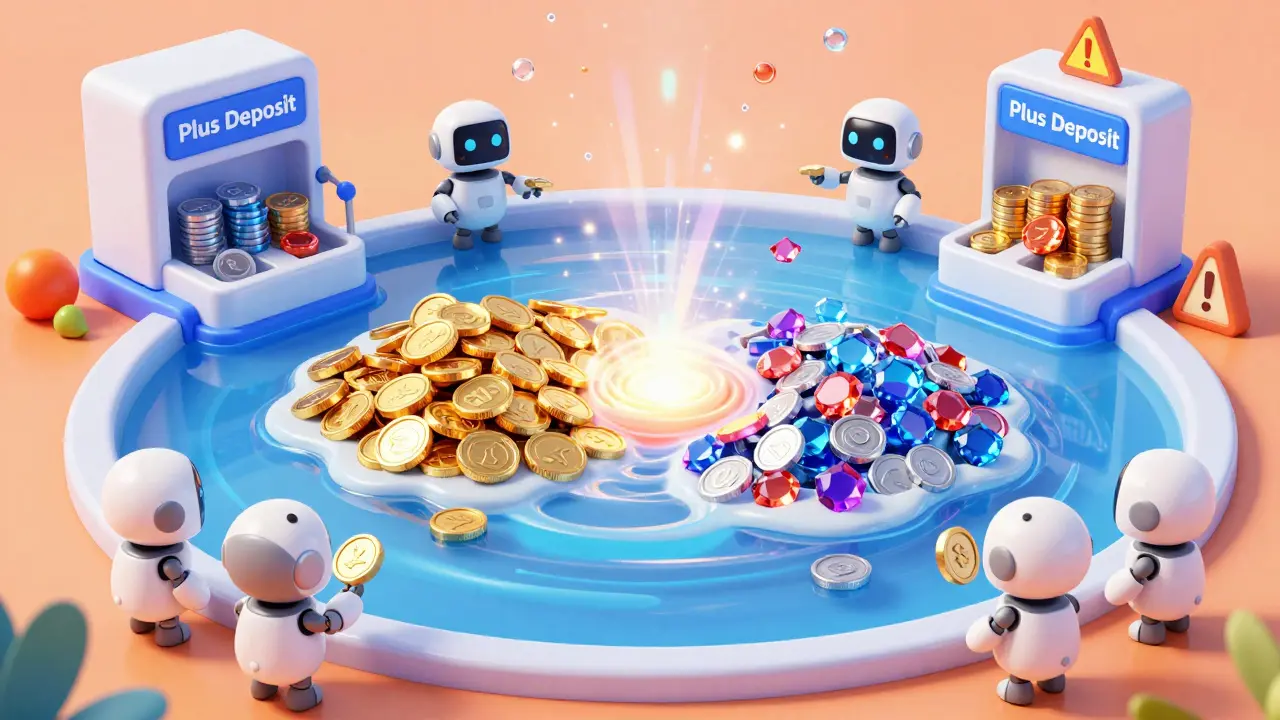
- Plus Deposit: This is KLAYswap’s unique feature. You deposit one asset, and smart contracts automatically swap and pair it to maintain an optimal ratio. It sounds convenient, but there’s a major warning here.
The Plus Deposit mechanism has a critical flaw during volatile markets. If the price swings wildly, the utilization rate of your deposit can exceed 85%. When this happens, withdrawals can become difficult or impossible until the market stabilizes. Users reported being locked out during the May 2023 volatility spikes. If you use Plus Deposit, you need to monitor your position closely.
For those who do provide liquidity successfully, annual percentage yields (APYs) have historically ranged between 8% and 15%, depending on the pool. This is decent, but not life-changing. You also earn KSP tokens, the platform’s governance token, as rewards.
Security and Safety: Can You Trust It?
In DeFi, security isn’t about customer support tickets. It’s about smart contract code. KLAYswap has undergone audits by Haechi Theori, a reputable firm in the Asian crypto space. While specific audit reports aren’t always public, the fact that an audit occurred is a positive sign.
However, remember that an audit is a snapshot in time. New vulnerabilities can emerge. More importantly, KLAYswap is non-custodial. This means if you send your tokens to the wrong address or lose your private key, no one can help you. There is no “Forgot Password” button. You are responsible for your own security.
The platform also discontinued its leverage services in 2025. This move likely stems from regulatory pressure in Asia, particularly regarding derivatives. For advanced traders looking to use margin, this removal makes KLAYswap less attractive. It signals a retreat to safer, simpler spot trading.
User Experience and Interface
Let’s be honest: KLAYswap’s interface isn’t pretty. Compared to the sleek designs of Uniswap or dYdX, KLAYswap feels dated. Navigation can be clunky, and finding specific pairs sometimes requires more clicks than necessary. User reviews on platforms like Trustpilot average around 3.8 stars, with many citing the UI as “less intuitive.”
That said, it works. You can connect popular wallets like MetaMask and Kaikas without issue. The learning curve is moderate-expect to spend 3 to 5 hours getting comfortable if you’re new to DeFi. Documentation exists, but it leans technical rather than beginner-friendly. You’ll find better support in their Telegram and Discord communities, though response times can vary from 2 hours to over 24 hours on weekends.
Who Should Use KLAYswap?
KLAYswap isn’t for everyone. Here is who should consider it:
- Klaytn Ecosystem Users: If you hold KLAY or other Klaytn-native tokens, this is your home base. Swapping here saves you bridge fees.
- Passive Income Seekers: If you want to earn APY through single-side deposits without worrying about complex pairing ratios, KLAYswap offers a straightforward path.
- Asian Market Participants: With 65% of its user base in South Korea and Southeast Asia, liquidity is deepest for pairs relevant to these regions.
Who should avoid it? Traders looking for exotic altcoins, leveraged positions, or ultra-low spreads will find KLAYswap lacking. Its 24-hour trading volume hovers around $157,000, which is tiny compared to Uniswap’s billions. Low volume means higher slippage on large trades.
The Bottom Line
KLAYswap fills a specific niche. It’s not trying to be the best DEX in the world. It’s trying to be the best DEX for Klaytn. If you’re already invested in that ecosystem, it provides reliable, secure swaps with reasonable fees. The Plus Deposit feature is innovative but risky. The lack of leverage limits its appeal for pros.
Before using it, ensure you understand gas fees on Klaytn and double-check your wallet connection. Start with small amounts to test the waters. In the fast-moving world of DeFi, convenience matters, but so does safety. KLAYswap strikes a balance, but only if you know where the lines are drawn.
Is KLAYswap safe to use in 2026?
Yes, KLAYswap is considered relatively safe as it is a non-custodial decentralized exchange audited by Haechi Theori. However, all DeFi platforms carry inherent risks including smart contract vulnerabilities and user error. Always verify contract addresses yourself.
What is the minimum deposit for KLAYswap?
There is no official minimum deposit set by the protocol. However, you must cover network gas fees. For practical purposes, starting with at least $10-$20 worth of KLAY ensures your transactions don't get eaten up by fees.
Can I withdraw my funds from Plus Deposit anytime?
Not necessarily. If market volatility causes your deposit's utilization rate to exceed 85%, withdrawals may be restricted until conditions stabilize. This is a known risk of the automated ratio optimization feature.
Does KLAYswap require KYC verification?
No. As a decentralized exchange, KLAYswap does not require Know Your Customer (KYC) verification. You only need a compatible cryptocurrency wallet like MetaMask or Kaikas to access the platform.
Why did KLAYswap remove leverage trading?
KLAYswap discontinued leverage services in 2025, likely due to increasing regulatory scrutiny on derivative products in its primary markets, particularly in Asia. The platform now focuses exclusively on spot trading and liquidity provision.