To start, let's look at the tools that make this possible. For most, the first line of defense is a VPN is a service that masks a user's IP address by routing their internet connection through a server in a different country. It is the simplest way to trick an exchange into thinking you are browsing from London or New York instead of Tehran or Lagos. In fact, NordVPN saw a massive jump in users from China and Nigeria recently, showing just how essential these tools have become. When a VPN isn't enough, some turn to the Tor Browser, which bounces your connection through three different layers of encryption to hide your identity completely.
Breaking the Banking Blockade
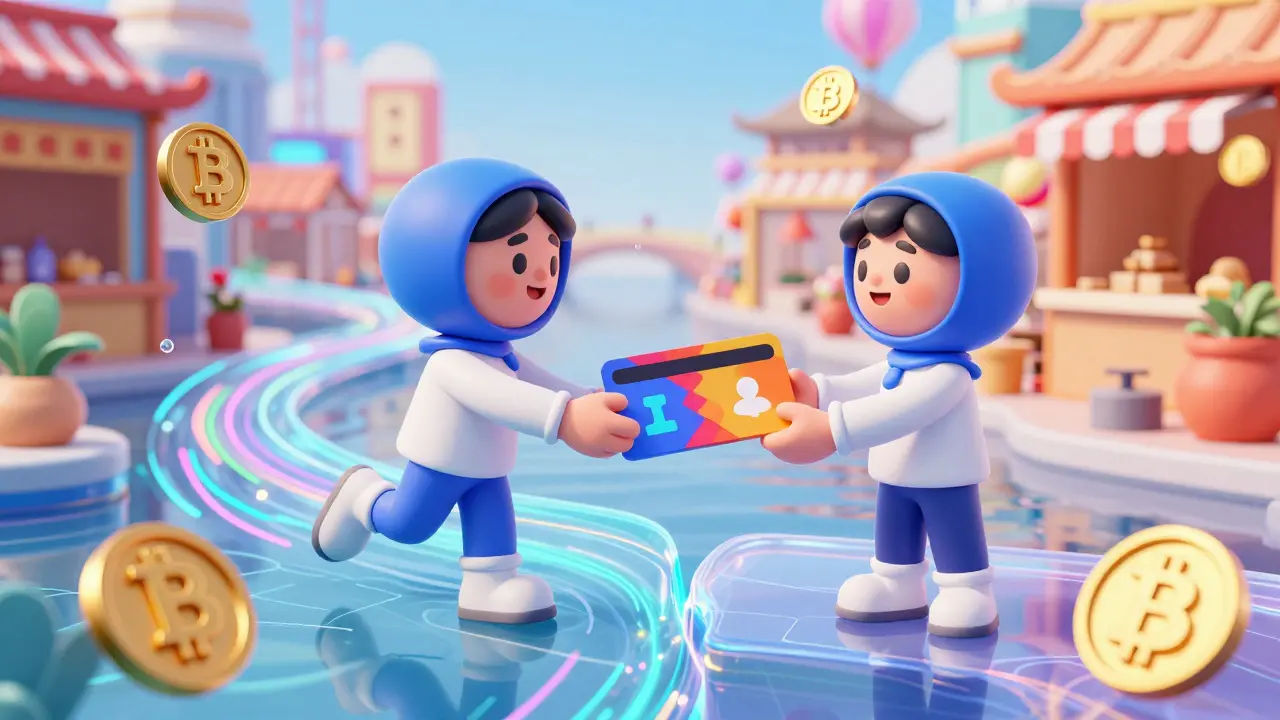
Since traditional banks are often the ones enforcing the ban-like the Central Bank of Nigeria's long-standing restrictions-users have to find ways to swap local cash for crypto without a corporate middleman. This is where P2P Platforms come into play. Instead of depositing money into an exchange, you send money directly to another person via a local app or cash transfer, and they release the crypto to you through a secure escrow service. For many, the process is a bit more creative. Some use "gift card arbitrage." You buy a Steam or Amazon gift card with your local currency and then trade that card for Bitcoin on platforms like Paxful. While this sounds clunky, it's an incredibly effective way to move value across borders without a bank ever seeing a "crypto" label on the transaction. In other regions, the old-school Hawala system-an informal value transfer network based on honor and trust-has been modernized. Users pay a local Hawaladar in cash, and a partner in a crypto-friendly hub like Dubai releases the digital assets to the user's wallet.Trading Without an ID: No-KYC and DEXs
Most big exchanges require "Know Your Customer" (KYC) checks, meaning you have to upload your passport. For someone in a banned country, that is a recipe for an immediate account freeze. This has led to the rise of no-KYC exchanges and Decentralized Exchanges (DEXs). A DEX like Uniswap isn't a company; it's a piece of software running on a blockchain. There is no one to ask for your ID and no one to shut down your account. However, there is a trade-off. While DEXs provide total privacy, they often have less "liquidity"-meaning it's harder to trade huge amounts of money quickly without moving the price. For those who need absolute stealth, Privacy Coins like Monero (XMR) have become the gold standard. Unlike Bitcoin, where every transaction is public, Monero hides the sender and receiver, making it nearly impossible for authorities to track the flow of funds.| Method | Privacy Level | Liquidity/Speed | Main Risk |
|---|---|---|---|
| P2P Platforms | Medium | High | Counterparty scams |
| DEXs (e.g., Uniswap) | High | Medium | Smart contract bugs |
| No-KYC Exchanges | High | Low | Exchange insolvency |
| Gift Card Arbitrage | Medium | Low | High fees/premiums |
The Practical Path to Getting Started
If you're starting from scratch in a restricted area, you can't just download an app and buy. It usually takes a few weeks to set up a reliable system. Here is the general roadmap most users follow to stay safe:- Secure the Connection: Get a reputable VPN (like NordVPN) and set it to a crypto-friendly country.
- Set Up a Non-Custodial Wallet: Use a wallet like Trust Wallet where you hold the private keys. Never leave your coins on an exchange you don't control.
- Find a Gateway: Use a P2P marketplace or gift card service to get your first small amount of crypto.
- Bridge to a DEX: Move those funds into a decentralized exchange to trade for other assets without needing an account.
- Optimize for Privacy: Swap some of your assets for privacy coins like Monero if you are in a high-risk jurisdiction.
The Hidden Dangers of the Workaround
It's not all smooth sailing. When you step outside the regulated banking system, you lose the protections that come with it. There is no "forgot password" button for a seed phrase, and there is no bank to call if a P2P seller disappears with your money. In fact, research shows that about 67% of users in restricted countries have dealt with at least one security incident, ranging from phishing attacks to outright scams targeting those searching for "no-KYC" options. Furthermore, the "premium" you pay is high. In Vietnam, users have reported paying a 2.5% premium over the market rate just to get their money into a P2P trade. In Nigeria, the pressure to use unregulated platforms has led to millions of dollars in losses when those platforms eventually collapse. You are essentially paying a "restriction tax"-either in time, technical effort, or actual money-just to exercise your financial freedom.
The Future of the Cat-and-Mouse Game
Governments aren't just sitting back. They are improving their blockchain surveillance capabilities, which means the simple VPN tricks of 2023 might not work in 2027. However, this only pushes the tech further. We are seeing a surge in "zero-knowledge proofs," a fancy way of saying you can prove you have money or a certain identity without actually revealing who you are. As long as there is a gap between what a government wants and what a citizen needs, people will find a way. Whether it's through Singapore-based intermediaries in India or the Bitcoin Beach Wallet in Latin America, the drive for financial autonomy is stronger than any legislative ban. The tools will change, but the goal remains the same: getting your money out of the reach of those who would freeze it.Is it illegal to use a VPN to access crypto exchanges?
In many banking-restricted countries, using a VPN itself might be a legal grey area or explicitly banned. While a VPN hides your activity from the exchange, it doesn't necessarily hide it from a sophisticated government firewall. Users should check local laws, but in practice, millions use them to bypass regional blocks.
What is the safest way to buy crypto without a bank account?
Peer-to-peer (P2P) trading is generally the most effective method. By using a platform with an escrow service, the crypto is held by a third party until the seller confirms they have received the cash. This prevents the buyer from being scammed by the seller, though it doesn't eliminate all risk.
Are decentralized exchanges (DEXs) really anonymous?
DEXs don't require IDs, but the blockchain is a public ledger. If your wallet address is ever linked to your real-life identity (for example, if you send funds from a KYC exchange to your DEX wallet), your history becomes traceable. To stay truly anonymous, users often use privacy coins or mixing services.
Why are gift cards used to buy cryptocurrency?
Gift cards (like Amazon or iTunes) are easy to buy with cash or local bank transfers and don't trigger "crypto" red flags in banking systems. Traders then sell these cards on platforms like Paxful for Bitcoin, effectively using the gift card as a temporary currency bridge.
What happens if an exchange freezes my account due to my location?
If you use a centralized exchange (CEX) and your location is detected, they may freeze your assets until you provide KYC documents. This is why experts strongly recommend using non-custodial wallets and DEXs, where no single entity has the power to freeze your funds.
Next Steps & Troubleshooting
- For Beginners: Start with a small amount of money via a P2P trade. Do not move your entire savings into a new platform until you have successfully completed three small "test" transactions.
- If your VPN is blocked: Try "obfuscated servers" which make VPN traffic look like regular web traffic. If that fails, switch to the Tor browser.
- If you lose access to your wallet: Remember that in the world of no-KYC and DEXs, there is no customer support. If you lose your seed phrase, your money is gone forever. Store your keys offline on paper, not in a screenshot on your phone.
- For those in high-risk zones: Prioritize assets like Monero (XMR) over Bitcoin for long-term holdings to avoid blockchain analysis by government agencies.
Evan Iacoboni
April 16, 2026 AT 08:46The mention of VPNs is cute, but let's be real: sophisticated state actors can see right through basic obfuscation. If you're actually in a high-risk zone, you're playing a dangerous game of hide and seek with people who have way more resources than NordVPN.
Andrew Southgate
April 17, 2026 AT 06:23I really appreciate the breakdown of the different methods here. For anyone who is feeling overwhelmed, just remember that the most important step is the non-custodial wallet. I cannot stress enough how many people lose everything because they leave their assets on a platform they don't control, thinking it's a safe 'bank' account. When you have the seed phrase, you have the power, but you also have the total responsibility. It's a steep learning curve for some, but once you get the hang of it, the freedom is unparalleled. Just take your time, double-check every address you send to, and maybe write that seed phrase down in three different physical locations. Your future self will thank you for the paranoia today!
Saurav Bhattarai
April 17, 2026 AT 10:27Oh please, as if these 'workarounds' actually matter in the face of real regulatory power. It's adorable that people think a little bit of code can stop a government. Pure fantasy!
Nishant Goyal
April 18, 2026 AT 23:17Keep at it, everyone. Small steps lead to big wins.
Shantal Sanjur
April 20, 2026 AT 15:39Wake up people! The DEXs aren't 'anonymous' just because they don't ask for an ID. The chain is a public map. They're just waiting for you to make one mistake, one link to a real-world identity, and then boom, the whole history is flagged. It's all a trap to get you to move your money into a system they can eventually track with AI analysis. 🙄
siddharth narula
April 21, 2026 AT 03:13It is truly a tragedy that one must resort to such clandestine methods to secure their own wealth. Is this not a reflection of the spiritual decay of our modern governance? 😔 We seek liberation in code because we have lost it in our laws.
John and Lauren Busch
April 22, 2026 AT 00:13P2P is basically just a fancy way of saying 'hope the other guy isn't a crook.' Lol.
Vicky Duffala
April 23, 2026 AT 14:16This is exactly the kind of energy we need! Financial sovereignty is a human right. Let's just keep pushing the boundaries and supporting each other in these digital wild-wests. 🚀
Trudy Morse
April 25, 2026 AT 05:09Actually, Monero isn't just the 'gold standard,' it's the only real option for privacy. Bitcoin is a fishbowl.
Kevin Lư
April 26, 2026 AT 02:45Man, I just tried this gift card thing and it's a total pain. Why is it so hard to just buy some coins? Totally feels like a scam half the time.
Chintu Parikh
April 26, 2026 AT 18:38I am profoundly in agreement with the sentiments expressed. The pursuit of financial autonomy is a noble endeavor that transcends national borders and political ideologies. I believe we should all strive to assist those in restricted regions to achieve this digital liberation with the utmost dignity and care.
Michael Harms
April 28, 2026 AT 03:17Don't let the fear stop you, just be smart about it! If you're new, maybe find a buddy to walk you through the first trade. We've all been there!
Prachi Bhadarge
April 30, 2026 AT 02:56Imagine actually trusting a 'no-KYC' exchange in 2024. Good luck with that money disappearing into the void. 💅
Keri Pommerenk
May 1, 2026 AT 07:28keep it safe everyone. just use a hardware wallet if you can
Sean Douglas
May 3, 2026 AT 02:56The absolute audacity of these regimes to believe they can leash the digital wind! It is a Shakespearean comedy of errors, draped in the oppressive fabric of bureaucracy. My soul weeps for the sheer inefficiency of it all!
Luke George
May 3, 2026 AT 17:24The 'central bank' restrictions are just a cover for them to hoard the assets themselves. They don't want you having it; they want to control the supply while pretending it's illegal for you. Classic power play.
Tracy Sperandio
May 3, 2026 AT 18:19Absolutely brilliant guide! The way the world is shifting, these 'workarounds' will become the primary way of banking. Break those chains!
Alex Long
May 5, 2026 AT 16:25Too long. Just use Monero.
Gaurav Undirwade
May 7, 2026 AT 13:08It is imperative that we do not mistake convenience for morality. The use of such tools should be accompanied by a strict adherence to personal ethics, lest the pursuit of wealth override the pursuit of truth.
Gillian Kent
May 8, 2026 AT 09:25i think its amazing how people in diffrent countires help each other out with this stuff. its like a globall community of freedom fighters
Jeff Barlett
May 9, 2026 AT 04:25Wait, who actually uses the Hawala system now? That sounds like something out of a 1920s spy novel. I'm sure it's totally fine and not a giant risk of getting robbed.
Sandeep Bhoir
May 10, 2026 AT 08:32Oh, absolutely. Because nothing says 'secure financial future' like trusting a random guy on the internet with your life savings. Pure genius.
Adam Mann
May 11, 2026 AT 10:27I've always felt that the beauty of these systems is how they force us to connect with other humans. In a world that's becoming so digital and distant, having to actually trust a person for a P2P trade-while risky-reminds us that trust is the original currency of humanity. I remember talking to a friend in South America who did this, and it wasn't just about the money for him; it was about the kinship of resistance. If we can just be a little more patient and helpful to the newcomers, we can build a network that's not just about profit, but about mutual support and lifting each other up out of these restrictive systems. It's a long road, and sure, there are pitfalls, but the destination of true financial liberty is worth every single struggle along the way.
Ankit Sindhu
May 11, 2026 AT 17:25I can help anyone struggling with the wallet setup. Just send a DM and we can figure it out together. Just keep your seed phrases private!
Mike Kempenich
May 13, 2026 AT 05:28It's a bit risky, but the reward is too high to ignore. Just be careful with the P2P stuff.