You might have seen the ticker MCHC flash across your screen and wondered if it’s the next big thing or just another forgotten altcoin. Here is the reality: My Crypto Heroes Coin isn’t trying to replace Bitcoin. It is a specialized tool for a specific niche-Japanese blockchain role-playing games. If you are interested in how play-to-earn mechanics actually work behind the scenes, or if you want to understand where a small-cap governance token fits in today’s crowded crypto market, this breakdown cuts through the noise.
The Core Concept: More Than Just a Currency
At its heart, My Crypto Heroes Coin (MCHC) is a capped-supply governance token for the Japanese blockchain RPG My Crypto Heroes. Unlike general-purpose cryptocurrencies that aim to be money, MCHC exists to serve a community of players. It was launched on February 1, 2021, as an ERC-20 token, but the game itself has been around since late 2018. This timeline matters. It means the token wasn’t created to hype up a new project; it was added later to give existing players a say in how the game evolves.
Think of MCHC less like a stock and more like a club membership card with voting rights. The developers designed it so that owning the token gives you influence. You can vote on changes to in-game rules, elect producers who help manage the ecosystem, and even use it to buy non-fungible tokens (NFTs) related to the game. It ties financial value directly to gameplay participation.
How MCHC Works Inside the Game
Why would anyone hold onto MCHC instead of selling it immediately? The utility comes from three main areas: governance, rewards, and marketplace transactions.
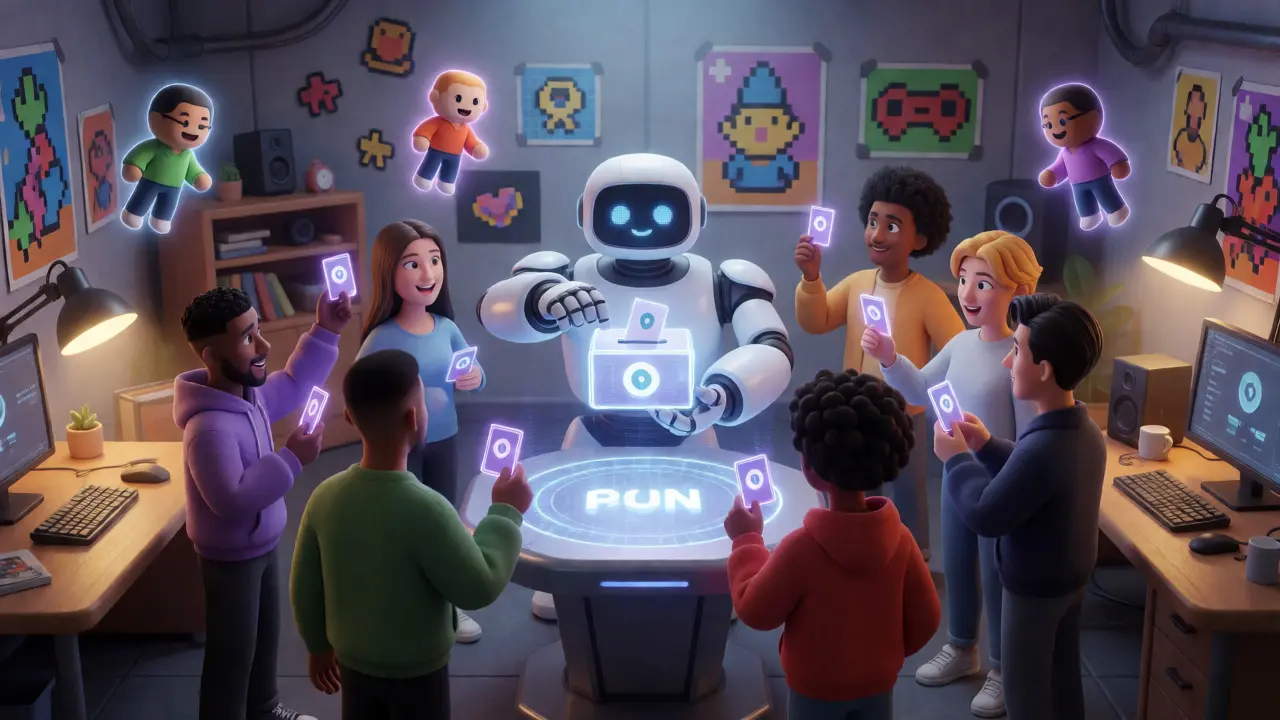
- Governance Power: The system operates on a simple rule: 1 MCHC equals 1 vote. If you hold tokens, you can decide on critical updates. Do we change the drop rate of rare heroes? Should we introduce a new PvP mode? Your votes count. Plus, if you’re too busy to research every proposal, you can delegate your voting power to someone else without losing ownership of your coins.
- Play-to-Earn Rewards: Top players in player-versus-player (PvP) modes don’t just get bragging rights. They receive NFTs and MCHC tokens. Specific content, like the "Cryptid Wars" event, allows players to earn MCHC by using in-game resources called Cp and GUM. This creates a loop where playing the game generates the asset used to govern it.
- NFT Marketplace Utility: You aren’t limited to Ethereum or Polygon when trading assets. MCHC is accepted as payment for My Crypto Heroes NFTs on platforms like OpenSea. This makes it easier for collectors to swap heroes and equipment without constantly converting back to stablecoins.
Tokenomics: Supply and Scarcity
If you look at different data providers, you’ll see conflicting numbers for circulating supply. Don’t panic. This usually happens because of how bridges and wrapped tokens are counted. However, all major sources agree on one hard fact: the maximum supply is capped at 50 million tokens. There will never be more than that.
| Metric | Value / Status | Notes |
|---|---|---|
| Max Supply | 50,000,000 MCHC | Hard cap enforced by smart contract. |
| Circulating Supply | ~27M - 43M | Varies by tracker due to bridging methods. |
| Blockchain | Ethereum & Polygon | ERC-20 standard compatible. |
| Voting Ratio | 1 Token = 1 Vote | Delegation allowed. |
The discrepancy in circulating supply figures between sites like CoinMarketCap and LBank highlights the complexity of multi-chain environments. As of mid-2026, roughly 55% to 88% of the total supply has been minted, depending on which platform you trust. The key takeaway for investors is scarcity. With a fixed cap, inflation won’t dilute your holdings unless the team breaks their own code.
Where to Buy and Trade MCHC
Getting your hands on MCHC requires navigating smaller exchanges rather than sticking solely to the giants. While Binance lists it, liquidity can vary significantly compared to top-tier coins like ETH or SOL. Major venues like Coinbase, Bitget, MEXC, and LBank offer trading pairs. However, note that some larger platforms, such as Crypto.com, may track the price but not yet allow direct trading, so always check the current listing status before transferring funds.
Price volatility is high. In early 2025, MCHC traded around $0.036, but by August 2026, it hovered near $0.015. This swing reflects the nature of micro-cap GameFi tokens. They react sharply to news about the underlying game. If a major update drops or a new partnership launches, the price moves fast. Conversely, if development slows down, volume dries up quickly.
The Broader Ecosystem: MCH Verse and DeFi
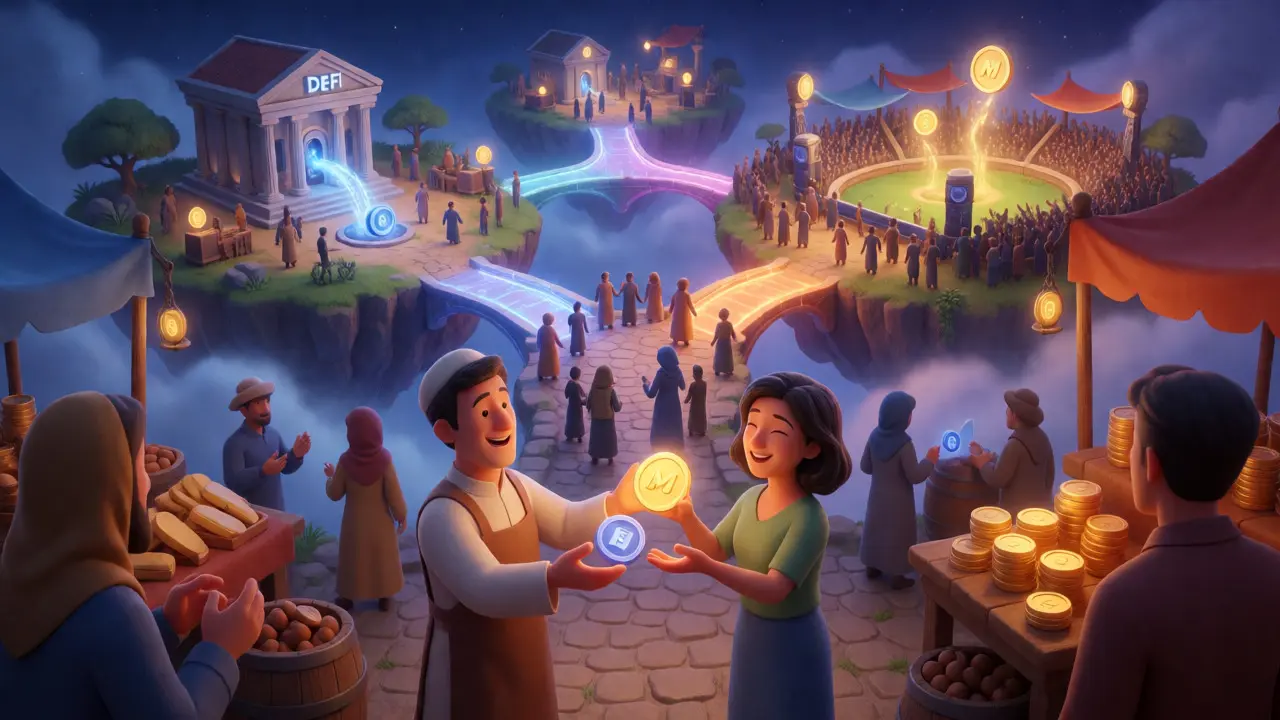
My Crypto Heroes isn’t just one game anymore. The team expanded into the "MCH Verse," a broader ecosystem of titles and services. To support this expansion, they integrated MCHC into decentralized finance (DeFi) protocols. A notable move occurred in December 2024 when MCHC was listed on Palmy Finance, a lending protocol on the Oasys blockchain.
This integration is crucial for long-term viability. It means holders can deposit MCHC as collateral to borrow other assets or earn interest. By connecting the governance token to DeFi yields, the project attempts to create demand beyond just speculative trading. It transforms MCHC from a passive voting tool into an active financial asset within the Oasys network.
Risks and Realities for Investors
Is MCHC a safe bet? Probably not, if you define safety as stability. It sits deep in the "long tail" of the crypto market, ranking around #2500 globally. Its market capitalization fluctuates between $400,000 and $600,000. For context, that’s tiny compared to billions for major chains. Low market cap means low entry prices, but it also means high risk. One large sell-off can crash the price by 20% in hours.
Furthermore, the value of MCHC is entirely dependent on the popularity of My Crypto Heroes. If player engagement drops, the demand for governance and rewards evaporates. Unlike Bitcoin, which has no central product to fail, MCHC fails if the game fails. Keep an eye on active user counts and Discord activity. Those are better leading indicators than candlestick charts alone.
Final Thoughts
My Crypto Heroes Coin serves a clear purpose: it empowers players to shape the future of a Japanese blockchain RPG. It combines governance, rewards, and NFT utility into a single capped asset. While it lacks the massive liquidity of mainstream coins, its integration into the MCH Verse and DeFi protocols like Palmy Finance shows ongoing development effort. If you believe in the growth of niche GameFi communities and enjoy the idea of having a direct vote in game development, MCHC offers a unique entry point. Just remember to size your positions appropriately given its micro-cap status.
What is the primary use case of MCHC?
The primary use case of MCHC is governance. Holders use it to vote on in-game rule changes and elect producers for the My Crypto Heroes ecosystem. It also functions as a reward for top-performing players and a currency for purchasing NFTs on marketplaces.
Is MCHC an ERC-20 token?
Yes, MCHC is an ERC-20 compliant token deployed on the Ethereum blockchain. It is also represented on the Polygon network and bridged to the Oasys chain for DeFi integrations, making it compatible with standard Ethereum wallets and infrastructure.
Can I stake MCHC for passive income?
Direct staking mechanisms within the game primarily involve earning rewards through gameplay. However, since December 2024, MCHC has been integrated into Palmy Finance on the Oasys blockchain, allowing users to lend or borrow against MCHC as collateral, which can generate yield.
What is the maximum supply of MCHC?
The maximum supply of MCHC is strictly capped at 50 million tokens. This hard cap ensures that the token cannot be inflated indefinitely, providing scarcity relative to projects with unlimited issuance models.
Which exchanges list MCHC for trading?
As of 2026, MCHC is available for trading on several centralized exchanges including Binance, Bitget, MEXC, LBank, and Coinbase. Liquidity levels vary by platform, so checking recent volume data is recommended before executing trades.