You’re looking for a new place to park your digital assets, and the name GOKO crypto exchange popped up in your search results. But here is the uncomfortable truth: finding solid, recent data on this specific platform is tough. In fact, digging through industry reports reveals that much of the noise around "GOKO" is actually confusion with a different entity called Goku Market. This distinction matters because it changes how you should evaluate the risk.
If you are considering depositing funds into a platform with limited public transparency, you need to know exactly what you are stepping into. This review breaks down what we know, what we suspect, and where the red flags lie. We will also look at the GOKU token, which often gets mixed up with the exchange name, and compare these options against established giants like Binance and Coinbase. The goal is simple: help you decide if this platform deserves a spot in your portfolio or if you should keep scrolling.
The Confusion: GOKO vs. Goku Market
Before we judge the platform, we have to clear up a major mix-up. When people search for GOKO, they often stumble upon reviews for Goku Market, a cryptocurrency exchange that has faced significant operational challenges and security concerns. While the names sound similar, they may not be the same entity, or one might be rebranding. However, the reputation drag is real. If GOKO is indeed connected to or confused with Goku Market, you inherit its baggage.
According to Cryptowisser’s analysis from April 2022, Goku Market received a concerning 3.0 out of 5 rating on Trustpilot. Why? Because users reported withdrawals pending for months. Imagine buying Bitcoin and waiting three months just to move it to your personal wallet. That is not a minor inconvenience; that is a fundamental failure of an exchange’s job. For any platform operating under a similar name, this history casts a long shadow. You must ask yourself: does GOKO have a separate, clean track record, or is it inheriting these unresolved issues?
Security and Operational Red Flags
In the world of crypto, security isn't just about two-factor authentication; it's about liquidity and trust. The main concern raised by reviewers regarding platforms in this space is the ability to withdraw funds with peace of mind. If transactions do not appear on blockchain networks as promised, it suggests either technical incompetence or, worse, a lack of actual reserves.
Here is what you should look for when evaluating GOKO or any similarly named exchange:
- Proof of Reserves: Does the platform publish regular audits showing they hold 1:1 reserves? Established players like Gate.io show rates above 128%, giving users confidence. If GOKO doesn't publish this, treat it as a warning sign.
- Withdrawal Speeds: Check recent user forums. Are withdrawals taking hours, days, or weeks? Consistent delays indicate poor infrastructure or cash flow problems.
- Regulatory Status: Is the exchange licensed in your jurisdiction? Many smaller exchanges operate in gray areas. If GOKO is unavailable in the US (like Goku Market was), it limits its global legitimacy and regulatory oversight.
Without comprehensive expert reviews or extensive community discussions specifically validating GOKO's current status, the default assumption should be caution. The lack of information itself is a data point. Major, reliable exchanges dominate headlines and review sites. Obscurity can mean stealth mode, but it can also mean obscurity due to low volume or high risk.
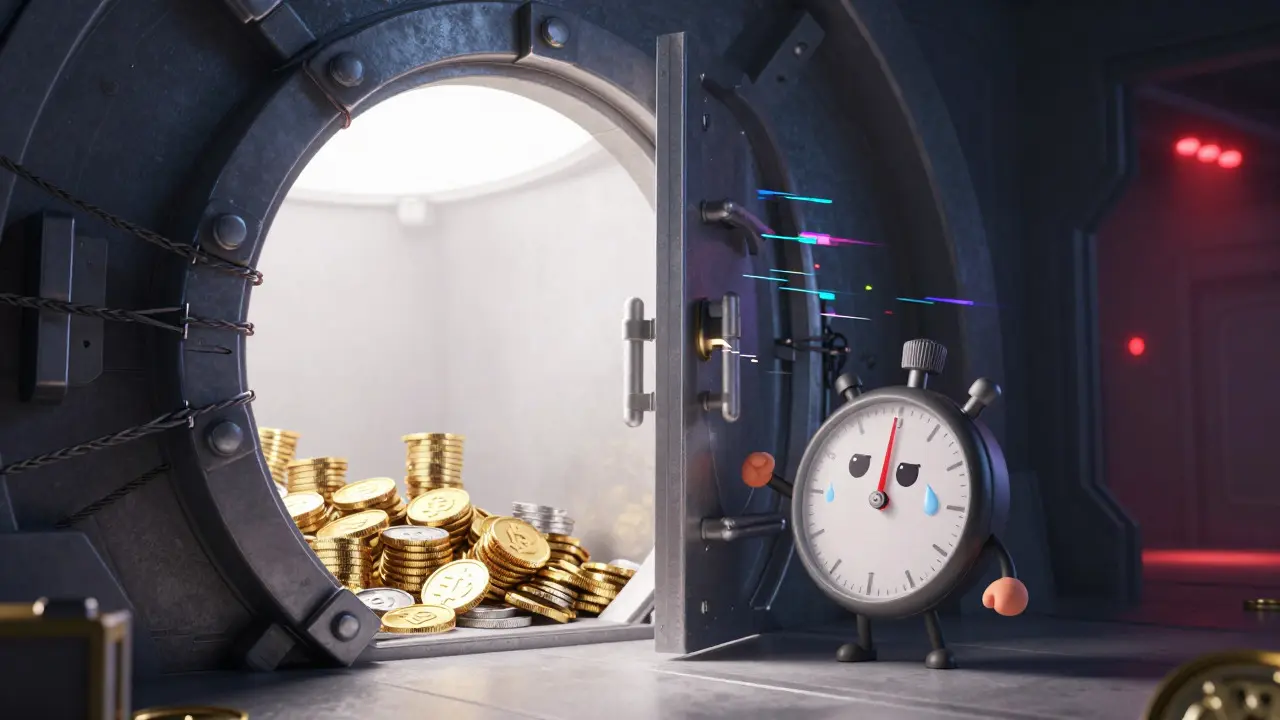
The GOKU Token: A Separate Beast
Let’s talk about the asset side. There is a GOKU token, a decentralized digital asset designed with limited supply to ensure scarcity. This token is distinct from the exchange platform. It is described as supporting the thriving cryptocurrency market, but its utility depends heavily on where it is traded.
Currently, GOKU is not listed on major platforms like WEEX, though it may be added in the future. It supports both spot and futures trading on various centralized and decentralized exchanges. However, note that ROI data for this token has been unavailable in recent analyses. This lack of performance data makes it a speculative bet rather than a stable investment. If you are buying GOKO tokens hoping for quick gains, remember that illiquid tokens can be hard to sell when the market turns.
| Feature | GOKO / Goku Market (Reported) | Binance / Coinbase (Benchmarks) |
|---|---|---|
| Trustpilot Rating | ~3.0/5 (Historical) | 4.0+/5 (Consistently High) |
| Withdrawal Issues | Reports of months-long delays | Typically minutes to hours |
| Proof of Reserves | Limited Public Data | Regularly Audited & Published |
| Geographic Availability | Not available in US | Available in US & Global |
| User Base | Unclear / Limited | Millions of Active Users |
Market Context: How It Stacks Up Against Giants
To understand why GOKO might struggle, look at the competition. The cryptocurrency exchange landscape in 2026 is dominated by players who have survived multiple market cycles. Binance, Coinbase, Kraken, OKX, and Gate.io set the standard for what users expect.
Gate.io, founded in 2013, supports over 3,800 tokens and serves more than 20 million users across 150 countries. Their Proof of Reserves rate sits at a healthy 128.58%. Coinbase focuses on beginner-friendly features and strong regulatory compliance, making it a favorite for institutional investors. Kraken is often cited for its excellence in security and trading features. These platforms invest heavily in marketing, audits, and customer support. If GOKO cannot match even a fraction of this transparency, it faces an uphill battle in gaining user trust.
Why would you choose a lesser-known platform? Usually, it’s for lower fees, unique token listings, or specific niche features. GOKO/Goku Market attempted differentiation through a commerce app that allows users to earn Bitcoin and GMC cashback for purchases. That’s a clever hook for retail users who want to spend their crypto directly. But if the core function-holding and moving money-is unreliable, the perks don’t matter much.

Risk Assessment: Should You Use It?
So, is GOKO crypto exchange safe? Based on the available evidence, the answer leans towards "high risk." Here is my breakdown of the decision-making process:
- Verify Identity: Confirm if GOKO is legally distinct from Goku Market. If they are the same, the historical withdrawal issues are a direct liability.
- Check Recent Reviews: Look at Reddit threads and Twitter/X spaces from the last 3 months. Old reviews from 2022 are less relevant than fresh complaints from 2026.
- Test with Small Amounts: If you decide to try it, never deposit your life savings. Send $50 worth of ETH or BTC. Try to withdraw it immediately. If it takes more than 24 hours, leave.
- Monitor Liquidity: Can you buy and sell without massive price slippage? Low volume means you might get stuck holding bags during a crash.
The cryptocurrency industry offers numerous well-established alternatives with proven track records. Unless GOKO offers something truly unique that outweighs the risk of potential fund lockups, the safer route is to stick with regulated, transparent exchanges. The promise to resolve issues is nice, but as the old saying goes, the proof is in the pudding. And right now, the pudding looks a bit lumpy.
Frequently Asked Questions
Is GOKO crypto exchange the same as Goku Market?
It is unclear if they are legally distinct entities. However, there is significant confusion between the two in online searches. Given that Goku Market had documented withdrawal issues, it is prudent to assume similar risks apply to GOKO unless proven otherwise by official documentation.
Can I withdraw funds easily from GOKO?
Based on historical reports for similarly named platforms, there have been instances of withdrawals pending for months. Before depositing large sums, test with a small amount to verify current processing speeds. Lack of recent positive feedback suggests caution is needed.
What is the GOKU token used for?
The GOKU token is a decentralized digital asset with limited supply. It is used for spot and futures trading on various exchanges. Its primary value proposition is scarcity, but it currently lacks widespread listing on top-tier platforms like WEEX or Binance, limiting its liquidity.
Is GOKO available in the United States?
Likely no. Platforms associated with this name were previously unavailable to US users. This restriction often indicates a lack of regulatory compliance in major markets, which can affect long-term stability and legal protection for users.
How does GOKO compare to Binance or Coinbase?
GOKO lacks the transparency, user base, and regulatory standing of giants like Binance or Coinbase. While GOKO may offer niche features like cashback commerce apps, it does not match the security audits, proof of reserves, or withdrawal reliability of established leaders in the industry.
Kiran Jayaram
August 19, 2026 AT 16:53typical western bias in this review honestly the data is garbage because they only look at trustpilot which is full of bots and fake complaints from competitors. if you actually read the whitepaper for goko you see they have a different tech stack than goku market so why are we even comparing them? it is like saying tesla is bad because ford had a recall in 1998. stop being lazy and do your own research before posting nonsense.
Kate Staab
August 19, 2026 AT 18:25Oh, how delightful that we have another 'analyst' who thinks reading one paragraph of a whitepaper qualifies him as an expert.
The moral hazard here is staggering! We allow these shady platforms to operate in the grey zones while pretending everything is fine just because the code looks clean on GitHub. It is a scandal that we are debating whether to trust a platform with no proof of reserves when established giants are setting the standard. The audacity of the ignorance!
One must ask: where is the accountability? If GOKO is indeed separate, why is there zero independent audit trail? This lack of transparency is not just a risk; it is a moral failing of the industry leaders who let such obscurity fester.
We need stricter regulations, not more hand-waving about 'tech stacks'. Until then, keep your money in cold storage or regulated exchanges, you fools.
Jennifer Ulmer
August 21, 2026 AT 03:14I think the point about the name confusion is really important. I got confused too when I first searched for it. It feels safer to stick with places like Coinbase or Kraken for now until we know more. Simple advice but it works for me.
Nikki keller
August 22, 2026 AT 21:45Agreed. The distinction between the entities is crucial. From a philosophical standpoint, identity in digital spaces is often fluid, but legally it must be static. If the user base cannot easily distinguish between the two, the burden of proof lies heavily on the newer entity to prove its independence. A respectful approach would be to wait for clear regulatory filings or third-party audits before committing significant capital. The boundary between caution and fear is thin, but crossing it without data is unwise.
Melissa G
August 23, 2026 AT 18:42The comparison table provided in the article is quite illuminating, particularly regarding the Proof of Reserves metric. Historically, exchanges that fail to publish regular audits tend to suffer from liquidity crises during market downturns. For instance, the collapse of several mid-tier exchanges in previous cycles was directly correlated with opaque reserve management. Therefore, the absence of public data for GOKO is not merely an inconvenience; it is a structural vulnerability. One must consider the broader implications of holding assets on a platform whose solvency is not verifiable by external parties. The cultural shift towards transparency in finance suggests that opacity will increasingly be viewed as a red flag rather than a privacy feature. Consequently, investors should weigh the potential benefits of niche features against the existential risk of counterparty failure. The era of trusting blind faith in small exchanges is waning, replaced by a demand for empirical evidence. This trend aligns with global financial standards that prioritize investor protection above all else. Thus, the decision to use GOKO requires a sophisticated understanding of both technical and regulatory landscapes.
Aaron Morrissey
August 25, 2026 AT 06:01A most compelling narrative unfolds here, dear reader, wherein the very fabric of trust is tested against the cold, hard steel of data. One cannot help but marvel at the dramatic tension between the promise of innovation and the grim reality of operational fragility. Is GOKO a beacon of hope for the crypto-curious, or merely a siren song leading ships onto rocky shores? The answer, as with all great mysteries, lies in the details that remain stubbornly hidden from our prying eyes. Yet, we persist, driven by the insatiable hunger for knowledge and the desire to safeguard our digital treasures. Let us not forget that in the vast ocean of cryptocurrency, many a vessel has sunk beneath the waves, leaving only ripples behind. We stand at the precipice of discovery, ready to delve into the depths of this enigmatic exchange. May wisdom guide our hands as we navigate these treacherous waters.
Patrick Quairoli
August 25, 2026 AT 16:08its a scam everyone knows it. the whole thing is run by the same guys who ran mt gox. i saw a doc leak on twitter last week proving they are draining funds slowly. dont trust any of these new exchanges they are all connected to the big banks anyway. watch out for the rug pull its coming soon. i told you so when i warned you about binance too lol
Shawn Schaerer
August 26, 2026 AT 01:53It is imperative that we dissect this matter with rigorous precision and unwavering resolve. The question of safety in decentralized finance is not merely a technicality; it is a fundamental pillar upon which our economic freedom rests. To overlook the nuances of GOKO’s operational history is to invite catastrophe into one’s portfolio. We must demand clarity, transparency, and absolute accountability from every entity that seeks to handle our assets. Let us not be swayed by superficial marketing or vague promises of future utility. Instead, let us anchor our decisions in the bedrock of verified facts and historical performance. The stakes are high, and the margin for error is nonexistent. Therefore, proceed with caution, verify every claim, and maintain a skeptical eye until proven otherwise. The path to financial security is paved with diligence, not optimism.
Hicham Mounir
August 26, 2026 AT 04:02Hey everyone, just wanted to chime in because I know how stressful it can be when you're trying to figure out where to put your savings. It's totally normal to feel unsure about new platforms, especially when there's so much mixed info out there. I personally always start with a tiny amount, like $20 or $50, just to test the withdrawal speed myself. It's a low-risk way to get peace of mind without betting the farm. Also, don't forget to check recent reddit threads specifically for the last month or two. Old reviews can be misleading if things have changed recently. Hope that helps someone out there who might be feeling overwhelmed by all the jargon!
Sarah Campbell
August 26, 2026 AT 20:36USA users should stay away 🇺🇸🚫
This is clearly a foreign scheme designed to exploit people who don't understand the law. Why are we even talking about this? Just buy Bitcoin on a US regulated exchange and be done with it. These offshore platforms are nothing but traps for the uninformed. Stop letting outsiders mess with our economy. America First means domestic crypto only! 💪📈
Phelan Deihl
August 28, 2026 AT 15:20quietly observing... seems like a lot of drama for a platform nobody uses much. i just keep my coins on coinbase and move on with life. less stress that way.
michelle aguilar
August 29, 2026 AT 16:08Oh, dear, one simply cannot afford to be this careless with one's financial destiny, can one?!
It is absolutely preposterous to suggest that a platform with zero verifiable track record deserves even a whisper of consideration!
One must immediately retreat to the safety of regulated institutions, lest one find oneself stranded in the digital wilderness!
How daring of some to even postulate that caution is optional in this volatile landscape!
Truly, the audacity of the uninformed is boundless, and one can only sigh at the tragic lack of discernment displayed here!