Ever felt the frustration of waiting days for a bank transfer to clear or paying steep fees just to send money to a friend in another country? This is the exact gap that Kasta crypto coin is trying to bridge. Instead of acting as just another speculative asset, Kasta is designed as a practical tool for the real world-a way to move money instantly without the middleman taking a huge cut.
The Quick Rundown on Kasta
If you don't have time for a deep dive, here is the gist: Kasta is a decentralized payment platform built on top of the Polygon network. It uses its own token, KASTA, to power a mobile app that lets people send and receive digital currency as easily as sending a text message.
| Attribute | Value |
|---|---|
| Network Type | ERC-20 (via Polygon) |
| Max Supply | 1.5 Billion Tokens |
| Circulating Supply | ~760-765 Million |
| Primary Use Case | P2P Payments & Governance |
| Recent 24h Volume | $1,008,265.70 (CoinGecko) |
How the Kasta Ecosystem Actually Works
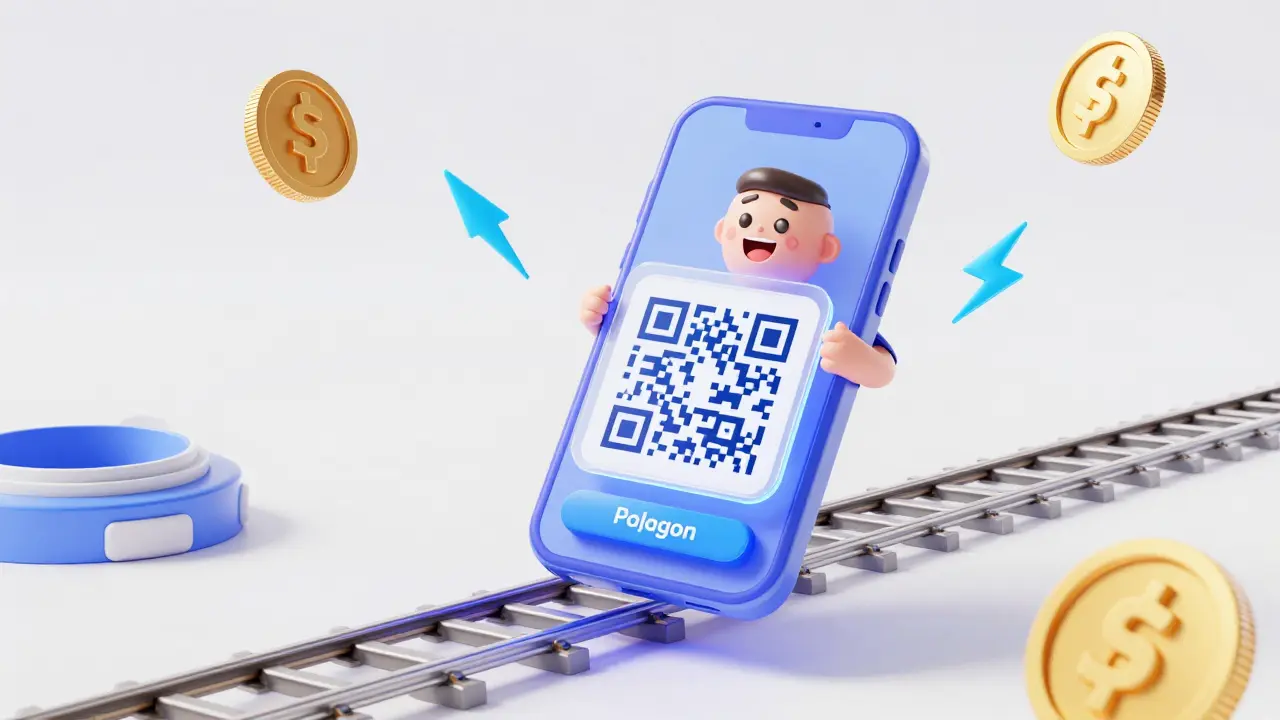
Most people struggle with crypto because the addresses are long, scary strings of characters. Kasta solves this by allowing users to send and receive funds using just a mobile number or a QR code. It’s a hybrid-decentralized approach, meaning it keeps the security of the blockchain but wraps it in a user interface that anyone can understand.
The secret sauce is the Polygon network. Think of Polygon as a super-efficient railway system. While the main Ethereum highway can get clogged and expensive, Polygon allows Kasta to zip through transactions with minimal fees and lightning speed. This makes it actually viable for things like splitting a dinner bill or paying a freelancer, rather than just moving thousands of dollars at a time.
One of the standout features is the Easy Swap Engine. This allows you to receive payments in your preferred currency regardless of what the sender used. If someone sends you a different token, the engine can automatically convert it so you get exactly what you want in your wallet. This removes the friction that usually stops businesses from accepting crypto.
The Utility of the KASTA Token
Is the token just for trading on exchanges? Not exactly. The KASTA token serves as the fuel for the entire Ka.app ecosystem. When you hold KASTA, you aren't just betting on a price increase; you're gaining access to specific tools.
- Governance Rights: Holders can vote on the direction of the platform, effectively acting as stakeholders in the project's evolution.
- Staking Rewards: You can lock up your tokens to earn compensation through various APY tiers, which encourages long-term holding over quick flipping.
- Fee Discounts: Using the native token for exchange transactions within the app often results in lower costs.
- Exclusive Access: Token holders can get access to specialized debit cards, bridging the gap between digital wallets and physical stores.
Real-World Use Cases: More Than Just a Chart
To understand Kasta, look at it through the lens of daily chores. Imagine you are a freelance designer in Bristol working for a client in Tokyo. Normally, you'd deal with SWIFT codes, currency conversion fees, and a 3-day wait. With Kasta, the client sends the payment, and it hits your wallet almost instantly. Because it supports conversions to EUR, the transition from crypto to spendable cash is streamlined.
It also transforms how we handle small, peer-to-peer interactions. Instead of digging for cash or using a banking app that requires a dozen clicks, a quick scan of a QR code settles the debt. This shift toward a "crypto-based economy" is the core mission-turning cryptocurrency from a digital gold hoard into a functional medium of exchange.
Market Performance and Volatility
Let's be honest: the price of KASTA has been a rollercoaster. As of April 2026, the data from platforms like CoinGecko and Bybit shows significant volatility. While it has seen spikes-sometimes jumping nearly 200% in a single day on certain exchanges-it has also traded significantly below its all-time high.
For instance, while some platforms reported prices around $0.0021, others showed it much lower, reflecting the fragmented nature of liquidity across different exchanges like Kraken and Coinbase. This volatility is typical for mid-tier tokens (ranked around #1654 on CoinGecko), but the consistent trading volume of over $1 million per day suggests that there is still genuine interest and liquidity in the asset.

Potential Pitfalls and Things to Watch
No project is without risks. The biggest challenge for Kasta is adoption. A payment network is only useful if both the sender and the receiver are on it. While the technology is sound, the "network effect" is the hardest hurdle to clear. If your local coffee shop doesn't use Kasta, you're still stuck with your traditional plastic card.
Additionally, because it relies on the Polygon network, Kasta is tied to the health and stability of that infrastructure. If Polygon experiences a major outage or a security breach, Kasta is affected by proxy. However, by utilizing a hybrid-decentralized model, they attempt to balance the anonymity of crypto with the legal compliance needed to keep the platform from being shut down by regulators.
What makes Kasta different from other crypto wallets?
Unlike standard wallets that require complex alphanumeric addresses, Kasta allows transactions via mobile numbers and QR codes. It also features an Easy Swap Engine that automatically converts incoming payments into your preferred currency, making it more like a payment app (like PayPal or Venmo) than a technical crypto vault.
Is KASTA an ERC-20 token?
Yes, KASTA is an ERC-20 token. However, it operates on the Polygon network rather than the Ethereum mainnet to ensure that transaction fees remain low and processing speeds remain fast enough for daily use.
Can I earn money by holding KASTA?
Yes, through a staking mechanism. Users can lock up their KASTA tokens in the app to earn rewards. The specific Annual Percentage Yield (APY) depends on the tier of benefits you choose and how many tokens you commit to the network.
Where can I buy KASTA tokens?
KASTA is listed on several major exchanges, including Kraken, Bybit, Coinbase, and Gate.io. It is also tracked on data aggregators like CoinMarketCap and CoinGecko for real-time price monitoring.
How does Kasta handle cross-border payments?
It bypasses the traditional SWIFT banking system. Instead of moving money through multiple intermediary banks, Kasta sends tokens directly from one wallet to another across the Polygon network, which results in near-instant settlement and drastically lower fees compared to traditional wire transfers.
Next Steps for New Users
If you're new to the ecosystem, start by downloading the Ka.app and exploring the interface. Don't dump all your funds in at once; instead, try sending a small amount to a friend using a QR code to see the speed firsthand. If you're looking for a passive income stream, look into the staking tiers to see which APY fits your risk profile. Just remember that in the world of crypto, volatility is the only constant-only put in what you are comfortable losing.
Adedamola Oyebo
April 18, 2026 AT 16:23Polygon is definitely the right choice here!! The gas fees on mainnet would just kill any real-world utility for small payments!!
Saurav Bhattarai
April 18, 2026 AT 21:18Oh look, another "revolutionary" payment app that thinks it's the first to ever use a QR code. Truly groundbraking stuff here. I'm sure it'll be just as successful as the thousand other clones that failed last year. Absolute geniuses.
John and Lauren Busch
April 19, 2026 AT 21:09Sarcasm aside, the Easy Swap thing is actually decent.
Michelle Stanish
April 21, 2026 AT 07:49Not for me. It's just more crypto.
Shantal Sanjur
April 21, 2026 AT 13:51Sure, "hybrid-decentralized" is just a fancy way of saying they have a backdoor for the government to freeze your funds whenever they feel like it. Why do you think they're pushing mobile numbers? It's for the KYC trap. Once your identity is tied to your wallet, the whole point of blockchain is dead and we're just back to digital banks with a different name. They probably have a secret agreement with the central banks to phase out cash by 2030 and this is just the beta test for the social credit system. Wake up people, the "convenience" is just the bait for the hook. You're not gaining freedom, you're just decorating your cage with some fancy tokens and a QR code. It's all a game to keep us distracted while they consolidate the real power in the background.
Shannon Kelly Smith
April 23, 2026 AT 13:30Let's try to stay positive! 🚀 The tech is meant to help people who are underserved by banks, and that's a huge win for global accessibility! 🌍✨
Kim Smith
April 24, 2026 AT 12:10It's kinda funny how we think about money as this rigid thing when really it's just a collective hallucination anyway, so why not use a token on a sidechain if it makes the flow of value more fluid? i've always felt that the real beauty of these systems isnt even the money part but how it might bridge differant cultures by removing the friction of national borders, though i suspect the transition will be messy since most people are too scared to leave their bank accounts because they dont trust the void of a private key. if we can just get past the fear of the unknown then maybe we'll actually see a world where a freelancer in bristol and a client in tokyo can just vibe without some bank in the middle taking a massive chunk of the profit for just clicking a button, which is honestly just a crime against the spirit of labor in the modern age.
Jeff Barlett
April 24, 2026 AT 20:57I can't believe people are actually falling for this. The "network effect" isn't just a hurdle, it's a brick wall. Who is actually going to use this instead of just using a credit card or Apple Pay? It's a solution looking for a problem that doesn't exist for 99% of the population. Absolute joke.
Mike Kempenich
April 26, 2026 AT 00:47I think it has a shot if they target the right niches. It's definitely worth keeping an eye on.
Sean Mitchell
April 27, 2026 AT 00:34The prose in the description is utterly pedestrian, yet the volatility of the token is truly operatic in its absurdity. It's a tragedy in three acts.
Karen Mogollon Gutierrez
April 27, 2026 AT 14:07It is quite distressing that one must risk such significant volatility for the mere convenience of a digital transfer. I find the entire premise most unstable!
Prachi Bhadarge
April 28, 2026 AT 06:12Imagine thinking you're a "stakeholder" because you bought some tokens. Cute.
nikki krinkin
April 29, 2026 AT 00:16I can see why some people would be worried about the risks, but it sounds like a helpful tool for a lot of freelancers.
Ankit Sindhu
April 29, 2026 AT 05:25For anyone starting out, just take it slow. Start with a small amount and get a feel for the app before diving deep.
Vicky Duffala
April 30, 2026 AT 13:52This is the energy we need! 🌟 Breaking down barriers and making money flow freely across the globe is such a vibe. Let's go! 💸
Trudy Morse
April 30, 2026 AT 19:14Basically it's just Venmo on a blockchain. Simple.
Kevin Lư
May 2, 2026 AT 03:10I'm just saying, it's kind of selfish to push these things without mentioning how much energy the whole crypto thing wastes, though I guess Polygon is better than Bitcoin. Still, we gotta be better.
Kaitlyn Wu
May 3, 2026 AT 16:05The Easy Swap Engine is the most important part here. Without it, merchants will never touch crypto.
Yuhan Mo
May 3, 2026 AT 18:19The integration of a Layer 2 solution like Polygon effectively mitigates the latency issues inherent in the Ethereum mainnet, optimizing the throughput for micro-transactions.
Thomas Jewett
May 4, 2026 AT 20:14This is just another way for foriegn influence to mess with our economy!! We need to stop relying on these weird digital coins and get back to real American values and hard currency that you can actually hold in your hand!! Why are we letting these things even exist in our market place when they're basically just gambling chips for people who dont want to work for a living!! Its a disgrace to the whole idea of a stable economy and we're just walking right into a trap set by people who dont even live here!!
Luke George
May 6, 2026 AT 08:56Exactly. They want us off the dollar so they can track every single cent we spend through these "apps".
Michael Harms
May 7, 2026 AT 04:31Hey, let's keep it civil! There's room for both traditional and new systems to exist side by side.
Anna Grealis
May 9, 2026 AT 00:46Another rug pull waiting to happen. Typo in the docs probably means the devs dont even care.
Tracy Sperandio
May 9, 2026 AT 02:17The sheer audacity of these fees in the old system is a crime! Kasta is bringing a vivid, electric change to how we handle our loot!
Gillian Kent
May 10, 2026 AT 03:05I think its realy cool how it helps peopel send money without waiting for days. Very helpfull for families!