You’ve probably heard of Dogecoin or Shiba Inu. Maybe you even have a few coins sitting in your wallet, hoping for that one big moon shot. But then you stumble across Inu Inu (INUINU). It sounds familiar, looks similar, but something feels different. Is it just another copycat project trying to ride the wave of dog-themed cryptocurrencies? Or is there actual substance behind the meme?
As of mid-2026, INUINU remains a niche player in the vast ocean of meme tokens. It launched on July 7, 2022, on the Ethereum blockchain with a promise of community ownership and anti-establishment vibes. The catch? The developer who created it vanished shortly after launch. Today, it exists as a ghost ship-steered entirely by its holders.
Quick Takeaways
- Inu Inu (INUINU) is a community-run meme token on Ethereum with no active developers.
- It features a zero transaction tax policy, which is rare for this sector.
- The original creator burned 53% of the supply and locked liquidity for 200 years before disappearing.
- Trading volume is extremely low, making large buys or sells risky due to slippage.
- There is no whitepaper, roadmap, or utility beyond community sentiment and speculation.
The Origin Story: A Stealth Launch and a Vanishing Creator
To understand what INUINU is today, you have to look at how it started. On July 7, 2022, amidst a bear market where many projects were failing, INUINU was deployed on the Ethereum network. Unlike most tokens that hype themselves up with months of marketing, influencer shills, and presales, INUINU used a "stealth launch." This means it went live with minimal fanfare, aiming for a fair distribution without bots sniping early allocations.
Here’s the twist: after setting up the initial parameters, locking the liquidity, and burning a massive chunk of the supply, the developer simply left. They didn’t announce retirement. They didn’t hand over control to a foundation. They just stopped responding. This left the token in a unique state. It is technically decentralized because there is no central authority controlling it-but not by design of a complex governance protocol. It’s decentralized because nobody is left to control it.
This "abandonware" status is both its biggest risk and its strongest selling point. For skeptics, a project with no team is a red flag. For believers, it proves that the community truly owns the asset. There are no insiders who can dump their bags on retail investors. If the price moves, it’s purely based on supply and demand from the existing holder base.
Tokenomics: Zero Taxes and Burned Supply
If you trade meme coins regularly, you’re used to seeing taxes attached to every buy and sell. Many projects charge a 5% to 10% fee, taking a cut for marketing, development, or redistribution to holders. INUINU breaks this mold.
Inu Inu (INUINU) operates with a zero tax policy on all transactions. When you buy or sell, you pay only the standard Ethereum gas fees. No hidden cuts go to a team wallet. This transparency appeals to traders who dislike opaque fee structures. However, it also means there is no automatic mechanism funding marketing or buying back tokens to support the price. The community must self-fund any promotional efforts.
The supply dynamics are equally aggressive. At launch, 53% of the total supply was sent to a burn address-meaning those tokens are gone forever. This deflationary move was intended to reduce circulating supply and create scarcity. The maximum supply is often cited as 1 quadrillion (1,000,000,000,000,000) tokens, though some sources reference a hard cap closer to 470 trillion. Currently, approximately 465 trillion tokens are in circulation. With such a high number, individual token prices remain microscopic, typically trading in fractions of a cent (e.g., $0.0000000009). This psychological pricing makes it easy for users to buy millions of tokens for a few dollars, fostering a sense of significant ownership despite the low monetary value per unit.
Liquidity Locks: The 200-Year Promise
One of the biggest fears in the crypto space is a "rug pull," where developers withdraw the liquidity pool funds and disappear, leaving the token worthless. To prevent this, legitimate projects lock their liquidity. INUINU took this to an extreme. The liquidity was locked for 200 years.
Why 200 years? Because it effectively means "forever" for a cryptocurrency project. Even if the Ethereum network evolves or merges into other chains, the current liquidity contract remains untouched. This provides a layer of security against the most common scam in the meme coin sector. However, while the liquidity is safe from the developer, it doesn’t guarantee price stability. Low trading volume can still cause massive price swings.

Market Performance and Volatility
Let’s talk numbers. As of 2026, INUINU has experienced significant volatility, which is standard for this asset class. Its all-time high was recorded on April 12, 2024, when it reached $0.00000002. Since then, it has declined by approximately 95%. Current prices hover around $0.00000000044 to $0.0000000009, depending on the exchange.
The market capitalization is modest, ranging between $177,000 and $429,000. This places it firmly in the micro-cap category. The daily trading volume is particularly thin, often fluctuating between $58 and $313. What does this mean for you? If you try to buy or sell a large amount of INUINU, you will likely experience severe slippage. Your order could move the price significantly against you because there aren’t enough buyers or sellers in the order book to absorb large trades.
| Metric | Value |
|---|---|
| Blockchain | Ethereum (ERC-20) |
| Launch Date | July 7, 2022 |
| Total Supply | ~470 Trillion - 1 Quadrillion |
| Circulating Supply | ~465 Trillion |
| Transaction Tax | 0% |
| Liquidity Lock | 200 Years |
| All-Time High | $0.00000002 (April 2024) |
| Current Holders | ~2,710 |
Community Governance: Who Runs the Ship?
With no developer, who decides the future of INUINU? The answer is the ~2,710 holders. This is a relatively small group compared to major cryptocurrencies like Bitcoin or even Shiba Inu, which have millions of addresses. This tight-knit community manages social media channels, creates memes, and promotes the token independently.
The project positions itself as more than just a financial instrument. It frames INUINU as a lifestyle choice and a cultural statement against centralized finance. The mascot-a dog wearing a hat-is meant to symbolize resilience and the culmination of meme culture evolution. Without a formal DAO (Decentralized Autonomous Organization) or voting mechanism, decisions are made through informal consensus. If the community agrees on a marketing campaign or a charity donation, they organize it themselves. This grassroots approach fosters loyalty but lacks scalability.
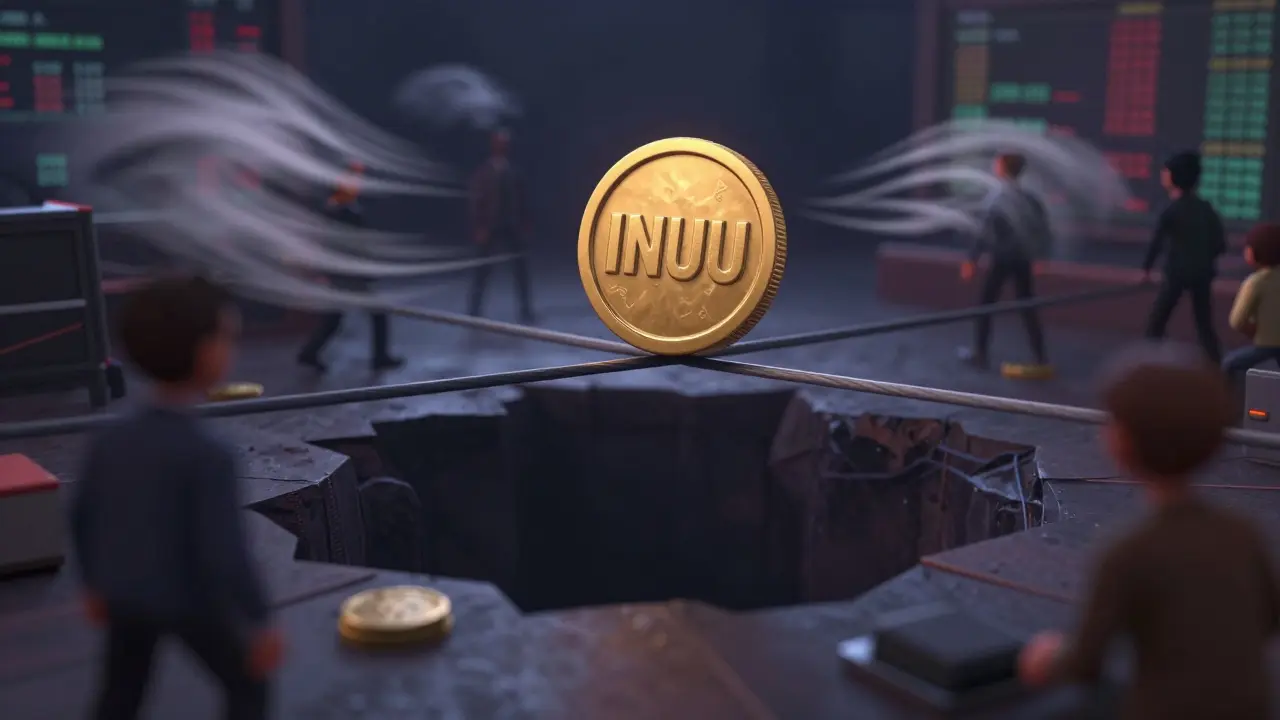
Risks and Limitations: The Dark Side of Ghost Tokens
Before you buy, you need to understand the risks. INUINU is a speculative asset with no intrinsic utility. It doesn’t offer staking rewards, yield farming, or access to exclusive services. Its value is derived entirely from community sentiment and scarcity.
First, consider the lack of documentation. There is no whitepaper. No technical audit reports are publicly available from reputable firms. While the code is open-source on Etherscan, verifying its safety requires technical expertise that most retail investors don’t possess. The absence of a roadmap means there are no planned upgrades, partnerships, or feature releases to drive long-term growth.
Second, the low liquidity is a double-edged sword. While the 200-year lock protects against rug pulls, it doesn’t protect against illiquidity. If panic sets in, selling your tokens might be difficult without crashing the price further. Conversely, buying in during a dip might be impossible if there are no sellers willing to offload at lower prices.
Third, competition is fierce. The meme coin sector is saturated. New tokens launch daily, each vying for attention. Without active marketing from a team, INUINU relies solely on organic growth and viral moments. In a noisy market, staying relevant is challenging.
How to Buy INUINU Safely
If you decide to proceed, here is how to navigate the purchase process. INUINU is listed on several exchanges, including Coinbase, MEXC, LBank, and decentralized platforms via aggregators like CoinGecko or CoinMarketCap. However, availability varies by region and exchange listing policies.
- Choose an Exchange: Check if your preferred exchange supports INUINU. If not, you may need to use a decentralized exchange (DEX) like Uniswap on the Ethereum network.
- Set Up a Wallet: Use a secure non-custodial wallet like MetaMask. Ensure you have ETH for gas fees.
- Verify the Contract Address: Always double-check the smart contract address on official sources or trusted trackers like CoinGecko. Scammers often create fake tokens with similar names.
- Execute the Trade: Due to low volume, consider using limit orders instead of market orders to avoid excessive slippage. Be prepared for potential delays in transaction confirmation during network congestion.
- Secure Your Assets: Never share your private keys. Consider using a hardware wallet for long-term storage.
Conclusion: Is INUINU Worth Your Attention?
Inu Inu (INUINU) is a fascinating case study in decentralized ownership. It proves that a token can survive without a developer, relying purely on community strength and transparent mechanics like zero taxes and locked liquidity. However, it also highlights the dangers of investing in assets with no utility, low liquidity, and no clear future direction.
If you are looking for a safe investment, INUINU is not it. It is a high-risk, high-reward speculative play suitable only for capital you can afford to lose entirely. If you believe in the power of community-driven projects and want to support a pure meme experiment, it might fit your portfolio. Just remember: past performance, especially the 95% drop from its ATH, is not indicative of future results. Do your own research, verify the contract, and trade cautiously.
Is Inu Inu (INUINU) a scam?
INUINU is not inherently a scam in the traditional sense because the liquidity is locked for 200 years and the developer burned 53% of the supply. However, it carries high risk due to the lack of utility, low liquidity, and absence of an active development team. It is a speculative asset where value is driven purely by community sentiment.
Where can I buy INUINU?
You can find INUINU on exchanges like Coinbase, MEXC, and LBank. It is also tradable on decentralized exchanges (DEXs) on the Ethereum network, such as Uniswap, provided you swap ETH for the correct ERC-20 token contract.
Why is the price of INUINU so low?
The price is extremely low because the total supply is in the trillions or quadrillions. This is typical for meme coins. The low price allows users to buy large quantities of tokens for small amounts of money, creating a psychological appeal despite the low market capitalization.
Does INUINU have a whitepaper?
No, INUINU does not have a published whitepaper or formal technical documentation. The project relies on its website and community communication for information, which limits transparency regarding long-term goals or technical specifications.
What happens if the community dies out?
If the community loses interest, trading volume will likely drop to near zero. Without new buyers, the price could stagnate or decline slowly. Since there is no developer to revive the project, its fate rests entirely on the continued engagement of its remaining holders.