Most people think of an NFT as a digital image or a collectible, but the real magic-and the biggest headache-is actually the data behind it. If you've ever wondered why some NFTs suddenly disappear or why certain projects claim their art is "on-chain" while others aren't, you're touching on the most critical infrastructure battle in the blockchain space. We are moving away from the era of simple JPEGs and entering a phase where NFT data storage must support living, breathing AI agents and massive gaming worlds. If the storage fails, the asset ceases to exist. That's a high-stakes game for anyone holding a digital portfolio.
The Core Dilemma: On-Chain vs. Off-Chain
To understand where we're going, we have to look at how things work right now. Storing a high-resolution image directly on a blockchain is incredibly expensive. It would be like paying for a skyscraper's worth of land just to store a single shoebox. Because of this, most projects use a hybrid model. They keep a small piece of metadata (the "receipt") on the blockchain and store the actual file-the art or the 3D model-somewhere else.
This is where IPFS is a peer-to-peer decentralized file system that allows users to store and share data without a central server. Instead of a URL that says "this file is at this address," IPFS uses content addressing. It says, "this file has this specific fingerprint." If the file changes by even one pixel, the fingerprint changes, meaning you can't secretly swap your rare NFT for a common one without everyone noticing.
However, IPFS isn't "permanent" by default-someone has to keep "pinning" the data for it to stay online. That's why we've seen the rise of Arweave, which offers a "permaweb" solution where users pay a one-time fee to ensure data is stored indefinitely. For a collector, this is the gold standard because it removes the fear that a company will go bankrupt and take the artwork with them.
| Feature | IPFS | Arweave | Filecoin |
|---|---|---|---|
| Storage Model | Peer-to-Peer / Pinning | Permanent (One-time fee) | Decentralized Marketplace |
| Persistence | Requires active pinning | Indefinite / Permanent | Contract-based storage |
| Best For | Fast, verifiable access | Historical archives / Art | Enterprise-scale data |
| Cost Structure | Varies by pinning service | Upfront payment | Rental-based pricing |
The Rise of Intelligent NFTs (iNFTs)
We're seeing a massive shift in 2025 and 2026. We are no longer just storing static images; we are storing "intelligence." Enter ERC-7857, a new standard for intelligent NFTs (iNFTs) that allows for the secure transfer of AI agents. This isn't just a new way to tag a file; it's a total rethink of storage. When you transfer an iNFT, you aren't just moving a token; you're moving a set of behaviors, memories, and AI weights.
Imagine a gaming character that remembers every battle it fought and every player it met. That data is dynamic-it changes every day. Traditional storage like a static IPFS link doesn't work for this. These assets require "mutable" data structures that can update in real-time while still proving to the blockchain that the changes were legitimate. About 30% of new projects are now integrating these AI elements, meaning storage providers have to move from being "digital warehouses" to "active databases."
The complexity grows when you consider privacy. If an AI NFT contains sensitive user data or a custom-trained personality, you can't just put it on a public ledger for the world to see. The future involves re-encryption techniques where data is encrypted for the current owner and re-encrypted for the new buyer during a sale, all while the core asset remains safely stored off-chain.
Gaming and the $900 Billion Opportunity
Gaming is the biggest driver for storage innovation right now. The market is projected to hit nearly $943 billion by 2029, and you can't run a high-fidelity virtual world on a slow blockchain. If you're playing a game with thousands of players, your inventory-swords, skins, land-needs to load instantly. This is why we're seeing a push toward cross-platform interoperability.
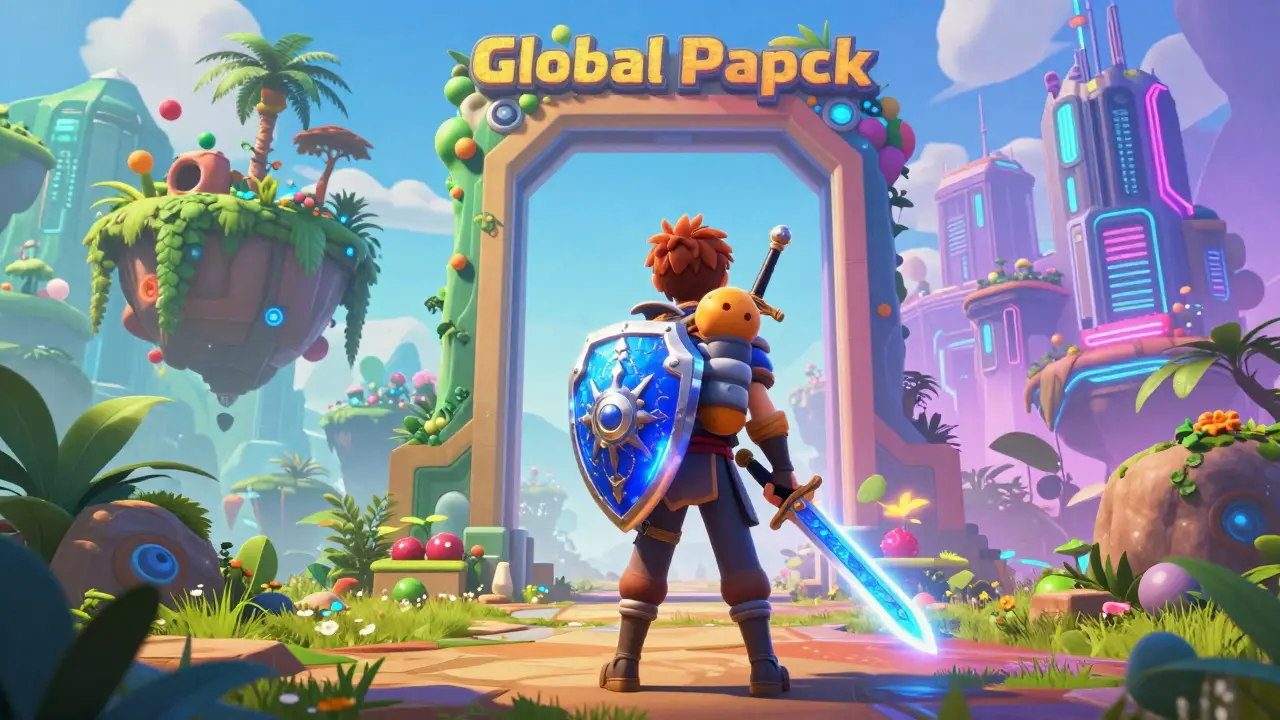
Around 70% of gamers want their assets to work across different games. If I earn a legendary shield in one RPG, I want to carry it into another virtual world. For this to work, the storage can't be locked into one game's private server. It needs a universal standard. We're seeing a move toward decentralized storage networks that act as a "global backpack" for your digital assets, regardless of which game you're currently logged into.
This requires a seamless link between the ERC-721 and ERC-1155 standards and the external storage layer. The goal is for the blockchain to handle the ownership (who owns it) while a high-performance decentralized network handles the rendering (what it looks like and how it behaves).
Why Cost and Scalability Still Matter
Why not just put everything on the blockchain? Simple: it's too expensive. Even with the improvements in network efficiency, storing a 10MB 3D model on-chain would cost a fortune in gas fees. By using off-chain storage, developers can keep the transaction costs low while using cryptographic hashes to ensure the data hasn't been tampered with. A hash is essentially a digital fingerprint of the file; the blockchain stores the fingerprint, and the storage network holds the file.
This approach also solves the scalability problem. When millions of people are trading NFTs, the network can't handle the traffic of moving massive files around. Off-chain systems allow the blockchain to remain lean and fast, processing only the ownership changes. This is the only way the virtual economy can realistically scale toward a $50 billion valuation.
What to Expect by 2026 and Beyond
By the end of 2026, the concept of a "static collectible" will feel obsolete. We are heading toward a world of programmable digital life. Your NFT won't just be a picture of a cat; it will be a digital pet that grows, learns, and interacts with other NFTs. This requires storage that supports versioning-keeping a history of how the asset evolved over time.
We will likely see a consolidation of storage providers. The "wild west" era of just throwing files on a random server is over. Serious investors and enterprise companies are demanding reliability and security. The winners will be the platforms that can offer enterprise-grade uptime, lightning-fast retrieval speeds, and native support for AI-driven dynamic content.
What happens to my NFT if the storage provider goes out of business?
If your NFT uses a centralized server (like a company's own website), the image will disappear if the server goes down. This is why decentralized storage like IPFS or Arweave is preferred. With Arweave, the data is paid for upfront and distributed across a global network, making it nearly impossible for a single point of failure to destroy your asset.
Can an NFT actually be stored 100% on-chain?
Yes, but it's rare and limited. These are typically "On-Chain NFTs" where the art is created using SVG code or pixels stored directly in the smart contract. Because this takes up so much block space, the art is usually very simple (like CryptoPunks). It's the most secure method because it doesn't rely on any external links, but it's not feasible for complex 3D art or AI agents.
What is an iNFT and how does it differ from a regular NFT?
A regular NFT is a static pointer to a file. An intelligent NFT (iNFT) is a programmable asset that integrates AI. It can change its appearance, react to user input, and evolve its behavior over time. This requires a more complex storage system that can handle mutable data rather than a single, unchanging file.
Is Filecoin better than IPFS for NFT storage?
They actually work together. IPFS is the protocol for finding and moving the data, while Filecoin is the incentive layer that pays people to actually store that data. For a developer, using Filecoin provides a more formal agreement (a storage contract) that ensures the data is being kept safely over a specific period.
How does the ERC-7857 standard help with AI NFTs?
ERC-7857 solves the problem of transferring "intelligence." It allows the sensitive data that makes an AI agent work to be securely re-encrypted when the NFT changes hands. This means the new owner gets full control of the AI's memories and capabilities without the data ever being exposed to the public blockchain.
Next Steps for Collectors and Developers
If you're a collector, start checking the "provenance" of your assets. Look for projects that explicitly use Arweave or IPFS and avoid those that rely on simple HTTP links to a private server. If the link starts with "https://companyname.com/image.jpg," you're trusting that company to stay in business forever.
For developers, the goal is interoperability. Don't build a storage silo. Use standards that allow your assets to move between different virtual worlds. Experiment with hybrid architectures where you use a fast cache for real-time gaming and a permanent layer like Arweave for the asset's historical record. As we move toward 2026, the ability to manage dynamic, evolving data will be the biggest competitive advantage in the Web3 space.
JERRY ORTEGA
April 6, 2026 AT 07:40ipfs is a decent start but the pinning problem is the real killer for a lot of casual users who dont realize their art is just floating in the void until a pinning service goes bust
vijendra pal
April 7, 2026 AT 02:12Bro this is revolutionary!! 🚀 iNFTs are gonna change everything and the ERC-7857 standard is just fire 🔥 imagine owning a digital pet that actually learns from you lol!! 🐶💎
Manisha Sharma
April 7, 2026 AT 11:46india is already leadng the way in tech and we will dominate this iNFT space while the west just tries to catch up with thier outdated systems
the sheer intellectual capacity of our devs makes these Western storage solutions look like childs play honestly
Arlen Medina
April 7, 2026 AT 23:42Listen up because I'm only saying this once. The whole 'global backpack' thing is basically just a fancy way of saying we're finally getting a real file system for the metaverse and if you aren't already moving your assets to Arweave you're literally just gambling with your money. USA is where the real innovation happens, period.
Bruce Micciulla Agency
April 8, 2026 AT 09:58the fundamental flaw in the gaming projection is the assumption that cross platform interoperability will be adopted by legacy studios who prefer walled gardens because the friction of moving a legendary shield between different engine architectures is way higher than just having a centralized database for each game and honestly the 900 billion number is probably just inflated VC hype to drive seed funding for projects that dont even have a working prototype yet
Sonya Bowen
April 8, 2026 AT 19:54Focus on the data integrity first.
Lauren Gilbert
April 9, 2026 AT 17:55It's fascinating to think about how we define ownership when the object itself is evolving and changing through AI interactions, as it suggests that the value isn't in the static state of the asset but in the history of its growth and the relationship between the user and the intelligent agent, which almost turns the NFT into a digital living entity rather than a piece of property.
Emily 2231
April 11, 2026 AT 00:08The government will use these "intelligent assets" to track our every thought and movement through the blockchain and it is an absolute disgrace that we are allowing this surveillance state to integrate with our digital portfolios while the American dream is being sold off to the highest bidder in a decentralized auction
June Coleman
April 12, 2026 AT 01:36Oh sure, because we've all had such *amazing* luck trusting centralized companies with our data in the past, right? 🙄
shubhu patel
April 12, 2026 AT 03:33I really appreciate the detailed breakdown of the different storage models because it helps those of us who are just starting to explore the space to understand the risks involved, and I think moving toward a more hybrid approach where performance is prioritized for the gameplay while permanence is handled by Arweave is a very sensible path forward for the entire community.
sekhar reddy
April 14, 2026 AT 00:38OMG!! I cannot even believe we are talking about digital pets that grow!! 😱 This is literally the most exciting thing I have read all year and I am shaking just thinking about the possibilities!! ✨
Alexandra Lance
April 15, 2026 AT 02:37Imagine thinking a 'digital fingerprint' actually protects you from the elites who control the nodes 🙄💅 these iNFTs are just another way to scrape our behavioral data for the New World Order 👁️
Taylor Meadows
April 15, 2026 AT 09:50You're all just chasing ghosts. The a-chain vanity is a void that will never be filled by a 3D model or a bot that remembers your name.
david head
April 17, 2026 AT 04:06totally agree with the global backpack idea 🎒 hope it happens soon!!
Robert Coskrey
April 19, 2026 AT 01:51I concur with the technical assessment, especially regarding the cost of on-chain storage; it is simply impractical for high-fidelity assets.
Carol Prates
April 20, 2026 AT 20:56This is so cool! I love the idea of assets evolving over time, it adds such a personal touch to the digital experience!
Hugo Lopez
April 21, 2026 AT 12:07Love the optimism here! Hope to see these standards adopted quickly so we can all play together! 😊✨
Carmelita Gonzales
April 22, 2026 AT 11:19it is so important to respect the creators by ensuring their work stays online regardless of the platform
gladys christine
April 24, 2026 AT 06:25Screaming at the thought of a global backpack!!! 😱 Finally we can just carry our loot everywhere!!! This is the future we deserve!!!