Imagine trying to send money to your family across a border, only to find that every bank account is frozen and every transfer channel is shut down. For millions of Afghans, this isn’t a hypothetical scenario-it’s daily life. Since the Taliban returned to power in August 2021, international sanctions have locked away Afghanistan's $9.5 billion in foreign reserves, creating a banking crisis that left citizens stranded. In response, many turned to digital assets for survival. But instead of regulating them, the Taliban issued an absolute ban on all cryptocurrency activity in August 2022. This move wasn't just about economics; it was rooted in a specific, rigid interpretation of Sharia law.
The question on everyone's mind is simple but complex: why does the Taliban consider Bitcoin haram (forbidden)? To understand this, we need to look beyond the headlines and into the religious jurisprudence that drives the regime's policies. It’s not just about fear of losing control over the currency. It’s about fundamental disagreements on what constitutes valid value in an Islamic system.
The Religious Rationale Behind the Ban
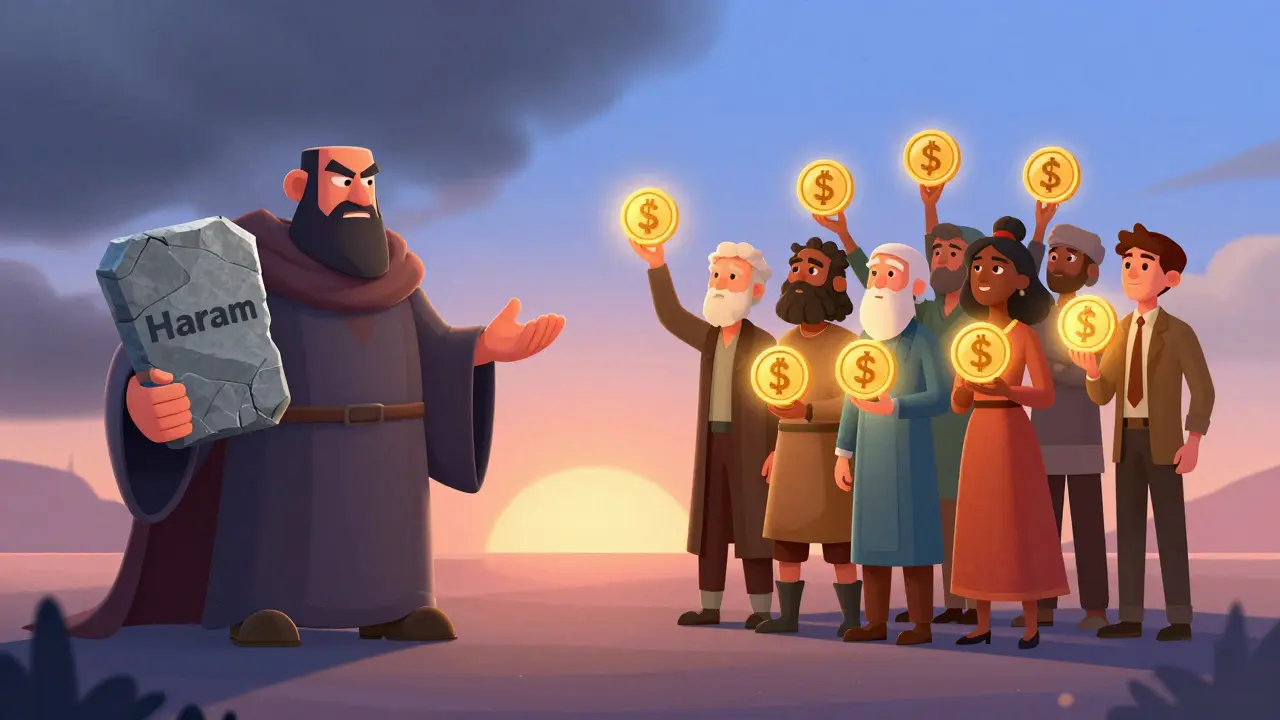
The Taliban’s stance is clear: cryptocurrencies are illegal because they violate core principles of Islamic finance. According to statements from Da Afghanistan Bank (DAB), the country’s central bank, crypto assets lack "real-life values" and constitute maysir (gambling or speculation). In traditional Islamic jurisprudence, money must have intrinsic value or be backed by tangible assets to be considered legitimate. Gold and silver fit this description. Bitcoin, with its decentralized nature and price volatility, does not.
This interpretation stands in stark contrast to other Muslim-majority nations. While Saudi Arabia and the UAE have created regulatory frameworks for virtual assets, and Indonesia allows trading under strict conditions, Afghanistan joins Algeria and Egypt in maintaining outright bans. However, Afghanistan’s approach is uniquely absolute. Egypt permits limited trading through licensed exchanges, whereas the Taliban prohibits all crypto activity without exception. Even Iran, another theocratic state, allows mining under strict licensing, though trading remains restricted since 2022.
The theological argument rests on two main pillars:
- Lack of Intrinsic Value: Critics argue that Bitcoin has no physical form and cannot be used as collateral in the same way gold can. Without a backing asset, it is seen as speculative fiction rather than real wealth.
- Gambling (Maysir): The extreme volatility of crypto markets is viewed akin to gambling. If you buy Bitcoin hoping its price will skyrocket, you are engaging in risk-taking behavior prohibited by Sharia.
However, this view ignores the practical utility of stablecoins like USDT, which are pegged to the US dollar and offer stability. For many Afghans, these tokens aren’t investments-they’re lifelines for sending remittances when traditional banks fail.
Economic Reality vs. Ideological Purity
There is a glaring contradiction between the Taliban’s ideological purity and the economic reality on the ground. Before the ban, Afghanistan ranked 20th globally in Chainalysis’ 2021 Global Crypto Adoption Index, processing approximately $740 million in cryptocurrency transactions between July 2020 and June 2021. By 2024, despite the prohibition, 38% of Afghans reportedly used cryptocurrency for remittances, up from just 2% pre-2021 according to UNDP surveys.
Why? Because the formal banking system collapsed. With foreign reserves frozen and correspondent banking relationships severed, ordinary citizens had no choice but to innovate. Peer-to-peer (P2P) trading networks sprang up underground, facilitated by Telegram groups and encrypted messaging apps. These informal markets process millions of dollars monthly, proving that demand cannot be legislated away.
| Country | Status | Regulatory Body | Key Restriction/Allowance |
|---|---|---|---|
| Afghanistan | Banned | Taliban / FinTRACA | All activities prohibited based on Sharia interpretation |
| Saudi Arabia | Regulated | SAMA | Crypto banned as legal tender, but ownership allowed |
| UAE | Regulated | VARA | Comprehensive licensing framework for exchanges and wallets |
| Iran | Mixed | Central Bank | Mining permitted with licenses; trading restricted |
| Indonesia | Regulated | Bappebti | Trading allowed on registered exchanges; not legal tender |
The data shows that while neighboring countries have embraced regulation, Afghanistan has chosen isolation. This decision has severe humanitarian consequences, particularly for women who are barred from opening bank accounts in many cases. Roya Mahboob, founder of the Digital Citizen Fund, argues that Bitcoin serves as a "survival tool" for Afghan women, giving them hope for financial freedom in a society where their rights are severely curtailed.
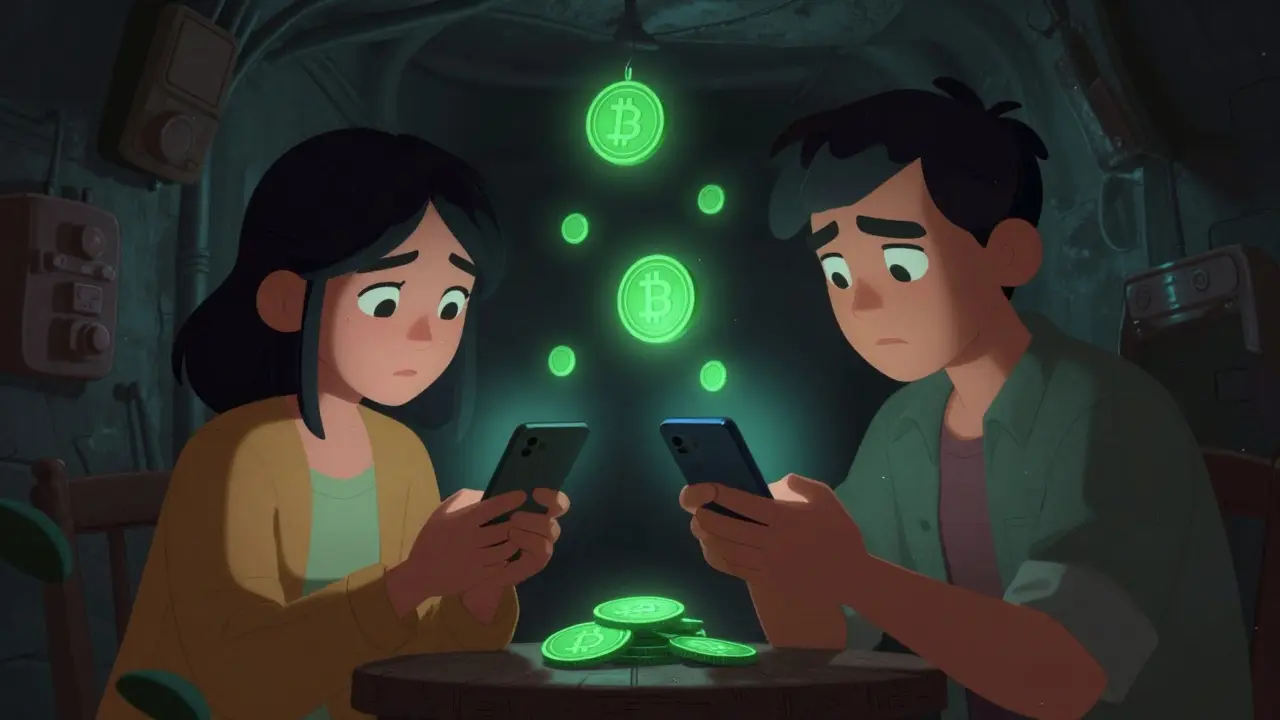
Enforcement Mechanisms and Underground Resistance
If the ban is so strict, how do people still use crypto? Enforcement relies heavily on FinTRACA (Financial Transactions and Reports Analysis Center of Afghanistan), which monitors suspicious transactions using existing anti-money laundering laws. There is no specific crypto legislation, meaning authorities interpret general financial crimes statutes to target digital assets.
Tactical enforcement includes periodic crackdowns. In Q4 2022, documented arrests occurred in Herat province, where dealers were detained and assets confiscated. Exchanges operating openly were forced to close. Yet, these measures have proven ineffective at stopping adoption. Instead, they’ve driven activity deeper underground.
Users have adapted creatively:
- Non-Custodial Wallets: Platforms like Trust Wallet allow users to hold private keys themselves, removing reliance on centralized exchanges that can be shut down.
- P2P Networks: Telegram channels such as 'AfghanCryptoHelp' facilitate direct trades between individuals, bypassing intermediaries entirely.
- Messaging Apps: Encrypted communication ensures anonymity during negotiations and transfers.
Technical challenges remain significant. Internet blackouts-such as the 48-hour nationwide outage in October 2024 affecting 13 million citizens-disrupt access to blockchain networks. SIM card registration requirements also compromise user privacy. Despite these hurdles, P2P trading volumes reached $4.2 million monthly in Q1 2025, showing resilience against state pressure.
Scholarly Debate: Is Crypto Really Haram?
The Taliban’s position is not universally accepted within Islamic finance circles. Scholars worldwide debate whether cryptocurrencies meet Sharia requirements. Dr. Mohsin Choudhry published a paper in the *Journal of Islamic Accounting and Business Research* arguing that if crypto is used as a medium of exchange rather than a speculative asset, it could be permissible. His analysis suggests that utility trumps origin.
Similarly, the OIC’s Fiqh Academy issued a non-binding opinion in June 2022 stating that cryptocurrencies "may be permissible if they achieve the objectives of Sharia." This directly challenges the Taliban’s absolutist stance. Meanwhile, the Dubai Islamic Economy Centre provided guidance suggesting legitimacy depends on purpose-not inherent nature.
These scholarly opinions highlight a critical gap: the Taliban applies a one-size-fits-all rule without considering context. A farmer selling crops via USDT receives different treatment than a trader flipping Bitcoin for profit. Yet both fall under the same blanket prohibition.
Human Impact: Stories from the Ground
Behind every statistic lies a human story. Reddit archives from r/Afghanistan contain verified accounts of loss and adaptation. One user, 'KabulTrader88', reported losing 1.2 Bitcoin (worth ~$52,800) when exchanges were raided in November 2022. Such losses devastate families already struggling with inflation and unemployment.
Conversely, success stories emerge too. Women participating in underground training programs report increased autonomy. The Digital Citizen Fund documented 687 Afghan women receiving Bitcoin education, with 89% noting greater financial independence. Though 42% faced harassment from authorities, the ability to transact freely outweighed risks for many.
Trustpilot reviews of now-defunct platforms like AfghanCrypto show high satisfaction ratings pre-ban, praising fast remittances during bank closures. Users valued speed and accessibility over regulatory compliance-a testament to desperate needs overriding legal concerns.
Future Outlook: Will the Ban Last?
Looking ahead, experts predict continued enforcement but growing tolerance. Mullah Abdul Ghani Baradar reaffirmed the ban’s permanence in February 2025, declaring digital currencies have "no place in an Islamic system." Yet, evidence suggests tacit acceptance among some officials. A December 2023 UN Security Council report noted instances of border agents accepting Bitcoin payments discreetly.
Economic pressures may force change. Goldman Sachs’ 2025 Emerging Markets Report assigns only a 30% probability of the ban lasting beyond 2028, citing GDP contraction and citizen reliance on alternative systems. As seen in Iran’s policy evolution between 2022-2024, pragmatism often wins over ideology when survival is at stake.
Most likely, Afghanistan will mirror Iran’s path: maintaining official prohibition while allowing limited P2P activity. Without formal regulation, however, citizens remain vulnerable to exploitation and seizure. Until then, innovation continues in shadows.
Is Bitcoin completely illegal in Afghanistan?
Yes. The Taliban imposed an absolute ban on all cryptocurrency activities-including trading, mining, and usage-in August 2022. No legal recognition exists, and violations carry penalties including asset confiscation and arrest.
Why does the Taliban consider crypto haram?
They cite two reasons: lack of intrinsic value (unlike gold/silver) and association with maysir (gambling/speculation). Their interpretation rejects decentralized assets lacking tangible backing.
How do Afghans access crypto despite the ban?
Through peer-to-peer (P2P) networks on Telegram, non-custodial wallets like Trust Wallet, and encrypted messaging apps. These methods avoid centralized exchanges targeted by authorities.
Are there any exceptions for women using crypto?
No formal exceptions exist. However, organizations like the Digital Citizen Fund provide underground training, enabling women to gain financial autonomy despite risks of harassment.
Will the Taliban lift the crypto ban soon?
Unlikely in short term. Officials reaffirm permanent prohibition. Long-term, economic collapse might force tacit tolerance similar to Iran’s model, but full legalization remains improbable before 2028.
What happens if caught trading crypto?
Penalties include confiscation of digital assets, fines, imprisonment, and closure of business operations. Enforcement varies by region but increases during crackdown periods.
Does international community support the ban?
No unified stance. Some Western powers criticize restrictions hindering humanitarian aid flow, while others respect sovereignty. Most focus on broader governance issues rather than crypto policy specifically.
Can stablecoins bypass Sharia objections?
Technically yes, since they’re pegged to fiat currencies. But Taliban ignores distinction, banning all tokens regardless of stability. Scholarly debates acknowledge potential permissibility, yet local rulings override global consensus.
Tobias Gjerlufsen
May 20, 2026 AT 08:11you guys really think sharia is the problem here its just incompetence and greed disguised as religion. the taliban are just using 'haram' as an excuse to keep control over every single transaction because they cant trust anyone not to steal from them. bitcoin doesnt care about their rules which makes it a threat to their power structure not their theology. stop letting them off the hook by focusing on the religious angle when its clearly political authoritarianism.
Ruben Michel
May 21, 2026 AT 09:12The article presents a rather pedestrian analysis of the geopolitical nuances at play. One must appreciate that the Taliban’s adherence to a specific jurisprudential framework, however archaic it may appear to the uninitiated Western observer, is consistent with their broader ideological project. The distinction between intrinsic value and speculative fiction is not merely semantic; it is foundational to the preservation of social order in a vacuum state. To suggest otherwise is to misunderstand the very nature of fiat versus asset-backed currency in a pre-modern context.
Samara McCallum
May 21, 2026 AT 16:23i feel like everyone misses the point entirely... crypto is just digital magic beans but sure lets pretend its a lifeline. the real issue is that people want freedom without responsibility and thats why systems collapse. its not about the money its about the illusion of control we all have.
Sheldon Friesen
May 23, 2026 AT 13:20Oh, look! Another take on how 'complex' this is! Let me guess, you're going to tell me that while the Taliban ban crypto, they probably accept USDT under the table for bribes? Because that's always the case! The hypocrisy is staggering, isn't it?! But hey, let's keep debating the theological merits of blockchain technology while actual humans starve! Brilliant strategy!
Jan Gilmore
May 23, 2026 AT 18:45Here is the thing most people dont get. The Chainalysis data is key. Afghanistan was top 20 globally before the ban. That means the demand was organic and massive. You cannot legislate away a market that solves a critical infrastructure failure. When banks close, people find another way. Crypto is just the new underground railroad for money. The Taliban are fighting physics, not just finance.
Tobias Gjerlufsen
May 24, 2026 AT 04:09@Ruben Michel your elitist nonsense is exactly why no one listens to you. you talk down to people who are literally trying to survive. 'jurisprudential framework' my ass. its just starvation tactics wrapped in fancy words.
Ruben Michel
May 25, 2026 AT 12:17I fail to see how my attempt to provide historical and economic context can be dismissed so rudely. Your reductionist view ignores the centuries of Islamic financial theory that predates Bitcoin by millennia. Perhaps if you spent less time typing angry comments and more time reading primary sources, you would understand that stability is not accidental.
Tobias Gjerlufsen
May 26, 2026 AT 12:08@Ruben Michel read the room dude. nobody cares about your book smarts when people are losing their savings. go back to your ivory tower.
Tricia Alach
May 27, 2026 AT 06:38its sad how hard they make it for women tho. i mean like really sad. if only there was a way to send money without asking permission from men in robes. maybe tech could help but they block everything. poor souls.
Pauline Larocco71
May 27, 2026 AT 19:21I just hope things get better soon for those families. Its really heartbreaking to hear about the women being harassed for trying to earn a living. We need more global support for these underground networks instead of just criticizing them. Maybe international bodies can step up and protect these users somehow?
Sheldon Friesen
May 28, 2026 AT 14:34@Tricia Alach Oh, don't worry! The 'poor souls' will just innovate again! They always do! It's almost like they're made of steel or something! But sure, let's pity them while the rest of us sit here judging their 'gambling' habits! How noble of us!
Caique Muniz
May 29, 2026 AT 11:57lol another article telling us what we already know. taliban sucks crypto saves lives. yawn. can we move on to something interesting like why irans mining operation is actually kinda smart despite the sanctions. afghanistan is just too broken to even matter anymore.
robert Whitehead
May 30, 2026 AT 09:13It is morally reprehensible that any government would restrict access to financial tools that empower individuals, especially women. The Taliban's interpretation of Sharia is not only incorrect but dangerous. True morality involves protecting the vulnerable, not persecuting them for seeking economic independence. This ban is a human rights violation plain and simple.
Gavin Wonnacott
May 30, 2026 AT 17:30You people are so naive thinking crypto is a savior. In reality, it's just another tool for exploitation. I've seen enough scams to know that these 'P2P networks' are often run by criminals who prey on desperate people. The Taliban might be brutal, but at least they're honest about their brutality. These crypto bros are just thieves with better PR.
Matt Davis
June 1, 2026 AT 00:08Oh, please. Spare me the dramatic outrage. The Taliban are doing exactly what they promised: enforcing their version of order. If you don't like it, leave. Or better yet, stop romanticizing chaos as 'freedom.' It’s not freedom if you’re getting arrested for sending money to your mother.
Tobias Gjerlufsen
June 1, 2026 AT 00:47@Gavin Wonnacott you sound like a bot programmed to defend dictators. nobody said it was freedom. we said it was survival. there is a difference. wake up.
Matt Davis
June 1, 2026 AT 07:16@Tobias Gjerlufsen Survival is not a moral justification for breaking laws. If everyone decided to break whatever law they found inconvenient, society would collapse. The Taliban’s rule is harsh, yes, but it is consistent. Your emotional appeal changes nothing.
Tobias Gjerlufsen
June 2, 2026 AT 15:08@Matt Davis consistency in oppression is still oppression. you are missing the forest for the trees. go read some history.