Since March 2024, Binance has been completely blocked in the Philippines. The country’s Securities and Exchange Commission (SEC) ordered internet service providers to cut off access to the platform after Binance refused to register as a legal crypto service provider. By May 2025, the rules got even stricter. The SEC rolled out new regulations - Memorandum Circular No. 4 and No. 5 - that created the first-ever legal framework for cryptocurrency exchanges operating in the country. These rules, effective July 5, 2025, forced every exchange serving Filipino users to register as a local company, set up a physical office in the Philippines, and deposit at least 100 million pesos (around $1.8 million USD) as capital. They also had to keep customer funds completely separate from company money and submit monthly financial reports.
Why Binance Got Banned
Binance didn’t just ignore the rules - it kept trying to reach Filipino users even after being warned. The SEC found that Binance was running social media ads, paying influencers, and encouraging people to trade on its platform. In one advisory, the SEC said anyone helping promote Binance - whether as an influencer, recruiter, or friend - could be held criminally liable. That’s not a warning you can shrug off. The agency pointed out that Binance had already been banned in 17 other countries, including the U.S., U.K., Canada, and the Netherlands, mostly over money laundering and unlicensed trading concerns. In early 2025, Binance agreed to pay a $4.3 billion fine to the U.S. Treasury for breaking anti-money laundering laws. That made the Philippines’ decision even clearer: they weren’t going to let a company with that kind of history operate without oversight.What About Bitget?
Bitget isn’t named in the official SEC enforcement list from August 2025, but that doesn’t mean it’s safe. The new rules apply to every foreign crypto exchange serving users in the Philippines - no exceptions. The SEC targeted OKX, Bybit, KuCoin, and Kraken for operating without registration. Bitget, like those others, has no physical office in the Philippines, no local registration, and no compliance with the CASP (Crypto Asset Service Provider) framework. If Bitget continues to let Filipinos trade on its platform without meeting those requirements, it’s already in violation. The SEC has made it clear they’re not just going after Binance - they’re going after everyone who ignores the rules. The next official advisory could easily include Bitget. Users should assume it’s already on the list.What Happens If You Keep Using Them?
Many Filipinos still access Binance and Bitget using Virtual Private Networks (VPNs). These services hide your real location by routing your internet traffic through servers in other countries. VPN companies are even advertising this as a feature: “Access Binance in the Philippines with one click.” But here’s the problem - using a VPN to bypass the ban puts you in a legal gray zone. The SEC doesn’t just target the exchanges. They’ve warned that anyone who promotes, facilitates, or enables access to unregistered platforms could face criminal charges. That includes people who run YouTube tutorials on how to use a VPN for Binance, or friends who help others set up accounts. There’s no clear law saying “using a VPN is illegal,” but the SEC’s language is broad enough to cover it. If you’re caught, you could be fined, investigated, or worse.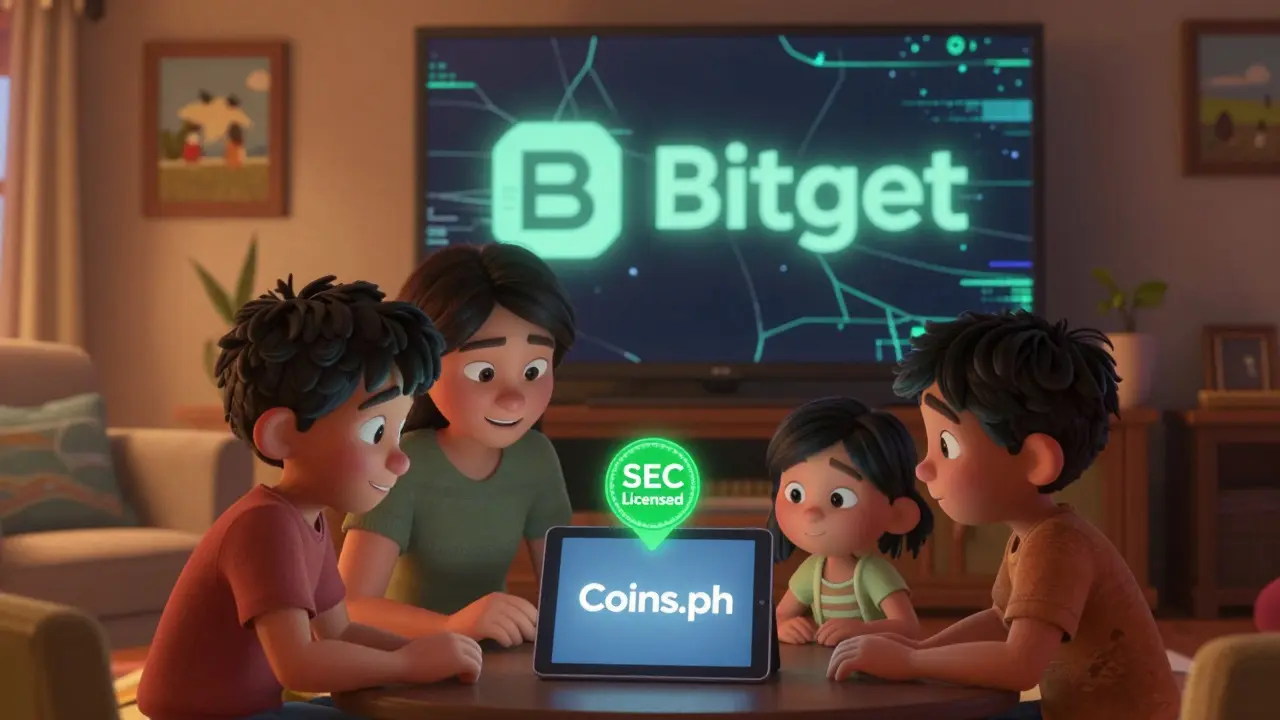
The New Rules: CASP Framework Explained
The CASP framework isn’t just about blocking companies - it’s about protecting people. Before July 2025, Filipino investors had zero legal protection if an exchange collapsed. Many lost life savings when platforms like FTX and Terra Luna failed. Now, every registered exchange must keep customer funds in separate accounts, so company debts can’t touch users’ money. They also need to prove they have enough capital to cover losses. Monthly reporting means regulators can spot trouble early. Violators face fines from 50,000 to 10 million pesos per offense - and an extra 10,000 pesos every day the violation continues. That’s not a slap on the wrist. It’s designed to make it too expensive to ignore the law.What Are the Legal Alternatives?
There are a few licensed platforms operating legally in the Philippines now. Coins.ph is the most popular - it’s registered with the SEC and offers crypto buying, selling, and wallet services. Other registered CASPs include PDAX, Bit2Me Philippines, and Crypto.com (after it completed local registration). These platforms may not offer the same range of coins or trading tools as Binance or Bitget, but they’re legal. That means your funds are protected under Philippine law. If something goes wrong, you can file a complaint with the SEC and have a real chance of getting help. You also won’t risk criminal liability just for trading.
Regional Trends: It’s Not Just the Philippines
The Philippines isn’t alone. Thailand blocked five major exchanges in May 2025, including Bybit and OKX. Indonesia raised taxes on offshore crypto trades from 0.2% to 1%. Singapore and Malaysia are tightening licensing rules too. This is part of a regional shift - governments are no longer letting foreign exchanges operate without accountability. They’re demanding local presence, transparency, and responsibility. The message is clear: if you want to serve customers here, you play by our rules.What Should You Do Now?
If you’re still using Binance or Bitget, you have three choices. First, move your funds to a licensed platform like Coins.ph or PDAX. This is the safest option. Second, if you want to keep trading on international platforms, stop using them from within the Philippines. Don’t use a VPN. Don’t promote them. Don’t encourage others to use them. Third, wait and see if Bitget registers. But don’t count on it - most global exchanges have shown no interest in setting up physical offices and paying millions in capital just for one market. The Philippines is making it clear: no registration, no access. Period.Will the Ban Ever Be Lifted?
Binance could technically reapply for a CASP license. But it would mean shutting down its global operations long enough to register as a Philippine corporation, hire local staff, open an office in Manila, and submit months of financial records. That’s a huge cost for a company that already lost billions in fines elsewhere. It’s unlikely they’ll bother. Bitget, similarly, has shown no signs of applying. The real question isn’t whether the ban will be lifted - it’s whether users will adapt. The SEC isn’t trying to kill crypto. They’re trying to stop people from losing money to unregulated platforms. The future of crypto in the Philippines isn’t on Binance or Bitget. It’s on the licensed platforms that follow the rules.Is it illegal to use a VPN to access Binance in the Philippines?
Using a VPN to access Binance isn’t explicitly illegal under Philippine law, but it puts you in legal danger. The SEC has warned that anyone who facilitates or enables access to unregistered exchanges - including through VPNs - may be held criminally liable. While individuals haven’t been prosecuted yet, the regulator has made it clear they’re watching. Promoting, teaching, or helping others use VPNs for Binance increases your risk significantly.
Why did the Philippines ban Binance but not local exchanges?
The Philippines didn’t ban local exchanges - it required all exchanges, local or foreign, to register. Local platforms like Coins.ph and PDAX already complied with the new CASP rules by setting up offices, depositing capital, and submitting reports. Binance and other foreign exchanges refused. The ban isn’t about nationality - it’s about compliance. Foreign companies that won’t follow the rules are blocked, while those that do are allowed to operate legally.
Can Bitget be banned next?
Yes, Bitget can and likely will be targeted next. The SEC’s May 2025 regulations apply to all unregistered crypto exchanges serving Filipino users. Bitget has no local registration, no physical office in the Philippines, and no compliance with CASP requirements. Since the SEC already targeted OKX, Bybit, and Kraken - all of which are in the same position - Bitget is next in line. The only reason it’s not on the list yet is timing, not safety.
What happens to my crypto if Binance or Bitget gets blocked?
If you keep your crypto on Binance or Bitget when they’re blocked, you risk losing access permanently. Once an exchange is blocked and forced to shut down operations in the Philippines, there’s no guarantee you’ll be able to withdraw your funds. The SEC advises users to move their assets to licensed platforms before access is cut off. Waiting until the last minute increases the chance your coins get locked in a platform that’s no longer operational.
Are there any safe crypto exchanges in the Philippines right now?
Yes. Coins.ph, PDAX, Bit2Me Philippines, and Crypto.com (Philippines-registered) are all SEC-licensed under the CASP framework. These platforms follow local laws, protect customer funds separately, and allow you to file complaints with the SEC if something goes wrong. They may have fewer trading pairs than Binance, but they’re the only ones legally allowed to operate in the country.
How long do I have to move my crypto from Binance?
You don’t have a deadline anymore. Binance was blocked in March 2024, and the SEC gave users 90 days to withdraw funds back then. That window closed over a year ago. Today, Binance is fully inaccessible from the Philippines without a VPN, and the SEC considers its continued operation in the country illegal. The longer you wait, the higher the risk of losing access permanently. Move your assets now.
Edward Drawde
February 3, 2026 AT 21:09Jack Petty
February 4, 2026 AT 17:03Nickole Fennell
February 5, 2026 AT 23:09Will Pimblett
February 6, 2026 AT 23:44Elle M
February 8, 2026 AT 04:47Crystal Underwood
February 9, 2026 AT 16:56Freddy Wiryadi
February 10, 2026 AT 01:55christal Rodriguez
February 11, 2026 AT 22:56Gustavo Gonzalez
February 13, 2026 AT 11:49Gavin Francis
February 15, 2026 AT 10:46Steven Dilla
February 16, 2026 AT 01:34Aaron Poole
February 16, 2026 AT 08:28Devyn Ranere-Carleton
February 16, 2026 AT 21:40Robert Mills
February 17, 2026 AT 20:29Jerry Ogah
February 18, 2026 AT 02:30Andrea Demontis
February 20, 2026 AT 02:11Joseph Pietrasik
February 20, 2026 AT 23:44Raju Bhagat
February 22, 2026 AT 03:00laurence watson
February 22, 2026 AT 22:18Pamela Mainama
February 24, 2026 AT 04:44Rico Romano
February 24, 2026 AT 22:16Rob Duber
February 26, 2026 AT 04:27Brianne Hurley
February 26, 2026 AT 21:55Aaron Poole
February 28, 2026 AT 09:09