Remember when swapping tokens meant filling out endless forms, uploading ID scans, and waiting days for approval? That era feels like ancient history now. Today, you can trade digital assets directly from your phone without ever handing over your private keys. If you are navigating the TRON blockchain ecosystem, one name keeps popping up: SunSwap v2. But is it actually safe? Does it live up to the hype as the leading decentralized exchange on the network? Or is it just another flashy interface hiding high fees and security risks?
I’ve spent weeks testing the platform, digging into its transaction data, and comparing it against competitors. Here is the honest breakdown of what SunSwap v2 offers, who it is for, and where it falls short.
What Exactly Is SunSwap v2?
To understand SunSwap v2, you first need to look at its roots. The platform started life as JustSwap back in 2020. In October 2021, the SUN.io team acquired it and rebranded it to SunSwap. This wasn't just a name change; it was a strategic move to integrate deeper with the broader DeFi (Decentralized Finance) landscape on the TRON network.
SunSwap v2 is a non-custodial decentralized exchange that allows users to swap TRC-20 tokens instantly using automated market maker technology.
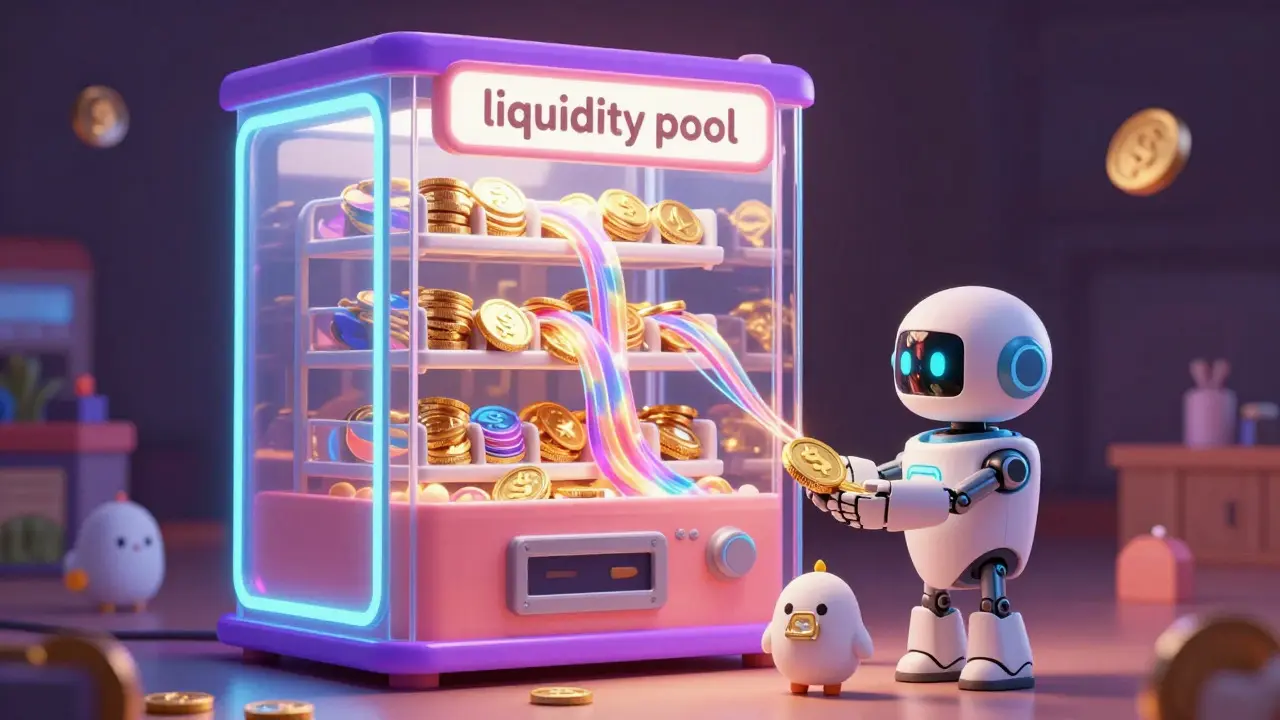
Unlike traditional centralized exchanges like Binance or Coinbase, SunSwap does not hold your money. You connect your wallet, approve the trade, and the smart contract handles the rest. It uses an Automated Market Maker (AMM) model. Think of it like a vending machine rather than a stockbroker. Instead of matching buyers and sellers via an order book, you trade against liquidity pools-large reservoirs of tokens provided by other users.
This structure means there are no intermediaries taking cuts behind the scenes. The protocol relies on mathematical formulas to determine prices based on supply and demand within these pools. For the average user, this translates to faster transactions and lower barriers to entry.
How SunSwap v2 Works: The User Experience
The beauty of SunSwap lies in its simplicity. You don’t need to be a coding wizard to use it. However, you do need one specific tool: the TronLink Wallet. This is currently the only supported wallet interface for seamless operations on the platform.
Here is how the process typically unfolds:
- Connect Your Wallet: You visit the SunSwap website and click connect. Your TronLink extension or mobile app prompts you to authorize the connection.
- Select Token Pair: Choose the token you want to sell (e.g., USDT) and the token you want to buy (e.g., TRX).
- Approve Transaction: Enter the amount. The interface shows you the estimated output, including price impact and fees.
- Confirm Swap: Click swap, confirm in your wallet, and wait for the blockchain confirmation.
Most swaps take seconds. There is no KYC (Know Your Customer) verification. No email confirmation codes. No support tickets if you forget your password because you never had one. Your identity is simply your wallet address.
During my testing, I found the interface intuitive even for beginners. The layout is clean, with clear inputs and outputs. One minor frustration? Some new users get confused by the existence of multiple web addresses associated with the brand in the past. Always double-check you are on the official domain to avoid phishing sites-a risk present across all DeFi platforms.
Fees, Liquidity, and Costs
Let’s talk about money. Everyone hates hidden fees. SunSwap operates on a fixed fee structure, which makes calculating your potential profit or loss straightforward. Typically, a standard swap incurs a small percentage fee (often around 0.2% to 0.3%, depending on the pool).
Where does this money go? It doesn’t vanish into a corporate headquarters. These fees are distributed directly to the Liquidity Providers-the users who deposit their tokens into the pools to facilitate trades. This creates a self-sustaining economic loop. The more people trade, the more providers earn, which incentivizes them to keep adding funds, thereby deepening liquidity.
High liquidity is crucial. If a pool is shallow, buying a large amount of a token can cause significant slippage (you get less than expected due to price movement during the trade). SunSwap has become the premier DEX on TRON for a reason: it holds massive volume. Data from 2025 shows over 6 million transactions processed on the platform alone. WTRX and USDT dominate the activity, but newer tokens like SUNDOG and JST are gaining traction.
| Feature | SunSwap v2 | Centralized Exchange (e.g., Binance) |
|---|---|---|
| Custody | Non-custodial (You hold keys) | Custodial (Exchange holds keys) |
| KYC Required | No | Yes |
| Fee Structure | Fixed protocol fee to LPs | Variable maker/taker fees + withdrawal fees |
| Asset Support | TRC-20 Tokens only | Multi-chain (ERC-20, BEP-20, etc.) |
| Security Risk | Smart contract bugs / Phishing | Hacks / Insider fraud / Bankruptcy |
Security: How Safe Is Your Money?
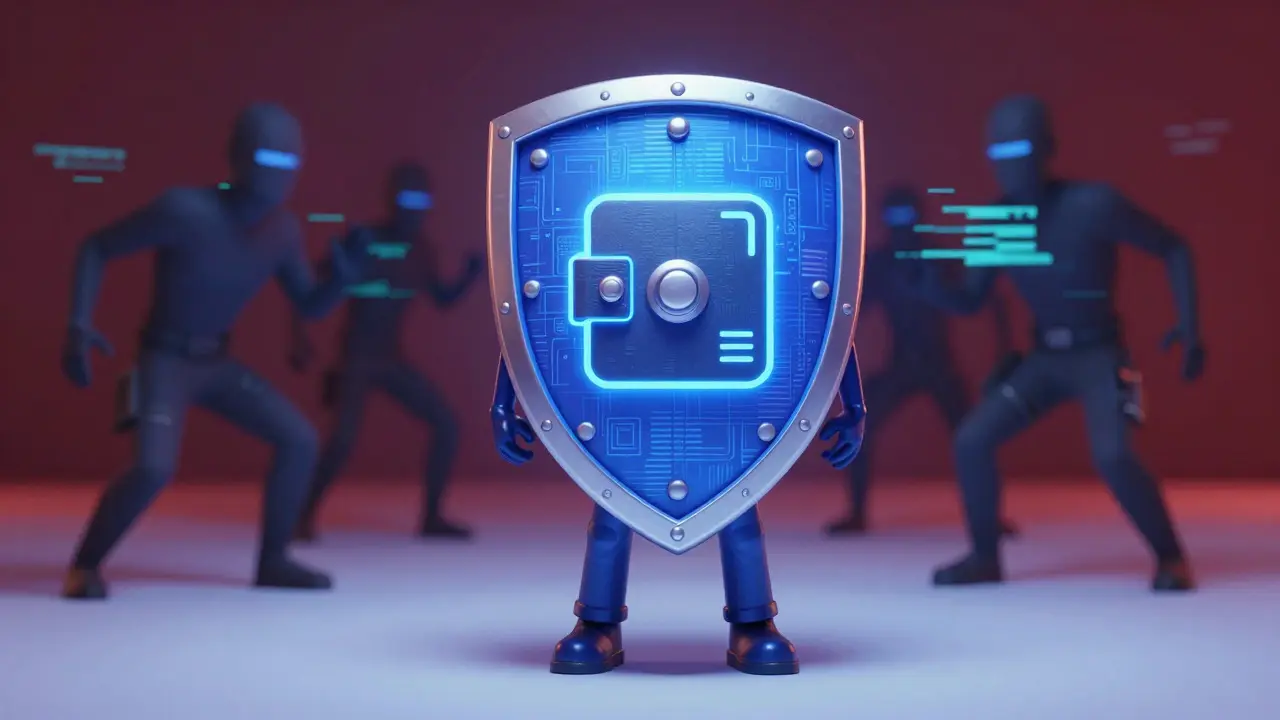
In crypto, "not your keys, not your coins" is the golden rule. SunSwap adheres strictly to this. Since it is non-custodial, SunSwap cannot freeze your account or lose your funds in a hack of their central servers. Your assets sit in your TronLink wallet until the exact moment of the swap.
However, "safe" doesn’t mean "risk-free." The primary risks lie elsewhere:
- Smart Contract Vulnerabilities: While SunSwap’s contracts have been audited and used by millions, code is human-made. Bugs can exist. The platform has maintained a near-perfect track record so far, but vigilance is key.
- Phishing Attacks: Because there is no login screen, scammers create fake websites that look identical to SunSwap. If you connect your wallet to a fake site, they can drain it. Always bookmark the official URL.
- User Error: Sending tokens to the wrong address or approving unlimited spending allowances for malicious contracts can lead to losses. Double-check every transaction.
Expert analysis from MarketplaceFairness.org rated SunSwap positively for reliability, noting no obvious errors during extensive testing of various token pairs, including BTC to TRX conversions. The consensus among security analysts is that the protocol itself is robust, provided users practice good hygiene with their wallets.
Pros and Cons: The Honest Verdict
No platform is perfect. After analyzing traffic data, user reviews, and personal usage, here is the balanced view.
The Good:
- Speed and Simplicity: Swaps are instant. The UI is described by many users as "effortless."
- Privacy: No personal data required. Trade anonymously.
- Earn Passive Income: By providing liquidity, you can earn a share of trading fees. This is a powerful feature for long-term holders of TRC-20 tokens.
- Low Barrier to Entry: Anyone with a TronLink wallet can start trading immediately.
The Bad:
- Limited Scope: You can only trade TRC-20 tokens. If you want to swap Ethereum-based ERC-20 tokens, you need a different DEX like Uniswap.
- Mixed Third-Party Reviews: Some users complain about confusion regarding web addresses or lack of customer support chat (since there is no central team to call).
- Impermanent Loss: For liquidity providers, if the price of one token changes drastically compared to the other, you might end up with less value than if you had just held the tokens. This is a standard DeFi risk, not unique to SunSwap.
Who Should Use SunSwap v2?
If you are already active in the TRON ecosystem, SunSwap is practically essential. It is the default gateway for moving between stablecoins like USDT and native assets like TRX or newer meme tokens like SUNDOG.
It is ideal for:
- Privacy-focused traders who dislike KYC processes.
- DeFi enthusiasts looking to provide liquidity and earn yields.
- Beginners wanting to try decentralized finance without complex setup.
It is not ideal for:
- Multi-chain traders who frequently switch between Ethereum, Solana, and Bitcoin networks.
- Users needing fiat on-ramps (buying crypto with credit cards). You’ll need a centralized exchange for that first step.
Final Thoughts
SunSwap v2 has solidified its position as the backbone of decentralized trading on TRON. With over 16 million total transactions since its inception and steady growth through 2025, it proves that simplicity and security can coexist. It may not have the flashy marketing budget of major centralized exchanges, but its utility speaks for itself.
As we move further into 2026, the platform continues to adapt, listing new tokens and optimizing its pools. For anyone holding TRC-20 assets, SunSwap isn’t just an option; it’s the most efficient tool in the shed. Just remember to protect your seed phrase, verify URLs, and start small if you are new to liquidity provision.
Is SunSwap v2 safe to use in 2026?
Yes, SunSwap v2 is considered safe. It is a non-custodial platform, meaning you retain control of your funds in your TronLink wallet. The smart contracts have been widely tested and audited. However, users must remain vigilant against phishing websites and always verify the URL before connecting their wallet.
Do I need to pay taxes on SunSwap trades?
Tax laws vary by country. In many jurisdictions, swapping one cryptocurrency for another is considered a taxable event (capital gains/losses). Since SunSwap does not report your activity to tax authorities, it is your responsibility to track and declare these transactions according to local regulations.
Can I use MetaMask with SunSwap?
Not directly. SunSwap is built on the TRON blockchain, which requires the TronLink Wallet. MetaMask is primarily designed for Ethereum-compatible chains. While some bridges allow interaction, the native and most seamless experience on SunSwap is exclusively through TronLink.
What are the fees for swapping on SunSwap?
SunSwap charges a fixed protocol fee, typically ranging from 0.2% to 0.3% per trade. This fee goes directly to liquidity providers. Additionally, you will pay the standard TRON network energy/bandwidth fees for the transaction, which are usually negligible if you hold enough TRX in your wallet.
How do I provide liquidity on SunSwap?
To provide liquidity, navigate to the "Liquidity" tab on SunSwap. Select a token pair (e.g., USDT/TRX), enter equal values of both tokens, and approve the transaction. You will receive LP tokens representing your share of the pool. You earn fees whenever others trade that pair, but you also face the risk of impermanent loss.
Andrew Schneider
July 25, 2026 AT 22:11Oh look, another 'review' trying to convince us that handing our keys to a smart contract is somehow safer than just keeping them in a cold wallet 🙄 The hype machine is running hot again folks. I’ve seen this movie before. First they say it’s 'revolutionary', then the rug pulls start. SunSwap? More like Sun-Burn for your portfolio when the next exploit hits. Don’t believe the marketing fluff.
Ray Arney
July 26, 2026 AT 05:45I mean, it works fine for me. I use it mostly for swapping USDT to TRX and haven't had any major issues. It's pretty straightforward once you get used to TronLink. Not saying it's perfect, but it gets the job done without too much headache.
Ella Collinson
July 26, 2026 AT 15:36The fundamental inefficiency of relying on a single-chain DEX for liquidity depth is glaring. While the AMM model reduces counterparty risk associated with centralized entities, the slippage tolerance on low-cap pairs remains suboptimal. Furthermore, the reliance on TronLink as a singular entry point creates a monolithic failure vector. If the extension suffers a critical vulnerability or regulatory crackdown, the entire user base is exposed. The article glosses over the systemic fragility of this ecosystem dependency. We are essentially trading custodial risk for smart contract existential risk, which is arguably more volatile given the lack of standardized auditing protocols across all integrated pools.
Lisa Chong
July 28, 2026 AT 13:47They want u to think its safe but have u ever noticed how many fake sites pop up? Its a trap. They track ur wallet address even if u dont give ur name. The government knows who owns every address linked to a phone number eventually. Why do they need KYC on Binance if not to feed data to the surveillance state? SunSwap is just the bait. Once u connect ur wallet, they have ur digital fingerprint. Wake up sheeple! The elites are watching every swap u make through blockchain analytics firms. Its all about control. Trust no one. Keep ur coins offline or lose them all to the algorithmic overlords.
Tracy Marshall
July 28, 2026 AT 23:50it is morally bankrupt to encourage people to gamble their savings on these unregulated platforms without proper oversight. where is the consumer protection? nothing. just code written by anonymous developers who could vanish tomorrow. we need stricter laws to hold these protocols accountable for losses. letting users drown in impermanent loss while developers cash out is unjust. the system is rigged against the little guy always has been
Guy Davis
July 30, 2026 AT 18:24typo in the article says 'Sun-Burn' earlier lol but yeah security is sketchy. dont trust anyone online really.
Natalie Lucas
August 1, 2026 AT 18:23Hey everyone! Just wanted to drop some positivity here. Ive been using sunswap for months and its actually super chill. Great way to dip toes into defi without the stress of kyc. Keep grinding yall! 💪✨
Steven Briggs
August 2, 2026 AT 03:40i usually stick to binance because i am afraid of making mistakes with wallets but this looks okay if you know what you are doing
Hamza k
August 2, 2026 AT 16:42Absolutely breathtaking analysis of the mundane! Who knew clicking buttons could be so dramatic? I feel like I'm conducting symphonies every time I approve a transaction. The sheer audacity of expecting perfection from a decentralized protocol is laughable yet inspiring. Let us embrace the chaos!
Brad Semp
August 4, 2026 AT 00:20It is amusing to observe the plebeian enthusiasm for such a rudimentary tool. For those of us who understand the nuances of cross-chain interoperability and advanced yield farming strategies, SunSwap is merely a stepping stone. However, for the masses content with basic swaps, it suffices. Do not mistake simplicity for sophistication. The true arbitrage opportunities lie elsewhere, beyond the reach of the average retail trader.
Korn Arrieta
August 5, 2026 AT 20:20The assertion that phishing is merely a 'risk present across all DeFi platforms' is a gross understatement. It is the primary attack vector. The UI design often mimics legitimate interfaces with terrifying accuracy. Users must implement rigorous verification protocols beyond simple URL checks. Domain spoofing is rampant. The platform itself does little to mitigate this social engineering threat. This negligence is unacceptable.
Curtis Johnson
August 6, 2026 AT 05:00Let us all try to keep the peace here. Everyone has different comfort levels with technology. Some prefer centralization for ease others prefer decentralization for freedom. Both sides have valid points. No need to attack each other. Lets just learn from the article and make informed choices together. Peace and love out there in the crypto world 🌍
Kim Kay
August 7, 2026 AT 09:32hi newbies! if you are scared of losing money start small. really tiny amounts. learn how the gas fees work first. its easy to get confused with energy and bandwidth on tron. take your time and read the docs. you got this!