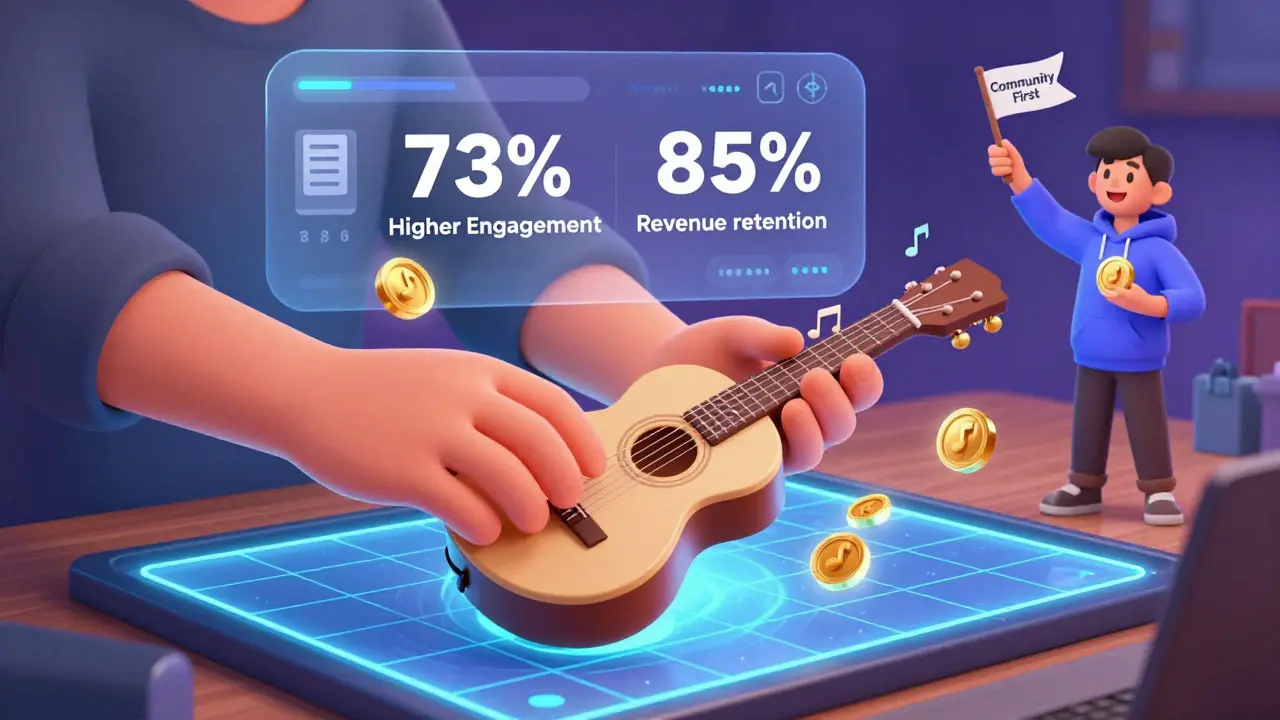
Imagine a world where your fans don’t just like your content-they own a piece of it. That’s not science fiction. It’s happening right now on social token platforms, and thousands of creators are already using them to turn followers into stakeholders. These aren’t just digital badges or NFTs. They’re actual tokens-built on blockchain-that give fans real value: exclusive access, voting power, revenue shares, and more. And the numbers don’t lie: over 25,000 creators have earned $450 million through these systems since 2022, with some seeing 73% higher engagement than on traditional platforms.
How Social Tokens Actually Work
At its core, a social token is a digital asset tied to a person, brand, or community. Unlike Bitcoin or Ethereum, which are general-purpose cryptocurrencies, social tokens are designed for one thing: connecting creators directly with their audience. Think of them like membership passes, but instead of a plastic card, you get a token stored in a crypto wallet.
When you launch a social token, you’re not just selling something-you’re building an economy. Fans buy your tokens, and in return, they unlock perks: early access to music, private Discord rooms, voting on your next project, or even a cut of your merchandise sales. The magic? You keep 85-95% of the revenue. On YouTube or Instagram, you’re lucky to see half that after fees and ads.
These tokens run on blockchains, mostly Ethereum, Solana, or Polygon. Ethereum is the most common-it’s secure, widely supported, and integrates with dozens of exchanges. But it’s not cheap. Transaction fees can hit $1.20 per swap, which adds up fast when fans are buying $5 tokens. Solana, on the other hand, processes transactions in under half a second and costs less than a penny. That’s why it’s exploding in popularity among creators who need fast, frequent interactions-like live-streaming musicians or gaming influencers.
The Top Platforms Compared
Not all platforms are made equal. Here’s how the leading options stack up:
| Platform | Blockchain | Setup Cost | Key Strength | Key Limitation |
|---|---|---|---|---|
| Rally | Ethereum, Polygon, Solana (cross-chain) | Free basic tier; 15% fee on premium features | No-code setup, Shopify integration, 92% success rate in 48 hours | High platform fees on advanced tools; limited customization |
| Roll Protocol | Ethereum | $299 setup + 3% on secondary sales | Advanced DAO governance, multi-sig treasury controls | Steep learning curve; requires crypto literacy |
| Kanga Exchange | Multi-chain | $499 flat fee | Unlimited holders, community revenue sharing | Requires developer help for wallet integrations |
| Torum | Binance Smart Chain | Free token creation | AI-driven engagement rewards, 47 min/day user time | Token useless outside Torum app |
| SolSocial | Solana | Free to create, low gas fees | 65,000 TPS, perfect for high-volume fan interactions | Four outages in 2023; unreliable for critical use |
Most creators start with Rally because you don’t need to know a single line of code. Just sign up, verify your identity, pick a token name, and set your perks. Within two hours, your token is live. That’s why musicians like ‘MusicianMike’ made $8,200 in his first month-no tech team needed.
But if you’re running a community with hundreds of members who need to vote on decisions, Roll Protocol’s multi-sig treasury system is unmatched. It lets you require 3 out of 5 community leaders to approve any spending. That’s how you prevent scams and build trust.
Real Success Stories (and Why Others Fail)
The biggest wins come from creators who treat tokens like a community tool-not a get-rich-quick scheme.
A indie band in Austin, Texas, launched a token called $BAND. They gave token holders early access to new songs, exclusive merch drops, and voting rights on tour locations. Within six months, they doubled their revenue and cut out their label entirely. Their secret? They posted weekly updates, hosted token-only Zoom calls, and even let fans suggest song titles. Engagement didn’t drop after the launch-it grew.
Contrast that with the influencer who sold 10,000 tokens promising “10x returns.” Within three months, the Discord went silent. No updates. No new content. Just empty promises. That’s the trap: if you don’t keep giving value, your token becomes worthless. Studies show 57% of failed projects didn’t have a long-term engagement plan.
Another common mistake? Wallet onboarding. Over 65% of fans don’t know how to connect a crypto wallet. That’s why platforms like Rally now offer one-click wallet creation and step-by-step guides. If you skip this, you’re leaving half your audience behind.
What’s Changing in 2025
The space is moving fast. In January 2025, Rally rolled out Token 2.0, letting creators launch tokens that work across Ethereum, Solana, and Polygon at once. That means your fans can trade on whichever chain they prefer-no more being locked in.
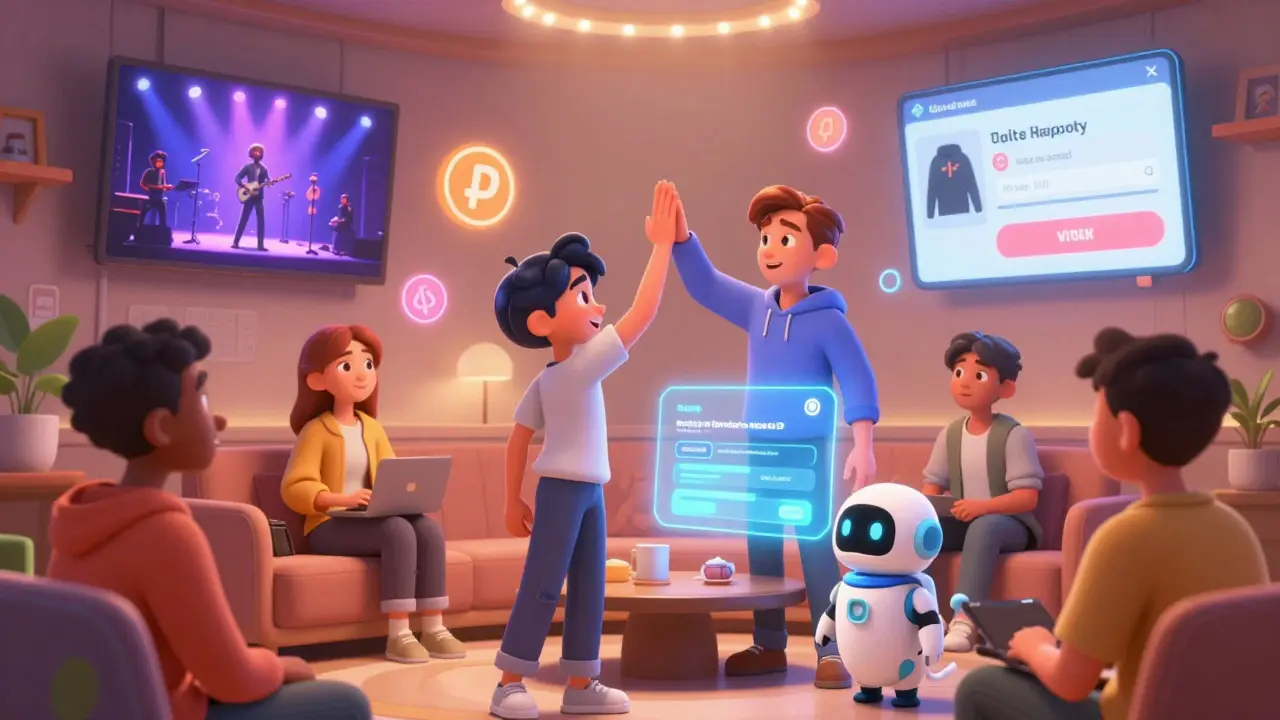
Roll Protocol just integrated with Shopify’s Hydrogen framework. Now, any Shopify store owner can add token-gated products with one click. Imagine selling a limited-edition hoodie-only accessible to holders of your token. That’s not a dream. It’s live.
Even Torum, once criticized for being a walled garden, added AI that now rewards users based on quality of contributions-not just likes. A thoughtful comment might earn you 5 tokens. A spam post? Nothing. That’s a big step toward real community value.
The biggest shift? The Token Standards 2025 initiative. A coalition including Ethereum, Solana, and major platforms is working on universal rules for social tokens. Think of it like HTML for the creator economy. Once it launches, your token could work across apps, not just one platform. That’s the real future.
What You Should Avoid
Don’t promise financial returns. The SEC made it clear: if you say your token will make money, it’s a security-and you need licenses. Instead, focus on access, perks, and participation.
Don’t ignore legal compliance. Even no-code platforms require KYC (know your customer) checks. Skipping this risks shutting down your token.
Don’t launch without a roadmap. People don’t buy tokens because they’re trendy. They buy them because they believe in your next 6 months. Outline what’s coming: events, drops, collaborations. Show up consistently.
And don’t underestimate community management. Tokens don’t run themselves. You need to reply, post, host calls, and celebrate wins. It’s not a passive income tool. It’s a new kind of job.
Where This Is Headed
By 2026, creator token revenue could hit $12 billion. That’s 15% of the entire creator economy. And it’s not just artists. Brands like Starbucks are using tokens to reward loyalty. K-pop artists in South Korea are using them to connect with millions of fans. Even small-town photographers are launching tokens to fund exhibitions.
The platforms that win won’t be the ones with the flashiest tech. They’ll be the ones that make it simple, secure, and meaningful. The ones that help creators build real relationships-not just wallets.
If you’re a creator wondering whether to try this, here’s the truth: you don’t need to be a crypto expert. You just need to care more about your fans than about the price of your token. The tools are here. The audience is waiting. All you have to do is start.
What’s the difference between a social token and an NFT?
Social tokens are fungible-meaning each one is identical and interchangeable, like dollars. You can hold 100 of them, and they’re all the same. NFTs are non-fungible, meaning each one is unique, like a digital painting. Social tokens are used for access, voting, or rewards. NFTs are used for collectibles, art, or one-of-a-kind perks. Many creators use both: tokens for ongoing community access, NFTs for special releases.
Can I make money just by buying social tokens?
Some people try, but it’s risky. Most platforms warn against treating tokens like investments. The real value comes from using them-accessing exclusive content, voting on projects, or earning rewards. If you buy a token hoping to flip it for profit, you’re gambling. If you buy it because you believe in the creator and want to support them, you’re building a community. The latter is what lasts.
Do I need a crypto wallet to use social tokens?
Yes. You’ll need a wallet like MetaMask, Phantom, or Trust Wallet to hold and use your tokens. Most platforms now offer simple in-app wallet creation so you don’t need to set one up manually. But if you’re helping others join, expect confusion. Many fans don’t know what a wallet is. That’s why platforms like Rally now guide users step-by-step through the process.
Are social tokens legal?
Yes, as long as they’re designed as access passes, not investments. The SEC says if your token only gives perks like early content, voting rights, or discounts, it’s likely fine. But if you say holders will earn dividends, profit shares, or guaranteed returns, you’re likely selling a security-and you need legal approval. Most successful creators avoid financial language entirely and focus on community benefits.
Which platform is best for beginners?
Rally is the easiest. You don’t need to know anything about blockchain. Just sign up, verify your identity, pick a token name, and set your perks. Most users launch in under 48 hours. It’s free to start, and they handle the technical stuff. If you’re not comfortable with code or crypto, start here. You can always move to a more advanced platform later.
What happens if a platform shuts down?
Your tokens still exist on the blockchain. Even if Rally or Roll disappears, your tokens are stored in your wallet. You can still use them on other platforms that support the same token standard. That’s why cross-chain compatibility (like Rally’s 2025 update) matters. The platform may vanish, but your community and tokens don’t have to.
How much does it cost to launch a social token?
It varies. Rally offers a free tier with basic features. For advanced tools like NFT integration or analytics, expect 15% of sales. Roll charges a $299 setup fee plus 3% on secondary trades. Kanga Exchange charges a flat $499 with no ongoing fees. If you’re on a budget, start with Rally. If you’re building a serious community, the upfront cost is worth it for better control and security.
Can I use social tokens for my business, not just as a creator?
Absolutely. Companies like Starbucks, Nike, and even local cafes are testing community tokens to reward loyalty. You can give tokens to customers who leave reviews, refer friends, or buy in bulk. Then let them redeem tokens for discounts, early product access, or voting on new flavors. It turns customers into co-owners. The same tools creators use work for brands too.
Start small. Test one perk. Talk to your fans. The rest will follow.
Danica Cheney
February 9, 2026 AT 23:56laura mundy
February 10, 2026 AT 03:08Jacque Istok
February 11, 2026 AT 12:27Mendy H
February 12, 2026 AT 00:29sabeer ibrahim
February 12, 2026 AT 09:16Taybah Jacobs
February 12, 2026 AT 16:06Oliver James Scarth
February 14, 2026 AT 08:58Kieren Hagan
February 15, 2026 AT 21:34sachin bunny
February 16, 2026 AT 01:04Mrs. Miller
February 16, 2026 AT 12:09Reda Adaou
February 17, 2026 AT 17:49Jesse Pasichnyk
February 18, 2026 AT 08:55Alex Garnett
February 20, 2026 AT 01:26Ryan Chandler
February 20, 2026 AT 18:21Ajay Singh
February 21, 2026 AT 09:45David Bain
February 22, 2026 AT 20:38Deeksha Sharma
February 23, 2026 AT 00:30Freddie Palmer
February 24, 2026 AT 01:04