In December 2017, a single document changed the financial landscape for millions of Muslims. The Egyptian Grand Mufti, the highest authority in Sunni Islam within Egypt, Dr. Shawky Ibrahim Allam, issued a definitive ruling that declared Bitcoin and all cryptocurrencies haram (forbidden). This wasn't just a casual opinion; it was a comprehensive fatwa from Dar Al-Ifta, the official Fatwa House of Egypt. For anyone trying to navigate the intersection of faith and digital assets, this ruling stands as one of the most restrictive barriers in the global crypto space.
If you are a Muslim investor or business owner, this fatwa isn't just history-it’s a current reality. While other parts of the world debated regulation, Egypt shut the door on participation. But why? Was it purely religious, or were security and economic fears driving the decision? Let’s break down exactly what the ruling says, why it matters today in 2026, and how it compares to other Islamic perspectives on crypto.
The Core Ruling: What Makes Bitcoin Haram?
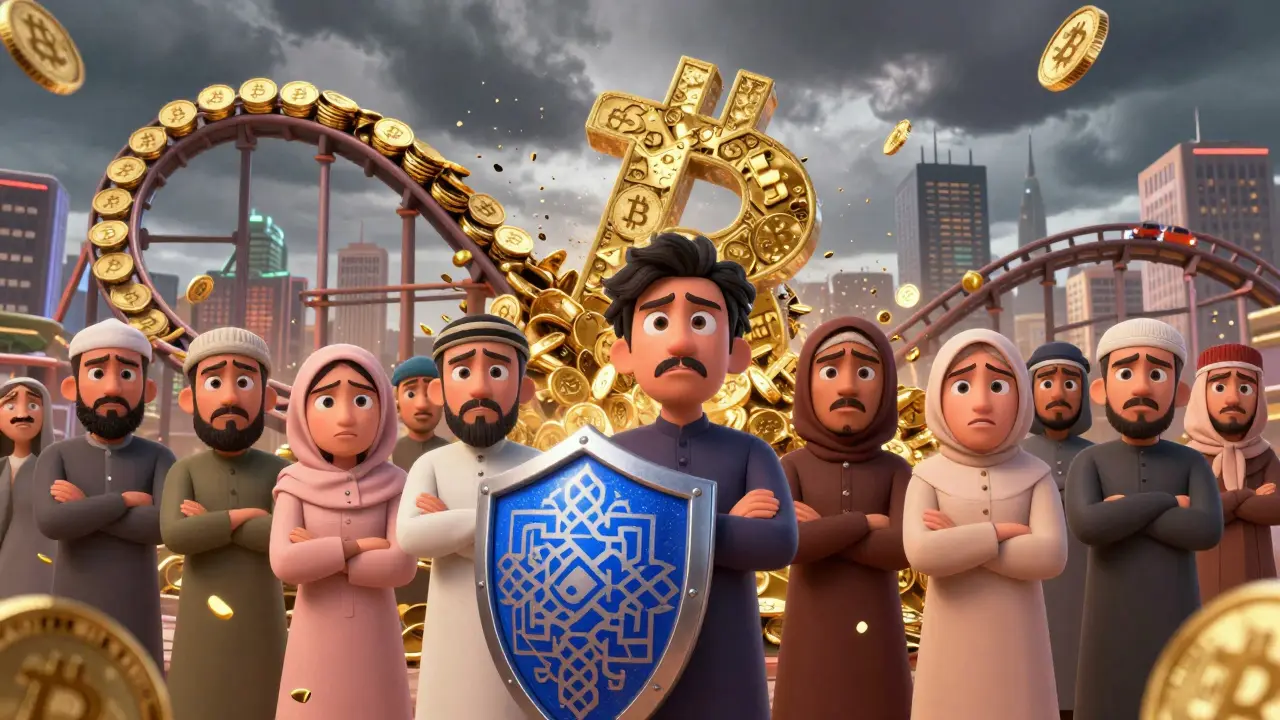
To understand the ban, you have to look at the specific reasons cited by Dr. Allam. The fatwa didn’t just say "no"; it provided a detailed theological and technical breakdown. The primary argument rests on the concept of gharar (excessive uncertainty) and maysir (gambling/speculation).
Under Islamic law, money must have intrinsic value or be backed by a recognized authority. Bitcoin, being decentralized and digital, fails this test according to the Egyptian scholars. Here are the key points from the 2017 fatwa:
- No Physical Existence: Bitcoin is described as having no tangible form, making it difficult to verify and secure in traditional terms.
- Lack of Regulatory Authority: There is no central bank or government body overseeing Bitcoin. In Islamic finance, oversight ensures fairness and prevents fraud.
- Extreme Volatility: The price swings of cryptocurrency create immense uncertainty. If you buy Bitcoin today, you might lose half its value tomorrow. This unpredictability violates the principle of clarity in contracts.
- Not Legal Tender: The fatwa explicitly states that Bitcoin is not an accepted medium of exchange by relevant authorities, meaning it cannot function as legitimate currency.
The ruling goes further, prohibiting not just buying and selling, but also mining, leasing, and even subscribing to services related to Bitcoin. It’s a total exclusion.
Security and National Safety Concerns
Beyond theology, the Egyptian Grand Mufti’s office highlighted serious security risks. This aspect of the fatwa is crucial because it shows that the ban wasn’t just about spiritual purity-it was about protecting the state and society.
The document specifically mentions the potential for Bitcoin to be used for illegal activities. At the time of the ruling in 2017, concerns about terrorism financing were high. The fatwa notes that cryptocurrencies can be used to evade security authorities, execute illegal purposes, and support armed groups like ISIS. Money laundering gangs were also cited as beneficiaries of anonymous transactions.
From a national security perspective, the lack of a central regulatory authority means the government cannot track flows of money. For a country like Egypt, which has faced significant economic pressure and inflation issues, allowing an unregulated currency to circulate poses a threat to the stability of the Egyptian Pound and the broader financial system. The fatwa frames Bitcoin as a penetration into cybersecurity and central banking systems, essentially viewing it as a hostile technology rather than a financial innovation.
How Does This Compare to Other Islamic Scholars?
Here is where it gets interesting. The Egyptian position is strict, but it is not universal across the Muslim world. Islamic jurisprudence (fiqh) allows for different interpretations based on context and evidence. While Egypt, along with Syria and some Saudi Arabian scholars, banned crypto, other experts argue for a more nuanced approach.
| Scholar/Authority | Ruling | Key Reasoning |
|---|---|---|
| Egyptian Grand Mufti (Shawky Ibrahim Allam) | Haram (Forbidden) | Lack of backing, high uncertainty (gharar), security risks, potential for illicit use. |
| Mufti Faraz Adam | Halal (Permissible) with conditions | Crypto has utility and legal entitlement. Can be treated as property or currency if screened for Sharia compliance. |
| Yusuf Al-Qaradaghi | Haram (Forbidden) | Bitcoin lacks real asset backing and resembles speculative credit markets. |
| Dr. Haitham al-Haddad | Haram (Forbidden) | No intrinsic value; purely speculative. |
Mufti Faraz Adam, a prominent researcher in Islamic fintech, offers a contrasting view. He argues that classical scholars looked at the "after-effect" and utility of something. Since cryptocurrencies have established networks, users, and use cases, they can be considered legitimate digital assets. Under his framework, Muslims can trade crypto if they pay zakat (Islamic tax) on their holdings and ensure the specific coin isn’t involved in haram industries (like alcohol or gambling). This creates a clear divide: follow the strict Egyptian ban, or follow the pragmatic utility-based approach.
Impact on Muslim Investors Today
So, what does this mean for you in 2026? If you live in Egypt or follow the guidance of Dar Al-Ifta, the answer is simple: you cannot participate. There are no loopholes. Trading platforms, mining operations, and accepting crypto for goods are all prohibited. This restriction limits access to the growing digital economy and potentially excludes Egyptians from early-stage technological advancements in blockchain.
However, for Muslims living outside Egypt, the situation is more complex. Many countries do not enforce religious fatwas as civil law. A Muslim in Canada, the UK, or Indonesia might choose to follow Mufti Adam’s guidance instead. This leads to a fragmented community where one group avoids crypto entirely, while another actively invests, screens tokens for Sharia compliance, and integrates them into their wealth management strategies.
The confusion arises when these two groups interact. Business partnerships can become tricky if one party considers crypto income haram. Family financial advice often splits along these scholarly lines. It’s not uncommon for families to have different investment portfolios based on which scholar they trust more.

Will the Fatwa Change?
Since 2017, the cryptocurrency world has evolved dramatically. We’ve seen the rise of stablecoins, regulated exchanges, and even Central Bank Digital Currencies (CBDCs). Some of the original concerns-like extreme volatility and total anonymity-have been mitigated by newer technologies and regulations.
Despite this, the Egyptian Grand Mufti’s office has not issued any reconsideration of the 2017 fatwa. The language used was broad, covering "any and all uses of cryptocurrency," which suggests it would apply to new developments like CBDCs unless explicitly exempted. However, the academic debate continues. Scholars who criticize the Egyptian ruling argue that principles like maslahah (public interest) should have been weighed more heavily. As crypto becomes more integrated into global finance, the pressure on conservative rulings may increase.
For now, the stance remains firm. But keep an eye on emerging Islamic finance products. We are already seeing Sharia-compliant tokenization of real-world assets (like gold or real estate) on blockchains. These projects aim to satisfy both the technological benefits of blockchain and the religious requirements of Islamic law. They might be the bridge that eventually changes minds.
Practical Steps for Muslim Crypto Users
If you are navigating this space, here is how to proceed responsibly:
- Know Your Source: Decide which scholarly opinion you will follow. Are you aligning with the Egyptian Grand Mufti’s caution, or a more permissive scholar like Mufti Adam? Consistency is key.
- Screen Your Assets: If you choose to invest, ensure the cryptocurrency or token you’re buying has real utility and isn’t tied to haram industries. Avoid meme coins or highly speculative assets if you want to minimize gharar.
- Pay Zakat: If your scholar considers crypto as property or currency, you likely need to pay zakat on its value each lunar year. Consult a local expert to calculate this correctly.
- Avoid Leverage and Margin: Even if spot trading is permissible under your chosen interpretation, using leverage involves interest and excessive risk, which is universally considered haram.
- Stay Informed: Regulations change. Keep up with both local laws and updates from Islamic finance councils. The landscape is moving fast.
The Egyptian Grand Mufti’s fatwa is a landmark decision that prioritizes security and traditional definitions of money. While it closes the door for many, it doesn’t close the entire conversation. As technology matures and new financial models emerge, the dialogue between faith and finance will continue to evolve. For now, clarity comes from knowing your own values and choosing a path that aligns with your conscience and your community’s guidance.
Is Bitcoin halal or haram according to the Egyptian Grand Mufti?
According to the 2017 fatwa issued by Dr. Shawky Ibrahim Allam, the Egyptian Grand Mufti, Bitcoin and all cryptocurrencies are strictly haram (forbidden). The ruling prohibits buying, selling, mining, and using crypto for any transaction due to concerns over uncertainty, lack of regulatory oversight, and potential for illicit use.
Why did the Egyptian Grand Mufti declare crypto haram?
The main reasons include the lack of physical existence, absence of a central regulatory authority, high volatility leading to uncertainty (gharar), and the risk of being used for illegal activities such as money laundering and terrorism financing. The fatwa views crypto as a threat to national financial security.
Are there Islamic scholars who consider crypto halal?
Yes. Scholars like Mufti Faraz Adam argue that cryptocurrencies can be considered halal if they have utility and legal entitlement. He suggests that crypto can be treated as digital property or currency, provided investors screen for Sharia compliance and pay zakat on their holdings.
Does the Egyptian fatwa apply to stablecoins or CBDCs?
The 2017 fatwa uses broad language covering "any and all uses of cryptocurrency." Therefore, technically, it applies to stablecoins and Central Bank Digital Currencies (CBDCs) as well, unless a new specific ruling exempts them. As of 2026, no such exemption has been publicly announced by Dar Al-Ifta.
Can Muslims in other countries follow the Egyptian fatwa?
Muslims anywhere can choose to follow the Egyptian Grand Mufti’s guidance, as al-Azhar University holds significant respect globally. However, it is not legally binding outside Egypt. Many Muslims in Western countries follow alternative scholarly opinions that permit crypto under certain conditions.
What is gharar in the context of cryptocurrency?
Gharar refers to excessive uncertainty or ambiguity in a contract. In crypto, this relates to the unpredictable price volatility and the lack of clear underlying value. Islamic law requires contracts to be transparent and free from undue risk, which critics argue Bitcoin fails to meet.