When a shipment of medicine goes missing, or a batch of spoiled food hits store shelves, companies don’t just lose money-they lose trust. Traditional supply chains are built on paper trails, email exchanges, and siloed databases. It’s slow. It’s messy. And it’s easy to cheat. That’s where supply chain blockchain platforms come in. They don’t just digitize the process-they rebuild it from the ground up with a single, unchangeable record that everyone in the chain can see and trust.
What Makes a Blockchain Platform Work for Supply Chains?
Not all blockchains are the same. Public blockchains like Bitcoin or Ethereum are open to anyone, which sounds great until you realize your competitor can see your supplier lists and pricing. Enterprise supply chains need privacy, control, and speed. That’s why nearly all serious platforms use permissioned blockchains-where only approved companies can join and view data. The core benefits are simple but powerful:- Provenance: You know exactly where every part or product came from-from the mine to the factory to the shelf.
- Immutability: Once a shipment is logged, no one can delete or alter it. No fake certificates. No backdated records.
- Consensus: Every participant agrees on what’s true. No more arguing over who sent what, when.
- Finality: Everyone sees the same version of the ledger. No more reconciliation headaches.
These aren’t theoretical. They’re what Walmart, Maersk, and Pfizer are using right now to fix real problems.
IBM Blockchain: The Food and Pharma Leader
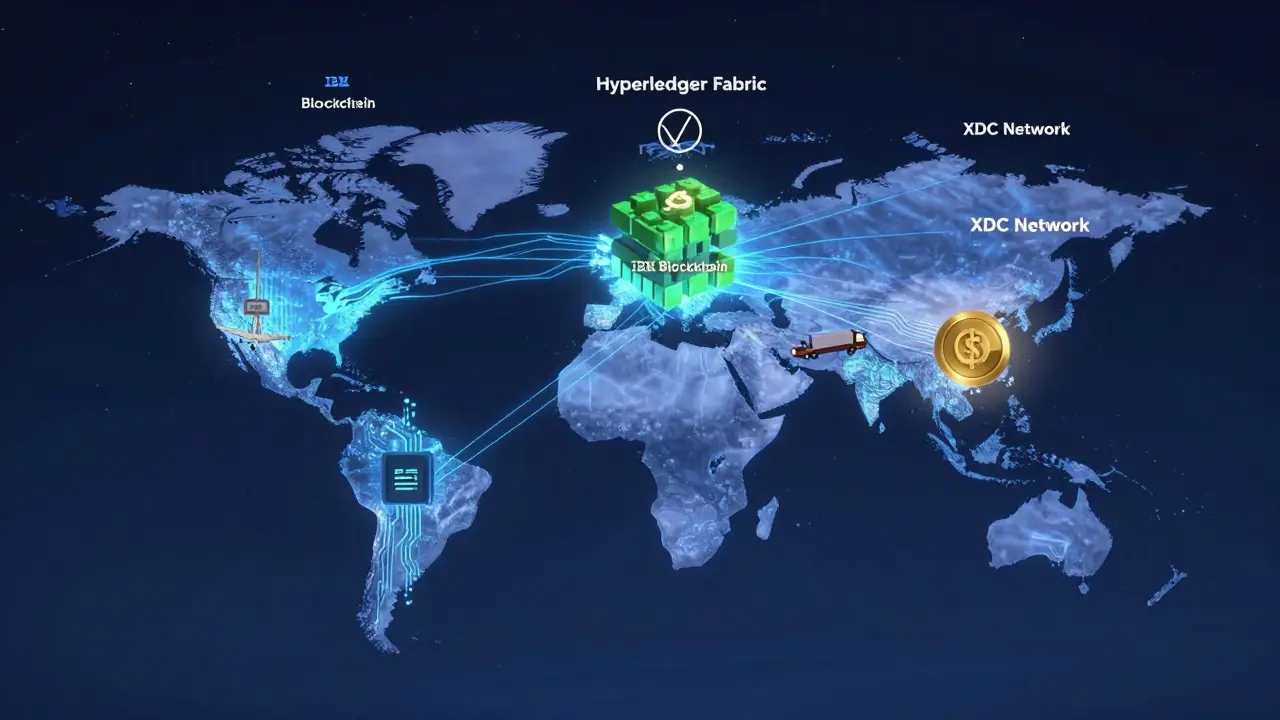
If you’ve ever bought a mango in the U.S., there’s a good chance it was tracked on IBM Blockchain. Their Food Trust network connects over 10,000 participants-farmers, shippers, retailers like Walmart and Kroger-on a single ledger. Before this, tracing the origin of a contaminated mango took 7 days. Now? It takes 2.2 seconds. Built on Hyperledger Fabric, IBM’s platform adds enterprise-grade security: hardware security modules (HSMs) protect encryption keys, and it integrates directly with SAP and Oracle systems. That’s why 68% of enterprise users say it’s the easiest to connect to old systems. In pharma, IBM’s Transparent Supply solution cut dispute resolution costs by 41% and reduced documentation time by 28%. The 2025 update, Transparent Supply 2.0, now uses AI to flag anomalies-like a shipment sitting too long in a warehouse-reducing false alerts by 37%. It’s not cheap. Premium support runs $185,000 a year. But for companies under strict FDA traceability rules, the cost of not using it is higher.Hyperledger Fabric: The Manufacturing Backbone
If you drive a car, wear a watch, or use a smartphone, chances are a part of it was tracked using Hyperledger Fabric. It’s the most widely adopted platform in industrial supply chains, holding 47% of that market according to Debut Infotech’s 2025 analysis. Why? Flexibility. Unlike IBM’s more rigid structure, Hyperledger Fabric lets companies pick their own consensus rules, customize access controls, and plug in their own smart contracts. That’s critical when you’re managing hundreds of tier-2 and tier-3 suppliers across continents. Maersk’s TradeLens platform, which handled over $1.2 trillion in global trade before it shut down in late 2023, was built on Fabric. It proved blockchain could replace stacks of paper bills of lading and letters of credit. The platform’s downfall wasn’t the tech-it was the lack of universal participation. Too many carriers and ports refused to join. Fabric 3.0, released in January 2025, fixed one of its biggest weaknesses: interoperability. Now, it can talk to other blockchain networks. That’s a big deal for supply chains that use multiple platforms. The downside? It’s complex. Developers need 3 to 6 months of training to build on it. And while the Linux Foundation offers solid documentation (rated 4.3/5), most companies need to hire expensive specialists-$145,000 to $185,000 a year-to make it work.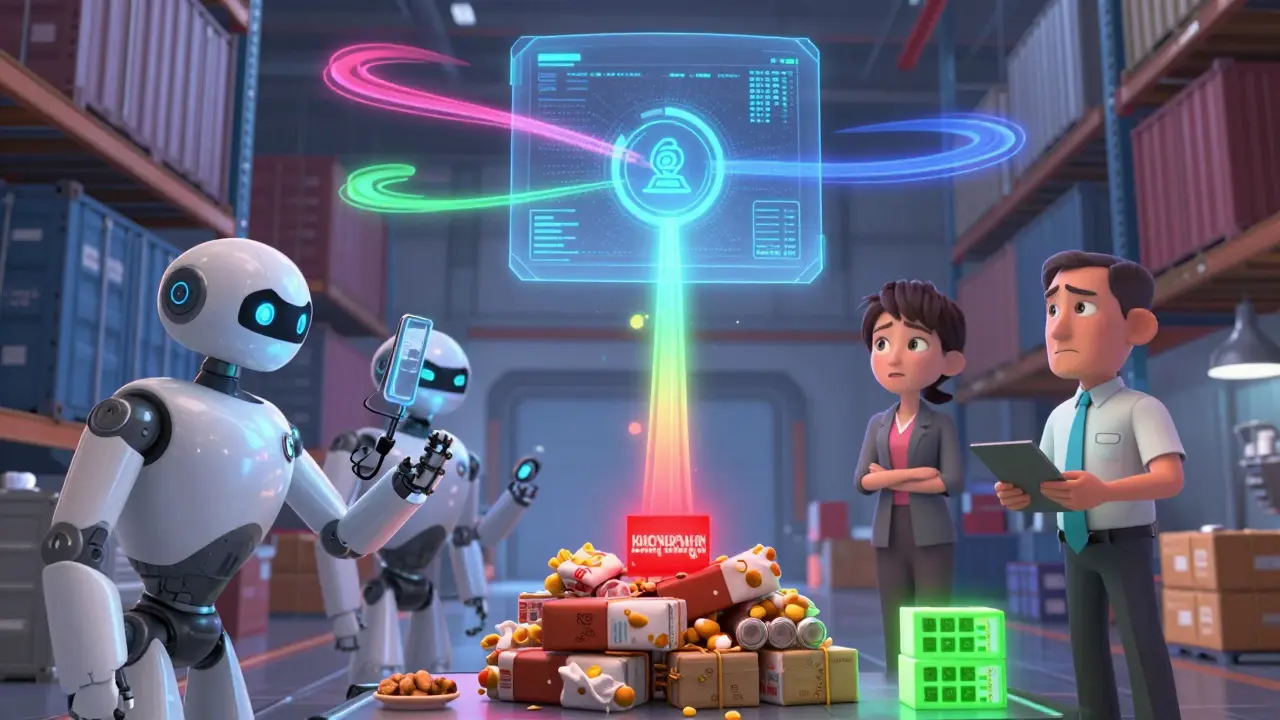
XDC Network: The Trade Finance Specialist
Most supply chain blockchains focus on logistics. XDC Network focuses on money. It’s built for trade finance-the messy, paper-heavy world of letters of credit, payment guarantees, and cross-border settlements. Before XDC, a letter of credit could take 5 to 10 business days to clear. Now? It’s done in minutes. The platform uses a hybrid model: private for sensitive data, public for verification. That means banks, importers, and exporters can all validate transactions without exposing proprietary details. It handles 2,000 transactions per second-faster than most public chains-and is used by over 200 financial institutions and trading firms. It captured 28% of all trade finance blockchain implementations in 2025, according to TechTarget. It’s not perfect. Developer satisfaction is lower than Hyperledger’s (3.7/5), and its ecosystem is smaller. But if your supply chain runs on invoices and payments, not just boxes and trucks, XDC is the most focused tool available.Why Other Blockchains Don’t Work for Supply Chains
You might think, “Why not just use Ethereum?” It’s popular. It’s well-known. But public blockchains are too slow (15-45 transactions per second) and too open. Your competitors can see your supplier names, your inventory levels, your pricing. Even Ethereum’s enterprise versions, like ConsenSys Quorum, struggle with scalability and cost. A single transaction on Ethereum can cost $5-$10 during peak times. In a supply chain with thousands of daily shipments? That’s $50,000 a month in fees. Permissioned platforms like IBM, Hyperledger, and XDC avoid this. They’re designed for business-not speculation.Who’s Using This, and What’s the Real Impact?
The numbers don’t lie:- Walmart: Reduced mango traceability from 7 days to 2.2 seconds. Cut recall investigation costs by 63%.
- FedEx: Automated 76% of shipment verification. Cut paperwork by 68% and sped up delivery confirmations by 52%.
- Pfizer: Met FDA’s 2027 traceability deadline early. Reduced counterfeit drug risks by 89% in pilot regions.
But not everyone wins. One European automaker spent $4.2 million on a blockchain pilot-and only improved processes by 19%. Why? They didn’t fix broken workflows. They just put bad processes on a blockchain.
As MIT’s Yossi Sheffi says: “Blockchain solves data sharing, not data quality.” If your suppliers are sending fake inspection reports, no blockchain will fix that. You have to fix the process first.
Implementation Challenges You Can’t Ignore
This isn’t a plug-and-play tool. Here’s what you’re really signing up for:- Integration cost: Connecting to your ERP system averages $285,000 per point. Some companies spend over $1 million just to get started.
- Participation: If your top 3 suppliers won’t join, the system fails. 43% of pilot projects died because of this.
- Standardization: No two platforms speak the same language. A shipment moving from an IBM network to a Hyperledger network can’t automatically share data.
- Skills gap: There are fewer than 5,000 experienced blockchain architects globally. Hiring one means paying top dollar.
Most implementations take 6-9 months. And the learning curve is steep. IBM’s academy takes 4 months just to onboard architects. Hyperledger requires deep Go programming knowledge.
What’s Next? AI, IoT, and Digital Twins
The next wave isn’t just about tracking-it’s about predicting. IBM’s AI anomaly detection is just the start. By 2027, Gartner predicts 75% of large enterprises will combine blockchain with AI to forecast delays, shortages, or fraud before they happen. Siemens’ new Digital Supply Chain Twin platform combines blockchain with digital twins-virtual replicas of physical supply chains. In tests, it improved disruption prediction accuracy by 44%. IoT sensors are also getting plugged in. Temperature, humidity, shock data from shipping containers now auto-logs onto the blockchain. If your coffee beans get too hot, the system knows-and alerts you before they’re ruined.Is It Worth It for Your Business?
If you’re in food, pharma, or high-value manufacturing, the answer is yes. Regulatory pressure is real. The FDA and EU’s Digital Product Passport mandate blockchain-grade traceability by 2027. Waiting means fines and lost customers. But if you’re a small distributor with 5 suppliers? The cost and complexity aren’t worth it yet. Start with a pilot. Pick one high-risk product. Track it from source to customer. See if the data improves decisions. The goal isn’t to go all-in on blockchain. It’s to stop guessing where your stuff is-and start knowing.What’s the difference between public and permissioned blockchains in supply chains?
Public blockchains like Ethereum are open to anyone, making them slow and insecure for business use. Permissioned blockchains, like IBM Blockchain and Hyperledger Fabric, only allow approved companies to join. They’re faster, private, and designed for enterprise needs like data confidentiality and high transaction volume.
Can blockchain prevent counterfeit products in supply chains?
Yes, but only if every step is recorded on the chain. A blockchain can’t stop someone from making a fake product-but it can make it nearly impossible to fake the paperwork, certifications, or shipping records. Companies like Pfizer use it to verify drug authenticity from factory to pharmacy, cutting counterfeit risks by over 80% in pilot programs.
How long does it take to implement a supply chain blockchain platform?
Most full implementations take 6 to 9 months. Integration with existing systems like SAP or Oracle adds 8-12 weeks. Smaller pilots focused on one product line can be done in 3-4 months. The biggest delays come from getting suppliers to join and agreeing on data standards.
What’s the biggest reason supply chain blockchain projects fail?
Most fail because companies try to digitize broken processes instead of fixing them. If your suppliers send fake inspection reports, putting that data on a blockchain just makes the lies permanent. Success requires reengineering workflows first-then using blockchain to enforce them.
Are there regulatory requirements pushing companies to use blockchain?
Yes. The FDA’s Drug Supply Chain Security Act requires full traceability of pharmaceuticals by 2027. The EU’s Digital Product Passport will require blockchain-style tracking for electronics, textiles, and batteries by 2026. Companies in these industries have no choice but to adopt compliant systems.
Can small businesses use supply chain blockchain platforms?
Not directly. These platforms are built for enterprises with complex networks and legal teams. But small suppliers can join as participants in larger networks-like a farmer selling to Walmart via IBM Food Trust. You don’t need to build the system; you just need to feed data into it.
Prateek Chitransh
December 28, 2025 AT 21:56And don't get me started on 'permissioned' blockchains. Sounds like a club where only the rich get to see the ledger. Real transparency, huh?
Michelle Slayden
December 30, 2025 AT 00:49christopher charles
December 31, 2025 AT 23:02Vernon Hughes
January 2, 2026 AT 03:42Brandon Woodard
January 3, 2026 AT 04:37Johnny Delirious
January 4, 2026 AT 12:13Bianca Martins
January 5, 2026 AT 18:03alvin mislang
January 6, 2026 AT 05:19Monty Burn
January 6, 2026 AT 10:19Kenneth Mclaren
January 8, 2026 AT 07:24Alexandra Wright
January 9, 2026 AT 07:34Jack and Christine Smith
January 11, 2026 AT 07:17Jackson Storm
January 12, 2026 AT 01:10Raja Oleholeh
January 13, 2026 AT 20:59Alison Hall
January 15, 2026 AT 05:07Amy Garrett
January 15, 2026 AT 11:23Haritha Kusal
January 15, 2026 AT 19:31