Ever tried swapping large amounts of stablecoins and watched your profit vanish due to high slippage? If you operate on the BNB Chain, Ellipsis might be the tool you’ve been looking for. It is a specialized decentralized exchange designed specifically for low-slippage trades, particularly for assets like USDT, BUSD, and other pegged tokens. Unlike general-purpose exchanges that handle thousands of volatile coins, Ellipsis focuses on one job: making sure your stablecoin swaps cost you as little as possible in fees and price impact.
The native token of this protocol is EPX, which serves as the reward mechanism for liquidity providers and stakers. But what exactly makes this coin different from the hundreds of other DeFi tokens out there? To understand its value, we need to look at its origins, how it technically works, and where it fits into the broader landscape of blockchain finance.
Origins and The Shift From EPS to EPX
Ellipsis didn’t start as an independent project. It began in April 2021 as an authorized fork of Curve Finance, one of the most successful protocols in the Ethereum ecosystem. The goal was simple: bring Curve’s efficient stableswap technology to the BNB Smart Chain, where transaction costs are significantly lower than on Ethereum mainnet.
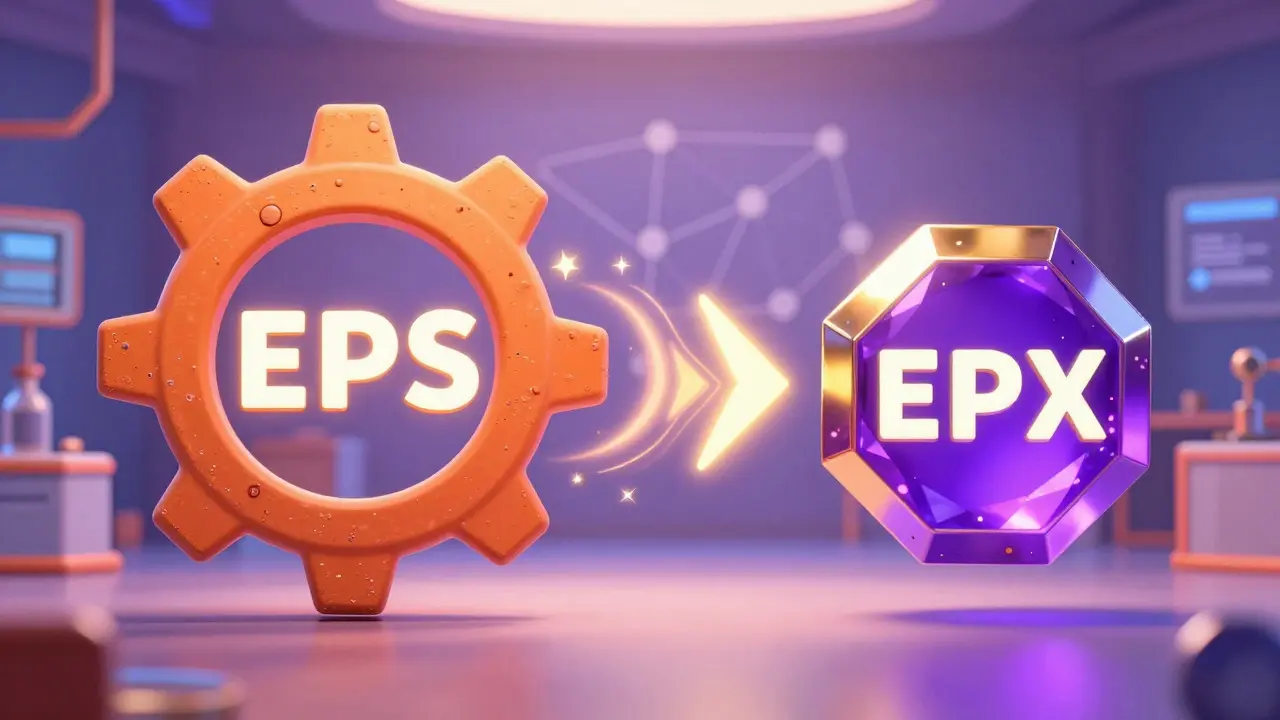
Initially, the platform used a token called EPS. However, in May 2022, the team executed a migration to a new token, EPX. This wasn’t just a name change; it marked the launch of Ellipsis V2.0. The conversion rate was set at 88 EPX for every 1 EPS. This upgrade introduced critical improvements, including a pool registry for better transparency and multiple GitHub repositories to open up development processes. For users, this meant a more robust and auditable system, though it did cause some confusion during the transition period.
How Ellipsis Works: The Stableswap Advantage
Most decentralized exchanges use an Automated Market Maker (AMM) model based on the constant product formula (x*y=k). While effective for volatile assets, this model often results in higher slippage when swapping two assets with similar values, like USD-pegged stablecoins. Ellipsis uses a modified AMM algorithm optimized for these pairs.
Here is why that matters:
- Lower Slippage: On general DEXs like PancakeSwap, swapping $100,000 worth of stablecoins might result in 0.5% to 1.0% slippage. On Ellipsis, that figure drops to under 0.1%.
- Cheaper Transactions: Because it runs on BNB Chain, gas fees average between $0.05 and $0.10 per transaction, compared to potentially $1-$50 on Ethereum during congestion.
- Faster Settlement: Trades settle in approximately 3 seconds, offering a snappy user experience.
The protocol operates without admin access to user funds, meaning no central authority can freeze your assets or manipulate pools unilaterally. This decentralization is a key trust factor for DeFi natives. Security has been vetted by Trail of Bits, a reputable audit firm, which found no critical vulnerabilities, though they noted moderate risks related to governance attack vectors.
Understanding the EPX Token Utility
If you hold EPX, what do you actually get? The token isn’t just a speculative asset; it has functional utility within the ecosystem. When you provide liquidity to Ellipsis pools, you earn trading fees. These fees are split 50:50 between direct liquidity providers and those who stake their EPX tokens in the protocol’s staking contract.
This creates a flywheel effect: as trading volume increases, fee rewards grow, incentivizing more people to stake EPX. Stakers also gain voting rights in future governance proposals, giving them a say in which new pools should be added or how treasury funds are managed. Currently, the total supply of EPX is around 12.4 billion tokens, with a maximum cap of 132 billion, ensuring long-term inflationary pressure is controlled.
| Feature | Ellipsis (EPX) | PancakeSwap (CAKE) |
|---|---|---|
| Primary Focus | Stablecoin & Pegged Asset Swaps | General Token Trading & Yield Farming |
| Slippage (Stable Pairs) | < 0.1% | 0.5% - 1.0% |
| Liquidity Pools | ~15 Specialized Pools | 1,200+ Pools |
| Daily Trading Volume | ~$1.5 Million (EPX specific) | ~$1.2 Billion (Platform-wide) |
| Best For | High-volume stablecoin arbitrage | Trading diverse altcoins |
Market Position and Competitive Landscape
Ellipsis occupies a niche but vital spot in the DeFi world. It doesn’t compete directly with giants like Uniswap for general trading volume. Instead, it competes with Curve Finance on Ethereum, but wins on cost efficiency. As of late 2022, Ellipsis held about 0.8% market share in the BNB Chain DEX sector, ranking 12th behind heavyweights like PancakeSwap and Trader Joe.
The Total Value Locked (TVL) in Ellipsis pools stood at approximately $184 million during its peak periods. While this sounds modest compared to PancakeSwap’s billions, it represents a concentrated base of serious yield farmers and institutional traders. Notably, three venture capital firms-Binance Labs, CMS Holdings, and GSR Markets-have backed the project, signaling confidence in its infrastructure role.
However, competition is heating up. Cross-chain protocols like Synapse Protocol have started capturing some of Ellipsis’s potential market share by offering multi-chain stableswap capabilities. If BNB Chain’s overall DeFi market share declines relative to Ethereum Layer 2 solutions, Ellipsis could face headwinds. Analysts suggest that if BNB Chain falls below 3% of total DeFi TVL, Ellipsis might lose 60-70% of its user base.
Risks and User Experience Challenges
No investment is without risk, and EPX is no exception. The most significant challenge for retail investors is liquidity depth. While great for small-to-medium swaps, selling large positions can be difficult. One user reported taking three days to sell 500,000 EPX, requiring over 20 separate transactions due to shallow order books on secondary markets.
Additionally, the Annual Percentage Yield (APY) for staking has fluctuated wildly. In Q1 2022, APYs hit 85%, but by Q3, they dropped to around 22% as more liquidity entered the pools. This volatility means returns are not guaranteed and depend heavily on network activity.
For beginners, the learning curve involves setting up a Web3 wallet like MetaMask or Trust Wallet and understanding impermanent loss. For stablecoin pairs, impermanent loss is minimal (typically 0.5-1.2% monthly), making it a safer entry point into DeFi yield farming compared to volatile token pairs.
Future Outlook and Roadmap
The roadmap for Ellipsis includes integration with BNB Chain’s cross-chain messaging protocol, expected to enable multi-chain stableswap functionality. There is also a planned governance dashboard for EPX holders to streamline decision-making. Changpeng Zhao, CEO of Binance, has publicly acknowledged Ellipsis as an important part of BNB Chain’s DeFi infrastructure, which provides a strong endorsement.
Price predictions vary widely. Some analysts forecast EPX could reach $0.17 by 2030 if BNB Chain expands its dominance, while others remain cautious, citing the narrow focus of the project. The key metric to watch is not just the token price, but the Total Value Locked in the pools. If TVL grows consistently, it indicates genuine utility adoption rather than speculative hype.
Frequently Asked Questions
Is Ellipsis (EPX) a good investment?
It depends on your strategy. If you believe in the growth of BNB Chain and the demand for efficient stablecoin swaps, EPX offers utility-driven value. However, it carries higher risk than major blue-chip cryptos due to its niche focus and lower liquidity. It is best suited for experienced DeFi users who understand impermanent loss and can monitor APY changes.
How is Ellipsis different from Curve Finance?
Ellipsis is an authorized fork of Curve Finance built specifically for the BNB Smart Chain. While both use similar stableswap algorithms, Ellipsis benefits from BNB Chain’s lower transaction fees and faster block times. Curve Finance operates primarily on Ethereum, where gas fees can be significantly higher during peak usage.
Where can I buy EPX tokens?
EPX is traded on several decentralized exchanges on the BNB Chain, including PancakeSwap and the Ellipsis DEX itself. You can also find it on some centralized exchanges. Always check the current liquidity and spread before executing large trades to minimize slippage.
What is the maximum supply of EPX?
The maximum supply of EPX is capped at 132,000,000,000 tokens. The current circulating supply is approximately 12.4 billion tokens. This hard cap prevents unlimited inflation, which is a positive factor for long-term holders.
Do I need to stake EPX to earn rewards?
Yes, to earn a share of the trading fees, you must stake your EPX tokens in the protocol’s staking contract. Liquidity providers also earn rewards, but staking allows you to capture the other 50% of the fee distribution without needing to manage LP positions directly.