Imagine trying to buy Bitcoin while standing in the middle of Seoul. You pull out your phone, open an app, and within minutes, your Korean Won turns into digital assets. That is the reality for millions of people in South Korea, thanks to Upbit. But if you are sitting in London, New York, or anywhere outside Asia, does this platform make sense for you? The short answer is complicated. Upbit is a beast in its home market, but it feels like a foreign object to international traders.
This review cuts through the hype. We will look at the real costs, the strict rules, and whether Upbit’s reputation for safety holds up against global giants like Binance or Coinbase. If you are looking for a place to trade KRW pairs or want deep liquidity in Asian markets, read on. If you just want to buy ETH with USD and forget about it, you might want to keep scrolling.
The Quick Takeaways
- Best For: Residents of South Korea, Singapore, Indonesia, and Thailand who need local fiat support (KRW, SGD, IDR).
- Avoid If: You are outside these regions, need USD/EUR trading pairs, or want advanced features like futures and leverage.
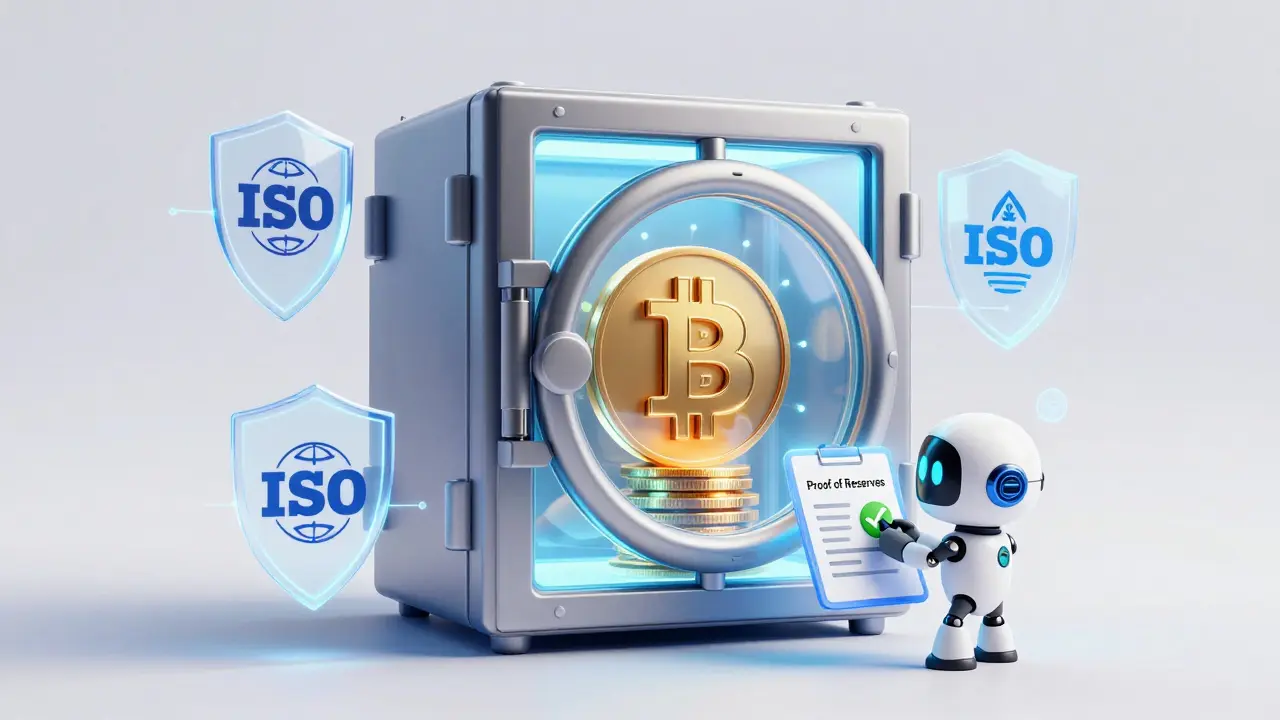
- Security Score: High. Upbit maintains ISO certifications and publishes quarterly proof-of-reserves audits.
- Fees: Competitive for spot trading (0.1% - 0.25%), but higher than some offshore competitors.
- Support: Excellent in Korean, slow and limited in English.
What Is Upbit and Who Runs It?
To understand Upbit, you have to understand its parent company. Upbit is operated by Dunamu & Company, which is a subsidiary of Kakao. If you use Line or KakaoTalk in Asia, you know Kakao. It is the tech giant behind messaging, gaming, and payments in South Korea. This connection matters because it gives Upbit a level of trust and infrastructure that standalone crypto startups often lack.
Launched in October 2017, Upbit quickly became the largest cryptocurrency exchange in South Korea. By 2025 data from CoinMarketCap, it consistently ranks among the top 10 exchanges globally by volume. However, its dominance is regional. In South Korea, Upbit commands roughly 85% of the domestic crypto market share. That is huge. But globally, it trails behind Binance, Coinbase, and Kraken.
The platform supports over 180 digital assets, including major coins like Bitcoin (BTC), Ethereum (ETH), and Solana (SOL). However, unlike global exchanges, Upbit focuses heavily on spot trading. You won’t find complex derivatives, high-leverage futures, or NFT marketplaces here. It is a straightforward place to buy and sell crypto, nothing more.
| Feature | Upbit | Binance | Coinbase |
|---|---|---|---|
| Primary Market | Asia (Korea) | Global | US/Europe |
| Fiat Support | KRW, SGD, IDR, THB | 100+ Currencies | USD, EUR, GBP |
| Trading Types | Spot Only | Spot, Futures, Margin | Spot, Staking |
| Regulation | Strict (FSC Korea) | Mixed/Offshore | Strict (SEC/FINRA) |
| English Support | Limited | Excellent | Excellent |
Security and Regulation: The Strong Suit
If there is one thing Upbit does better than almost anyone else, it is playing by the rules. South Korea has some of the strictest cryptocurrency regulations in the world, following the Virtual Asset User Protection Act passed in 2021. Upbit operates under the watchful eye of the Financial Services Commission (FSC).
What does this mean for you as a user? It means your money is safer here than on many offshore exchanges. Upbit publishes quarterly proof-of-reserves reports audited by firms like Kudelski Security. These reports confirm that the exchange actually holds the assets it claims to hold. This transparency was a direct response to past industry failures and has become a gold standard in Asia.
Technically, Upbit stores 98% of all digital assets in cold storage. Cold storage means offline wallets that hackers cannot access remotely. They also use AI-powered anomaly detection to spot suspicious login attempts or withdrawal patterns in real-time. In 2024, Upbit achieved ISO 27001, 27017, and 27018 certifications, which are international standards for information security management.
However, security isn't just about code; it's about process. Upbit requires mandatory two-factor authentication (2FA) for all withdrawals. While this adds a step to your routine, it prevents unauthorized access. Critics sometimes point out that Upbit lacks penetration testing disclosures compared to some Western rivals, earning a B-grade from CER.live despite an A-grade from CertiK. Still, no major hacks have compromised user funds since their early days, which speaks volumes.
Fees and Trading Costs
Let’s talk money. Trading fees can eat into your profits faster than you think. Upbit uses a maker-taker fee model, but the rates vary depending on the currency pair you trade.
- KRW Pairs (Fiat): Typically around 0.25% for both makers and takers. Some recent reports suggest promotional rates of 0.05% for specific high-volume users, but 0.25% is the standard baseline.
- Crypto-to-Crypto (BTC/USDT): Usually lower, around 0.2%. This makes arbitrage between stablecoins and Bitcoin relatively cheap.
Compare this to Binance, which offers spot fees as low as 0.1% (or even 0% during promotions), and Upbit looks slightly more expensive. However, fees aren't the only cost. If you are converting USD to KRW to trade on Upbit, you will face bank transfer fees and exchange rate spreads, which can be significant.
There are no hidden deposit fees for internal transfers between Upbit accounts. Withdrawal fees depend on the blockchain network used. For example, withdrawing Bitcoin incurs a network fee that fluctuates with congestion. Upbit updates these fees regularly, so always check the current schedule before moving large amounts off-platform.
User Experience and Interface
When you first log into Upbit, the interface feels clean but utilitarian. It is designed for speed, not aesthetics. The desktop website provides a full charting experience powered by TradingView, allowing you to analyze price movements with technical indicators. The mobile apps for iOS and Android mirror this functionality, letting you trade on the go.
For beginners, the "Simple Trade" mode hides the complex order books and lets you buy/sell at market price with one click. For experienced traders, the "Advanced Trade" mode reveals limit orders, stop-losses, and depth charts. This dual approach works well, though the transition between modes can be confusing for new users.
One major pain point is language. The Korean version of the site is polished, intuitive, and fully supported. The English version, however, feels like an afterthought. Menus may lag, documentation is sparse, and customer support responses in English can take up to 48 hours. If you don't speak Korean, you are essentially flying blind when things go wrong.
The KYC Hurdle: Verification Levels
You cannot trade much on Upbit without verifying your identity. Upbit uses a four-tier KYC (Know Your Customer) system that ties your verification level to your daily withdrawal limits. This is stricter than most global exchanges.
- Level 1 (Email Verification): Very basic. Allows small trades but minimal withdrawals (500,000 KRW daily).
- Level 2 (ID Upload): Requires uploading a government ID. Unlocks 5 million KRW daily limits.
- Level 3 (Video Verification): You must record a video holding your ID. Unlocks 50 million KRW daily limits.
- Level 4 (In-Person Verification): Required for the highest limits (500 million KRW daily). This involves visiting a partner bank or branch in Korea.
For international users, reaching Level 3 or 4 is nearly impossible unless you live in Singapore, Indonesia, or Thailand, where Upbit has localized entities. Even then, the process takes time. Average verification times range from 24 to 72 hours. During periods of high traffic, this can stretch longer, leaving your funds stuck in limbo.
Who Should Use Upbit? (And Who Shouldn't)
Upbit is not a one-size-fits-all solution. Its value depends entirely on where you live and what you want to do.
Use Upbit if:
- You live in South Korea and need to convert KRW to crypto easily.
- You reside in Singapore, Indonesia, or Thailand and want a regulated local exchange.
- You prioritize regulatory compliance and security over advanced features.
- You are an institutional trader needing deep liquidity in Asian markets.
Avoid Upbit if:
- You are based in the US, Europe, or other non-Asian regions (you likely won't be able to sign up).
- You want to trade futures, options, or use leverage.
- You expect instant, English-speaking customer support.
- You want to earn interest on your crypto holdings (staking products are limited).
Final Thoughts
Upbit remains the king of South Korea's crypto scene for good reason. It is secure, regulated, and deeply integrated into the local financial ecosystem. For Koreans, it is the default choice. For the rest of the world, it is a niche player. Unless you have a specific need for KRW pairs or live in one of its expanded Asian markets, global alternatives like Coinbase or Binance offer better accessibility, lower fees, and richer feature sets.
Before signing up, ask yourself: Do I need what Upbit offers, or am I just chasing its brand name? If you are outside its core markets, the friction of language barriers and verification hurdles will likely outweigh the benefits. Stay safe, verify your sources, and choose the tool that fits your location and goals.
Can I use Upbit if I live in the United States?
Generally, no. Upbit primarily serves residents of South Korea, Singapore, Indonesia, and Thailand. Due to strict US securities laws and Upbit's regulatory focus on Asia, American residents typically cannot create accounts or withdraw funds. You should use US-regulated exchanges like Coinbase or Kraken instead.
Is Upbit safe for storing large amounts of crypto?
Yes, Upbit is considered very safe. It stores 98% of assets in cold storage and undergoes regular third-party audits. However, for long-term holding of significant wealth, it is still recommended to move your crypto to a personal hardware wallet rather than leaving it on any exchange, regardless of how secure it is.
How long does KYC verification take on Upbit?
Verification usually takes between 24 to 72 hours. Level 1 and 2 verifications are often faster, while Level 3 (video verification) may take longer during peak times. Level 4 requires in-person verification in Korea, which adds logistical time.
Does Upbit offer English customer support?
Yes, but it is limited. English support is available via email, but response times can be slow (up to 48 hours). There is no 24/7 live chat in English. For urgent issues, Korean speakers receive much faster assistance through live chat.
What cryptocurrencies can I trade on Upbit?
Upbit lists over 180 digital assets, including Bitcoin, Ethereum, Solana, and various altcoins. However, it tends to list fewer meme coins and newer speculative tokens compared to global exchanges like Binance. The selection is curated for stability and regulatory compliance.
Are there minimum deposit requirements?
There are no fixed minimums for bank transfers, but practical minimums exist due to network fees. For example, you typically need at least 0.0001 BTC to trade Bitcoin effectively. Fiat deposits via bank transfer usually require a minimum amount set by your bank, often around 50,000 KRW.