Indonesia Crypto Payment Ban: What It Means for Users and Local Crypto Activity
When Indonesia banned using cryptocurrency, digital assets used for buying goods and services as payment in 2020, it didn’t stop people from holding or trading it. The ban targeted crypto payments, using coins like Bitcoin or USDT to pay for coffee, rent, or online services—not owning or exchanging them. This distinction matters because millions of Indonesians still trade crypto daily, not to pay for stuff, but to protect savings from inflation and bypass slow banks. The central bank, Bank Indonesia, wanted to keep control over the rupiah, but it didn’t shut down the underground crypto economy—it just pushed it further into the shadows.
What you’ll find in this collection isn’t about legal loopholes or protest movements. It’s about real behavior: how people in Indonesia use crypto like a parallel financial system. They trade on peer-to-peer platforms, swap USDT for cash in markets, and avoid regulated exchanges that require heavy KYC. This isn’t unique to Indonesia—similar patterns show up in Tunisia, a country that bans crypto use entirely but runs blockchain experiments, or Ecuador, where cash-based Bitcoin trades thrive because banks are unreliable. The common thread? When official systems fail, people turn to crypto—not for speculation, but for survival.
These posts don’t sugarcoat it. You’ll read about fake exchanges like EtherMuim and Armoney that prey on newcomers, and real platforms like DeDust and Raydium that offer real DeFi access without banks. You’ll see how crypto mining, using hardware to validate blockchain transactions in Kazakhstan shifted globally, and how Iran’s military runs illegal mines—proof that crypto’s power lies in its ability to operate outside state control. Indonesia’s ban didn’t kill crypto. It just made it messier, riskier, and more personal. What follows are stories from the ground: how people adapt, who gets hurt, and where the real value moves when governments say no.
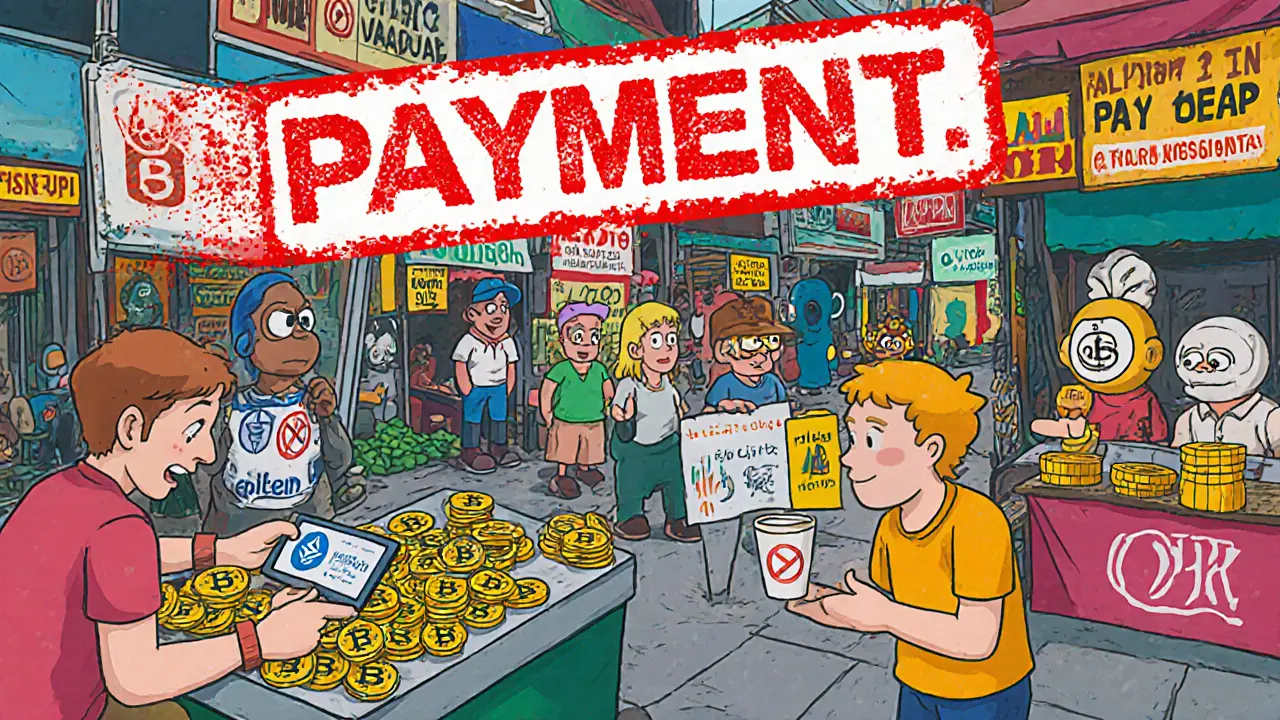
Indonesia Crypto Payment Ban Explained: Why Crypto Can't Be Used for Payments Despite Legal Trading
Indonesia bans cryptocurrency for payments but allows regulated trading under OJK. Learn why the ban exists, how trading works legally, tax changes in 2025, and what’s next for crypto in the country.
- 23
- Read More