Vietnam Crypto Capital Requirement Calculator
Under Vietnam's 2025 crypto regulations:
- • Minimum capital requirement: 10 trillion VND ($379 million)
- • Only local entities can operate exchanges
- • Trading exclusively in VND pairs
- • Foreign investors require CASP intermediaries
Your Calculation
Note: This calculation uses fixed conversion rates (1 BTC = 50,000 USD; 1 USD = 25,000 VND). Real market rates may vary.
For years, the State Bank of Vietnam told people: no crypto. No payments. No bank transfers. No exchanges. But in 2025, everything changed. The central bank didn’t just soften its stance-it built a whole new system around it. Cryptocurrencies like Bitcoin and Ethereum are now legal in Vietnam, but only under strict rules. This isn’t a free-for-all. It’s a tightly controlled experiment with one goal: let digital assets exist, but keep them from shaking the country’s financial foundation.
What Changed in June 2025?
The big shift came with the Law on Digital Technology Industry, passed in June 2025. For the first time, Vietnam officially recognized Bitcoin and Ethereum as "virtual assets." That means you can own them, trade them, inherit them, and even use them as collateral. Legally, they’re treated like property-not money. This is a huge step forward from the old ban that made crypto transactions punishable by fines and account freezes.
But here’s the catch: you still can’t use crypto to buy coffee, pay rent, or settle bills. The State Bank of Vietnam still prohibits using digital assets as a payment method. Banks and fintech apps are not allowed to process crypto transactions. So while you can hold Bitcoin, you can’t spend it like cash. The goal isn’t to replace the Vietnamese dong-it’s to create a separate, regulated investment layer.
The Five-Year Pilot: How It Works
In September 2025, the State Bank launched a five-year pilot program under Resolution No. 05/2025/NQ-CP. This isn’t just a guideline-it’s the law. And it’s one of the strictest crypto frameworks in Southeast Asia.
Only Vietnamese companies can apply to run crypto exchanges. Foreign firms? Not allowed. The exchange must be owned by local entities, with at least two shareholders coming from approved sectors: commercial banks, securities firms, insurance companies, fund managers, or tech enterprises. Each shareholder must prove they’ve been profitable for two straight years. No startups. No offshore shell companies. No quick money.
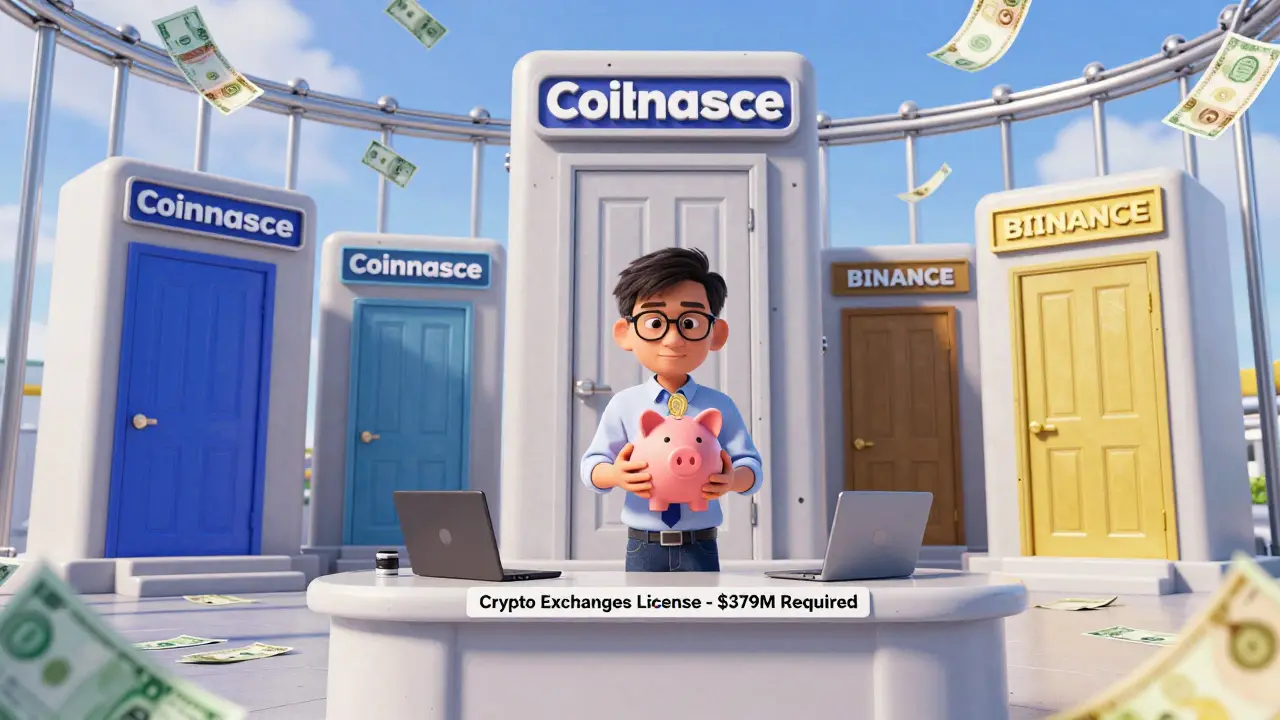
The capital requirement? 10 trillion Vietnamese dong-roughly $379 million. That’s more than most regional exchanges have in total funding. It’s designed to filter out fly-by-night operators and ensure only serious, well-funded players can enter. As of October 2025, not a single company has applied. That tells you something: even local giants are scared off by the cost and complexity.
Trading Rules: Only in Vietnamese Dong
Once licensed, exchanges can only offer trading pairs in Vietnamese dong (VND). No USDT, no BTC/USD, no ETH/EUR. Everything must be settled in local currency. This keeps capital flows visible and controllable. It also prevents people from using crypto as a way to move money out of Vietnam illegally.
Foreign investors can’t trade directly on these exchanges. They must go through Ministry of Finance-approved Crypto Asset Service Providers (CASPs). These are third-party platforms that act as gatekeepers, ensuring foreign money enters the system legally and is taxed properly. It’s a two-step process: first, you convert your foreign currency to VND. Then, you trade VND for crypto. No shortcuts.
NDAChain: Vietnam’s Own Blockchain
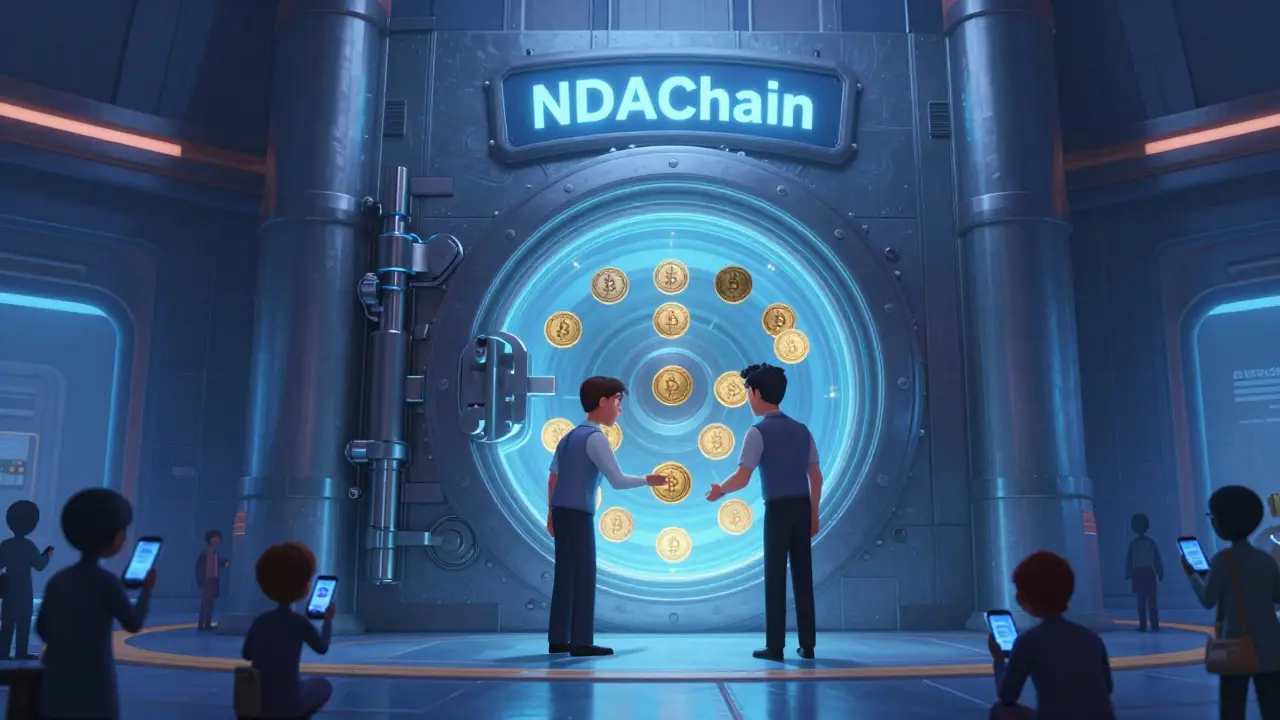
While the crypto exchange pilot is stuck in limbo, the government quietly launched something else: NDAChain. This isn’t a public blockchain like Ethereum. It’s a permissioned, government-controlled network designed to tokenize real-world assets-bonds, carbon credits, land titles, even supply chain documents.
NDAChain lets institutions issue digital versions of assets with built-in compliance. Every transaction is tracked. Every owner is verified. The State Bank can see everything without needing to rely on third-party data. It’s a way to embrace blockchain technology without opening the door to decentralized finance. Think of it as Vietnam’s answer to central bank digital currencies (CBDCs)-but focused on asset tokenization, not replacing cash.
Why Is Adoption So High Despite the Rules?
Here’s the paradox: Vietnam ranks fourth in the world for crypto adoption, according to Chainalysis 2025. Over 20% of its tech-savvy population owns some form of digital asset. But under the new law, most of that activity should be illegal.
It’s not. People are still trading. They’re using peer-to-peer platforms like Binance P2P to buy Bitcoin with bank transfers. They’re using local payment apps to send VND to traders in exchange for crypto. The State Bank can’t stop it. The infrastructure is too widespread, and the demand is too strong.
The central bank knows this. That’s why the new framework doesn’t try to ban P2P trading. Instead, it focuses on regulating the formal market-exchanges, institutions, and large-scale investors-while tolerating small-scale, informal activity. It’s a pragmatic compromise: control the big players, ignore the small ones.
How Vietnam Compares to Neighbors
Singapore lets stablecoins like USDT operate freely under strict licensing. The Philippines allows crypto payments through licensed fintech apps. Thailand has a clear path for retail crypto ETFs. Vietnam? Nothing like that.
Its rules are designed to slow things down. The $379 million capital requirement alone makes it nearly impossible for international exchanges like Coinbase or Kraken to enter. Even local banks are hesitant. The result? A market that’s legally open but practically closed to big players.
That’s intentional. The State Bank isn’t trying to compete with Singapore. It’s trying to avoid the chaos seen in other countries where crypto collapsed, banks got hit, and regulators scrambled. Vietnam wants the benefits-tax revenue, tech talent, global attention-without the risks.
What’s Next? The Pilot’s Real Test
Five years sounds long, but it’s not. By 2030, the government will decide whether to expand the program, tighten it further, or shut it down entirely. Right now, the pilot is stalled-not because people don’t want crypto, but because the rules are too rigid.
Will the capital requirement drop? Will foreign ownership be allowed? Will stablecoins ever be permitted? No one knows. But the fact that the State Bank even created this framework means they’re not going back to total prohibition.
What’s clear is this: Vietnam sees crypto not as a threat to its currency, but as a tool. A tool to attract tech investment. A tool to modernize finance. A tool to generate tax revenue from a market that’s already booming underground.
The real question isn’t whether crypto is legal in Vietnam. It’s whether the rules will ever be flexible enough to let it grow.
Nelia Mcquiston
December 3, 2025 AT 11:03It's fascinating how Vietnam is treating crypto not as currency but as property - a philosophical pivot that mirrors how we used to treat land or art in the 19th century. You own it, you can pass it on, you can leverage it, but you can't use it to buy groceries. It's like giving someone a rare painting and saying, 'You can hang it, sell it, or even mortgage it - but don't try to pay your rent with it.' The symbolism here is deeper than regulation; it's about cultural control over value itself.
Reggie Herbert
December 4, 2025 AT 08:38Let’s be clear: this isn’t innovation - it’s performative regulation. A $379M capital requirement is a barrier to entry disguised as prudence. Real financial innovation doesn’t require billionaire shareholders - it requires open access. And calling Bitcoin a ‘virtual asset’ while banning its use as payment is semantic gymnastics. If it behaves like money, it’s money. Stop pretending.
Murray Dejarnette
December 6, 2025 AT 06:59Y’all are overthinking this. People in Vietnam are already trading crypto like crazy - P2P, local apps, whatever works. The government knows it. They’re not trying to stop it. They’re just trying to tax it. This whole ‘pilot’ is a smokescreen. The real goal? Get a cut from the underground economy without having to admit it’s already here. Classic.
Tatiana Rodriguez
December 8, 2025 AT 00:32Imagine being a young Vietnamese coder in Hanoi, scrolling through your phone at 2 a.m., watching Bitcoin tick up while your bank account sits at zero - and then the government says, ‘You can own this, but you can’t spend it.’ It’s like being handed a key to a castle… but the doors are welded shut. They’ve created a beautiful, ornate prison for digital wealth. And yet - millions still climb the walls. The hunger for freedom, for real ownership, for a system that doesn’t treat you like a child - that’s what’s driving this. Not greed. Not speculation. Just… dignity.
Britney Power
December 8, 2025 AT 11:21While the regulatory architecture is undeniably complex, the structural inefficiencies are glaring. The capital requirement, while ostensibly designed to ensure solvency, introduces a perverse incentive structure wherein only incumbents with legacy balance sheets can participate - effectively entrenching oligopolistic control under the guise of financial stability. Furthermore, the prohibition of stablecoin pairs introduces a significant frictional cost, rendering arbitrage inefficient and capital allocation suboptimal. One must question whether this model fosters innovation or merely institutional inertia.
Maggie Harrison
December 8, 2025 AT 17:23THIS IS THE FUTURE 🌍✨
They didn’t ban crypto - they gave it a cage. And guess what? The birds are still flying. People are still trading. The system is adapting. This isn’t failure - it’s evolution. Vietnam’s playing 4D chess while everyone else is stuck in checkers. Let the big banks sweat over their $379M. The people? They’re already free.
Lawal Ayomide
December 9, 2025 AT 01:34They think they’re smart. But everyone knows the truth - crypto is already everywhere. The law is just a mirror. It doesn’t change what’s real.
justin allen
December 9, 2025 AT 20:27USA would never let some third-world country dictate how crypto works. This is why Vietnam will always be behind. You don’t build a future by locking it in a vault. You build it by letting people break rules. This isn’t policy - it’s fear dressed up in a suit.
ashi chopra
December 11, 2025 AT 08:52I read this with so much hope. My cousin in Ho Chi Minh City trades crypto every weekend - she says it’s the only way she feels like she’s building something real for her family. I’m glad someone finally acknowledged that the people aren’t the problem. The rules are. Maybe one day, the system will catch up to the heart of the people.
Darlene Johnson
December 12, 2025 AT 03:39Let me guess - this is all part of a globalist plot to replace sovereign currencies. The State Bank is just a puppet. NDAChain? That’s a surveillance tool. They’re tracking every transaction, every wallet, every byte. Next thing you know, your crypto holdings will be frozen if you ‘spend too much’ or ‘buy the wrong asset.’ This isn’t regulation - it’s digital authoritarianism with a smile.
Ivanna Faith
December 13, 2025 AT 00:10So they made crypto legal but you cant use it to buy stuff?? LMAO
Also why is everyone so mad about the $379M? Like… duh? If you want to run an exchange you better have money
Also NDAChain is kinda cool?? idk
Just saying
Akash Kumar Yadav
December 13, 2025 AT 16:24Vietnam’s doing what India should’ve done years ago. You don’t fight the wave - you build a dam and redirect it. The P2P chaos? Let it live. The formal market? We control it. Tax it. Monitor it. Use it to lure Silicon Valley investors. Smart. This isn’t about control - it’s about sovereignty. And it’s working.
samuel goodge
December 14, 2025 AT 02:22What’s remarkable here isn’t the regulation - it’s the humility. Most central banks panic when faced with crypto: ban it, regulate it, or ignore it. Vietnam chose a fourth path: acknowledge the reality, then build a controlled environment to observe, contain, and extract value - without surrendering monetary sovereignty. The $379M barrier? A brilliant filter. The VND-only pairs? A firewall. NDAChain? A quiet revolution in asset tokenization. This isn’t a policy failure - it’s a masterclass in institutional adaptation. The real test won’t be whether people trade - it’ll be whether the State Bank dares to evolve the framework before 2030.