Imagine signing up for a crypto exchange in under a minute-no ID, no selfie, no waiting days for approval. You log in, swap Bitcoin for Solana, and send it straight to your wallet. No one asks who you are. That’s the promise of non-KYC crypto exchanges. But here’s the truth: it’s not as simple as it sounds. While these platforms still exist, the landscape has changed drastically since 2023. Many big names that once let you trade anonymously now require ID checks. The ones that don’t? They come with trade-offs you can’t ignore.
What Exactly Is a Non-KYC Crypto Exchange?
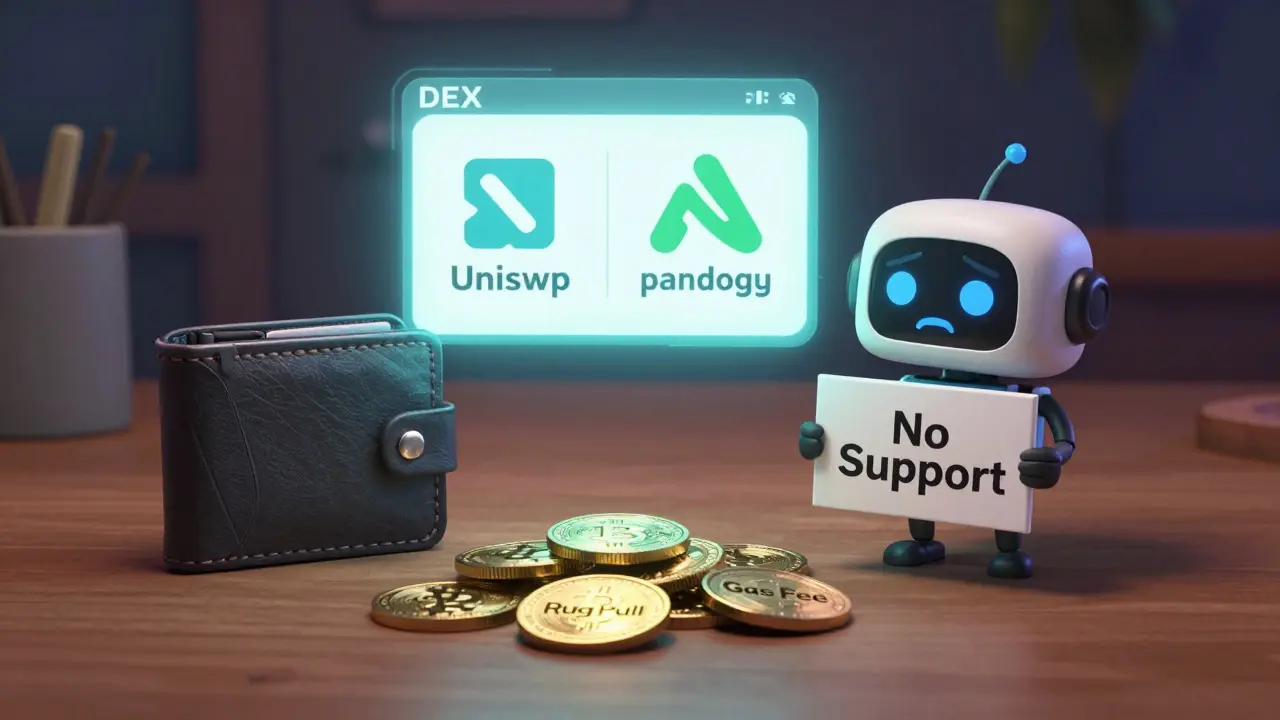
A non-KYC crypto exchange lets you trade digital assets without proving who you are. KYC stands for "Know Your Customer," the process most platforms use to collect your name, address, and government ID. Non-KYC platforms skip that step. You create an account with just an email or a wallet address-and you’re trading within seconds. There are two main types:- Decentralized Exchanges (DEXs): These don’t have servers or staff. You trade directly with other users through smart contracts. Examples: Uniswap, SushiSwap, PancakeSwap.
- Centralized exchanges with limited no-KYC access: These are traditional platforms, but they let unverified users trade up to a certain limit. For example, MEXC lets you withdraw up to 1 BTC per day without KYC. BingX and Best Wallet also offer partial no-KYC access.
DEXs are the true no-KYC option. You connect your wallet-MetaMask, Phantom, or Trust Wallet-and start swapping. No registration. No personal data stored. That’s privacy by design.
Why Do People Use Non-KYC Exchanges?
People don’t just use them to hide. They use them because they’re faster, more flexible, and give you real control.- Instant access: No waiting for document reviews. You can trade while your bank account is still being verified elsewhere.
- Privacy: Your trading history isn’t tied to your real identity. If you’re concerned about data leaks or government surveillance, this matters.
- Global access: You don’t need a bank account in the U.S. or Europe. If you have crypto, you can trade on a DEX from anywhere.
- Self-custody: Your funds never sit on the exchange. You hold your keys. That means no freezing accounts or sudden withdrawals blocked by compliance teams.
For traders moving between tokens like ETH, SOL, or meme coins, DEXs are the fastest route. You can chain swaps: swap Bitcoin for USDT, then USDT for a new altcoin, then send it to a staking protocol-all without ever handing over your passport.
The Real Limitations: It’s Not All Free Lunch
Here’s where the myth breaks down. Non-KYC doesn’t mean no rules. It means the rules are hidden.1. You Still Need KYC to Cash Out
This is the biggest trap. You can swap crypto all day on Uniswap. But if you want to turn that crypto into dollars, euros, or pounds? You need a fiat gateway. That means using a bank, a payment processor, or a centralized exchange like Coinbase or Binance. And guess what? They all require KYC.So you’re not avoiding KYC-you’re just pushing it to the end of the line. If your goal is complete anonymity, you’re stuck. You can trade crypto-to-crypto anonymously, but you can’t turn it into real money without leaving a paper trail.
2. Liquidity Is Thin
On a DEX like Uniswap, popular pairs like ETH/USDT have deep liquidity. But try swapping a new token from a small chain? You might get 30% slippage. That means you buy 100 tokens, but only get 70 because the pool is shallow. Slippage eats profits. And gas fees? On Ethereum, they can cost $10-$50 per trade. On Solana, they’re cheaper, but you still pay.3. Smart Contracts Can Be Dangerous
A DEX runs on code. That code can have bugs. Or worse-it can be a scam. Fake tokens, fake liquidity pools, rug pulls. In 2024, over $1.2 billion was lost to DeFi exploits, according to Chainalysis. Most of those happened on non-KYC platforms because there’s no customer support to help you recover funds.4. Regulatory Pressure Is Growing
In 2025, regulators are cracking down. The EU treats OTC desks as Crypto-Asset Service Providers (CASPs), meaning they must follow AML rules. The U.S. IRS demands 1099 forms from exchanges. Even if a platform doesn’t require KYC now, they might be forced to add it soon. KuCoin and OKX used to allow unverified trading. Now they don’t. That trend is spreading.5. No Customer Support
If you send crypto to the wrong address on a DEX? It’s gone. Forever. No help desk. No refund. No chatbot. You’re on your own. Centralized exchanges with KYC at least have a ticket system. DEXs? You’ll find answers in Reddit threads or Discord groups-if you’re lucky.
What Non-KYC Exchanges Are Still Working in 2026?
The list is short-and shrinking. Here’s what’s still viable as of early 2026:- Uniswap (Ethereum, Arbitrum, Polygon): The most trusted DEX. No sign-up. Just connect your wallet.
- SushiSwap: Similar to Uniswap, with added yield features. Good for advanced users.
- PancakeSwap: On BNB Chain. Lower fees. Popular for memecoins.
- MEXC: Centralized, but still allows up to 1 BTC daily withdrawal without KYC. Not fully anonymous, but useful for small trades.
- BingX: Offers limited no-KYC trading with a 2 BTC daily limit. Requires email only.
- Best Wallet: A non-KYC wallet + swap aggregator. Good for beginners.
Important note: These platforms don’t support fiat deposits. You need to buy crypto with KYC elsewhere first-like through a peer-to-peer platform (P2P) or a Bitcoin ATM.
Who Should Use Non-KYC Exchanges?
They’re not for everyone. But they’re perfect for:- Traders who move between crypto assets daily and want to avoid delays.
- People in countries with strict capital controls or unstable banking systems.
- Privacy-focused users who understand the risks and accept them.
- Developers testing DeFi protocols or deploying smart contracts.
They’re not for:
- Anyone trying to cash out to fiat anonymously.
- People who want to recover lost funds.
- Those who rely on customer service or dispute resolution.
- Users who don’t understand gas fees or slippage.
How to Use a Non-KYC Exchange (Step by Step)
Here’s how to get started safely:- Get a wallet: Download MetaMask (for Ethereum) or Phantom (for Solana).
- Buy crypto with KYC: Use Coinbase, Kraken, or a P2P platform to buy ETH, SOL, or USDT.
- Send it to your wallet: Never leave crypto on a KYC exchange longer than needed.
- Connect your wallet to a DEX: Go to Uniswap or PancakeSwap, click "Connect Wallet," and approve the connection.
- Swap tokens: Pick your pair, set slippage to 0.5-1% for safety, and confirm the transaction.
- Store or move: Send your new tokens to a hardware wallet if holding long-term.
Always test with a small amount first. Watch gas fees. Double-check token addresses. A single typo can cost you thousands.
The Future of Non-KYC Trading
Regulators aren’t going away. The Financial Action Task Force (FATF) already classifies crypto exchanges as Virtual Asset Service Providers (VASPs). That means, legally, they should collect KYC data. But technology moves faster than laws.Some projects are trying to bridge the gap. Privacy-focused chains like Zcash and Tornado Cash (though banned in the U.S.) show there’s demand. Layer-2 solutions like zkSync and StarkNet are making DEXs cheaper and faster. Maybe one day, you’ll be able to trade anonymously and still cash out legally.
For now, non-KYC exchanges are a tool-not a solution. They give you freedom in the crypto world, but not in the real world. If you want privacy, you need to accept the limits. And if you want cash? You’ll still need to play by the bank’s rules.
Final Thought: Privacy Isn’t Illegal-But It’s Risky
Using a non-KYC exchange isn’t against the law. But it’s like driving without a license. You can do it. But if something goes wrong, you have no protection. The same way you wouldn’t leave your house keys in the door, you shouldn’t leave your life savings on a DEX without understanding the risks.Non-KYC exchanges are powerful. But they’re not magic. They’re just code. And code doesn’t care if you lose money. Only you do.
Are non-KYC crypto exchanges legal?
In most countries, using a non-KYC exchange isn’t illegal by itself. But the laws around crypto are changing fast. In the U.S., the IRS and FinCEN treat crypto exchanges as financial institutions, and operating one without KYC may violate anti-money laundering rules. For users, simply trading on a DEX like Uniswap is generally tolerated-but if you’re moving large amounts or using it to evade taxes, you could face legal consequences. Always check local regulations.
Can I withdraw fiat from a non-KYC exchange?
No. You cannot directly withdraw fiat (like USD or EUR) from a non-KYC exchange. Even DEXs like Uniswap only handle crypto-to-crypto swaps. To turn crypto into cash, you must use a separate service that requires KYC-like a centralized exchange (Coinbase, Kraken), a P2P platform (LocalBitcoins), or a Bitcoin ATM. The no-KYC part ends when you hit the fiat gateway.
Is it safer to use a non-KYC exchange than a KYC one?
It depends. On a non-KYC DEX, your funds are safer from hacks because you control your own wallet. But you’re exposed to smart contract bugs, scams, and irreversible mistakes. On a KYC exchange like Binance, your funds are at risk from platform hacks (like Mt. Gox), but you have customer support and insurance in some cases. If you’re experienced, DEXs offer more control. If you’re new, a regulated exchange is less risky.
Do non-KYC exchanges work in the United States?
Yes, but with limits. U.S. users can still use DEXs like Uniswap and PancakeSwap because they’re decentralized and don’t have U.S. offices. However, centralized exchanges like MEXC and BingX may restrict access to U.S. IPs or block fiat on-ramps. You can’t legally trade on U.S.-based platforms without KYC. Always use a VPN with caution-it may violate terms of service and doesn’t make you immune to tax reporting.
What’s the difference between a DEX and a non-KYC centralized exchange?
A DEX (like Uniswap) has no company behind it. You trade directly with smart contracts. No emails, no logins, no data stored. A non-KYC centralized exchange (like MEXC) is a company with servers, customer support, and account systems-but they let you trade without ID verification. The catch? Centralized platforms can freeze your account or shut down. DEXs can’t. But DEXs offer no support if you lose your keys.
Can I be tracked on a non-KYC exchange?
Yes, to some extent. While your name isn’t tied to your wallet, blockchain analysis firms like Chainalysis can trace transaction patterns. If you ever connect your wallet to a KYC exchange, your entire history can be linked back. Also, your IP address can be logged if you access a DEX through a browser. For true privacy, use Tor or a VPN, and avoid linking wallets to personal accounts.
What are the best non-KYC exchanges for beginners?
Start with PancakeSwap on BNB Chain-it has low fees and a simple interface. Use MetaMask as your wallet. Only swap well-known tokens like USDT, BNB, or ETH. Avoid new tokens with no trading volume. Never invest more than you can afford to lose. Watch YouTube tutorials on connecting wallets before you start. Beginners should treat DEXs like a testing ground, not a bank.
Rachel Stone
January 30, 2026 AT 22:00Gurpreet Singh
January 31, 2026 AT 12:21Richard Kemp
January 31, 2026 AT 22:34Nickole Fennell
February 2, 2026 AT 09:29Edward Drawde
February 3, 2026 AT 12:22Pamela Mainama
February 3, 2026 AT 21:04Will Pimblett
February 5, 2026 AT 11:50Elizabeth Jones
February 5, 2026 AT 20:52Jeremy Dayde
February 6, 2026 AT 12:53Rob Duber
February 7, 2026 AT 08:53Tom Sheppard
February 7, 2026 AT 18:09Tressie Trezza
February 8, 2026 AT 14:42Gustavo Gonzalez
February 9, 2026 AT 11:32Joshua Clark
February 11, 2026 AT 04:36Christopher Michael
February 13, 2026 AT 00:42