Imagine selling the excess solar power from your roof directly to your neighbor, without ever seeing a utility bill or calling a customer service rep. This isn't science fiction anymore. It is happening right now in neighborhoods across Europe and North America through peer-to-peer energy trading. By using blockchain technology, we are moving away from the old model where one big company generates, transmits, and sells all the electricity. Instead, we are building a network where anyone with a solar panel, a wind turbine, or even an electric vehicle battery can trade energy like they send an email.
This shift changes everything about how we think about power. You stop being just a consumer who pays a monthly bill. You become a 'prosumer'-someone who both produces and consumes energy. The question is no longer just how much power you use, but how efficiently you can trade what you generate. Let's look at how this works, why it matters for your wallet, and what hurdles still stand in the way of a fully decentralized grid.
How P2P Energy Trading Actually Works
To understand this system, you have to forget the traditional grid structure. In the old days, power flowed one way: from a massive coal or gas plant, down high-voltage lines, through local transformers, and into your home. If you had solar panels, you sent extra power back to the grid and got a tiny credit on your bill. Now, with blockchain, that flow becomes two-way and localized.
Here is the step-by-step process of a typical transaction:
- Generation: Your rooftop solar panels produce more electricity than your house needs during the afternoon.
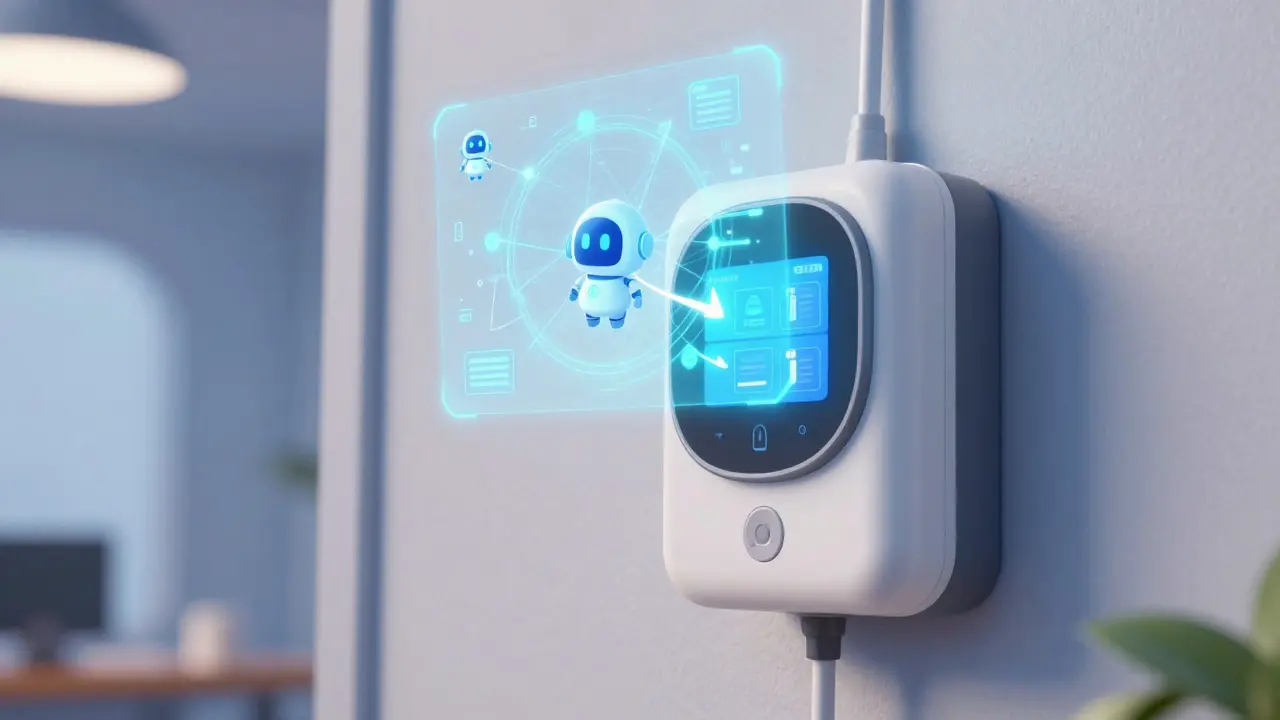
- Measurement: A smart meter records this surplus in real-time, usually every 15 to 60 minutes. These meters are IP-enabled and comply with standards like IEEE 2030.5.
- Listing: The data is sent to a blockchain platform. Smart contracts automatically list your available energy on a local digital marketplace.
- Matching: Your neighbor’s smart meter shows they need power. The smart contract matches your supply with their demand based on pre-set rules, such as price thresholds.
- Execution: The trade happens instantly. Money (or digital tokens) moves from your neighbor’s account to yours, and the energy flows physically through the local wires.
The key here is automation. You don’t negotiate prices manually. The code handles it. According to IRENA’s Innovation Landscape Brief, this automation reduces transaction costs by 30-45% compared to traditional utility arrangements. That savings comes from cutting out the middlemen-the billing departments, the manual reconciliation teams, and the complex regulatory fees associated with wholesale markets.
The Tech Stack Behind the Trades
You might wonder if this is just another crypto scheme. It’s not really about speculation; it’s about infrastructure. The technology stack relies on three main pillars: hardware, software, and consensus.
First, you need Smart Meters that are digital devices capable of measuring electricity consumption and production in real-time and communicating that data over the internet. Old analog meters won't cut it. You need devices that can talk to the blockchain. Second, you need the ledger itself. Most early projects used Ethereum because it supports smart contracts well. However, newer systems often use enterprise-grade platforms like Hyperledger Fabric or Corda. Why? Because they offer higher privacy and better scalability for regulated industries.
| Platform | Type | Key Advantage | Limitation |
|---|---|---|---|
| Ethereum | Public | High security, large developer community | Lower speed (15-30 TPS), higher fees |
| Hyperledger Fabric | Private/Consortium | High speed, privacy controls, modular | Complex setup, requires trusted participants |
| Corda | Enterprise | Designed for finance/regulation, low latency | Less flexible for open public markets |
Third, there are smart contracts. These are self-executing agreements with the terms directly written into code. If Neighbor A agrees to buy energy at $0.12 per kWh, the contract checks the meter data, verifies the price, and executes the payment automatically. No human intervention needed. This eliminates billing delays and disputes.
Real-World Success Stories and Data
Theory is great, but does it work in practice? Yes, and the numbers are promising. The Brooklyn Microgrid project, launched in 2016 by LO3 Energy and ConsenSys, remains the most famous example. As of late 2024, it connects over 500 participants across three New York neighborhoods. Participants report saving 12-18% on their energy bills. That’s significant when energy prices are volatile.
In Australia, Power Ledger ran a trial in Fremantle involving 100 households. The results were even starker. Solar owners earned between AUD$220 and $350 monthly from selling surplus energy. User satisfaction hit 97%. This proves that prosumers aren’t just altruistic; they are financially motivated. When people see cash coming in for energy they would otherwise waste, adoption accelerates.
Even colder climates are getting in on the action. In Sonderborg, Denmark, a blockchain-based P2P system helped reduce grid dependency by 37% during winter months. This is crucial for grid resilience. When centralized grids fail due to storms or extreme weather, local microgrids can keep running. The Brooklyn project demonstrated this capability during outages, keeping lights on for participants while the rest of the city went dark.
Challenges Holding Back Mass Adoption
If it’s so good, why isn’t everyone doing it? There are three major roadblocks: regulation, scalability, and user experience.
Regulation is the biggest hurdle. Electricity markets were designed for monopolies, not millions of individual traders. In many US states, laws prohibit direct energy sales between individuals. This led to the termination of the WePower project in Lithuania and stalled trials elsewhere. Regulatory frameworks are slowly catching up. The EU’s Clean Energy Package allows for 'renewable energy communities,' and the US Federal Energy Regulatory Commission’s Order 2222 opens wholesale markets to distributed resources. But change is slow.
Scalability is a technical issue. Public blockchains like Ethereum can only handle 15-30 transactions per second. Visa handles 24,000. While a neighborhood doesn’t need Visa-level speed, a national grid does. If millions of homes start trading every 15 minutes, current public chains will clog up. This is why private chains and Layer-2 solutions are gaining traction. They sacrifice some decentralization for speed and lower costs.
Finally, user experience matters. Reddit discussions from mid-2024 show users complaining about complex onboarding processes that take 3-5 hours. For non-technical people, setting up wallets, connecting smart meters, and understanding tokenomics is daunting. Until platforms make this as easy as signing up for Netflix, mass adoption will remain limited to tech-savvy early adopters and dedicated energy cooperatives.
The Future: EVs and Virtual Power Plants
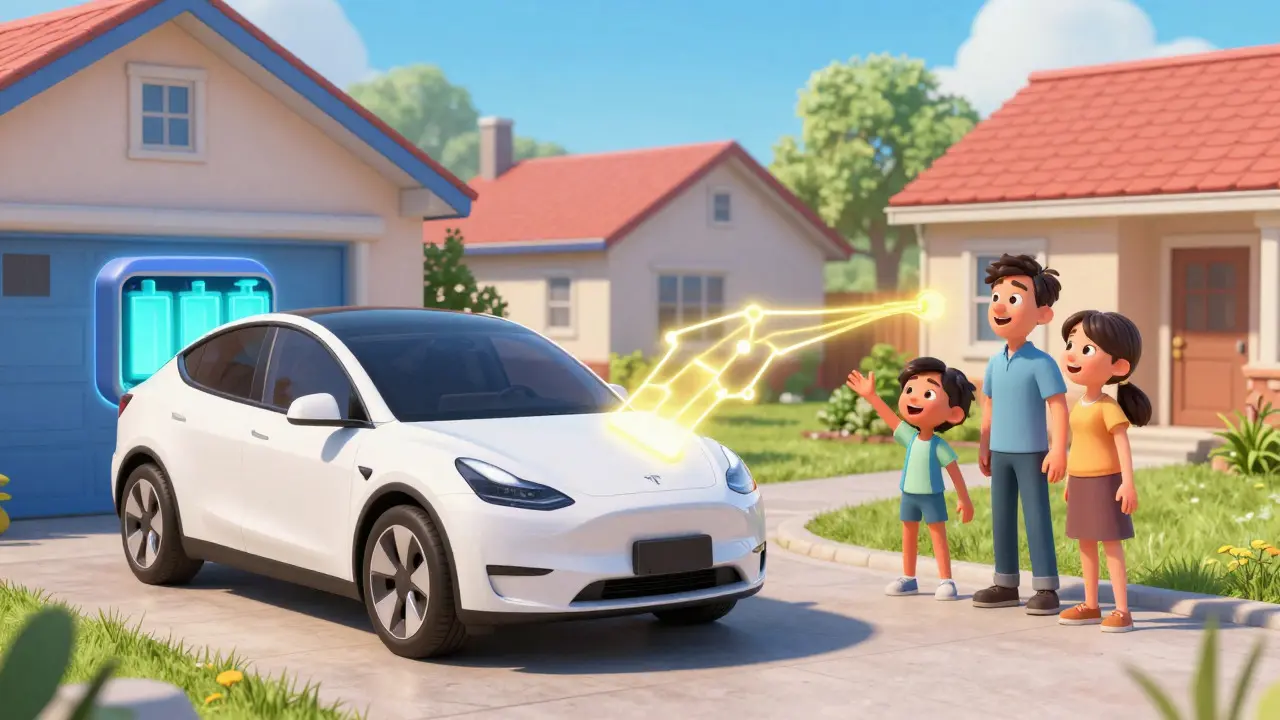
The next frontier isn’t just solar panels; it’s electric vehicles. An EV battery is essentially a giant power bank on wheels. With Vehicle-to-Grid (V2G) technology, your car can sell power back to the grid or to your neighbors when you’re parked. BMW and Siemens launched a joint trial in Munich in April 2024, connecting 200 EVs to the energy market. This turns parking lots into virtual power plants.
By 2030, IRENA predicts P2P trading could account for 10-15% of distributed renewable energy transactions in supportive regions. The global market is projected to grow from $1.27 billion in 2023 to $8.43 billion by 2028. This growth depends on solving the interoperability issues between different brands of smart meters and blockchain platforms. Standards like IEEE 2030.5 Annex D are being finalized to ensure devices from different manufacturers can talk to each other.
We are standing at the edge of a new energy era. It’s messy, regulated, and technically challenging, but the direction is clear. Power is shifting from the center to the edges. Whether you have solar panels or just an interest in sustainable tech, understanding P2P energy trading is essential for navigating the future of our grids.
What is a prosumer in energy trading?
A prosumer is a hybrid of producer and consumer. Unlike traditional customers who only buy electricity, prosumers generate their own power (usually via solar panels or wind turbines) and sell the surplus back to the grid or directly to neighbors.
Do I need a special meter for P2P trading?
Yes, you need a smart meter that can communicate digitally. Standard analog meters cannot record the bidirectional flow of energy or transmit data to the blockchain in real-time. Look for meters compliant with IEEE 2030.5 or OpenADR 2.0 standards.
Is blockchain energy trading legal everywhere?
No, regulations vary significantly by region. The European Union has progressive laws supporting energy communities. In the US, federal rules are improving, but state-level bans on direct retail sales still exist in some areas. Always check local utility regulations before investing.
How much money can I save with P2P trading?
Savings depend on your location and generation capacity. Trials in Brooklyn showed 12-18% bill reductions. In Australia, prosumers earned an additional AUD$220-$350 monthly. Savings come from avoiding utility markups and selling surplus at better rates than standard feed-in tariffs.
Can electric vehicles participate in P2P trading?
Yes, through Vehicle-to-Grid (V2G) technology. EVs can store energy and discharge it back to the home or grid during peak times. Trials in Munich and other cities are already testing this, turning parked cars into mobile energy assets.