When you sign a contract with a pen, you’re leaving a mark shaped by your hand - pressure, slant, speed. It’s personal. But in crypto, no one cares about your handwriting. What matters is whether you own the private key. That’s the core difference between digital signatures and traditional signatures in blockchain systems. One is art. The other is math.
How Digital Signatures Actually Work in Crypto
Digital signatures in cryptocurrency aren’t scanned ink strokes. They’re cryptographic proofs generated by a private key. Every Bitcoin or Ethereum wallet has a pair: a private key (secret) and a public key (shared). When you send a transaction, your wallet takes the transaction data - who’s sending, who’s receiving, how much - and runs it through a hash function. Then, it uses your private key to sign that hash. The result? A unique digital signature.
This signature doesn’t look like a name. It’s a long string of letters and numbers. But here’s the magic: anyone can verify it using your public key. If the math checks out, the network accepts the transaction. No human needed. No handwriting expert. Just pure cryptography.
The most common algorithm used? ECDSA (Elliptic Curve Digital Signature Algorithm). It’s the backbone of Bitcoin and Ethereum. Why? Because it’s efficient. ECDSA gives the same security as RSA - but with a 256-bit key instead of a 2048-bit one. That means faster transactions, less storage, and lower fees.
Traditional Signatures: Why They Don’t Work in Crypto
Imagine trying to sign a Bitcoin transaction with a pen. You’d print out the transaction details, sign it, scan it, and send it to a node. The node would then compare your signature to a scanned copy of your previous signature. Sounds ridiculous? That’s because it is.
Traditional signatures rely on visual recognition. Handwriting experts can tell if a signature is forged - but only if they have a sample to compare. And even then, mistakes happen. Pressure changes. Hand tremors. Smudges. Stamps. Digital signatures don’t have those problems. They’re either valid or invalid. No gray area.
Plus, traditional signatures can’t be automated. A blockchain node can’t “look” at a signature. It needs a mathematical guarantee. That’s why paper-based systems fail in crypto. They’re slow, subjective, and break under scale. Try verifying 10,000 signatures per second with a human? Impossible.
Why Digital Signatures Are Unforgeable
Forging a handwritten signature? Skilled artists can do it. There are cases of forgers who copied signatures so well, even banks were fooled.
Forging a digital signature? Not unless you steal the private key.
The security of digital signatures comes from asymmetric cryptography. Your private key is mathematically linked to your public key, but you can’t reverse-engineer the private key from the public one. Even with today’s fastest computers, brute-forcing a 256-bit ECDSA key would take longer than the age of the universe.
This is why wallet security is everything. If someone gets your private key - through a phishing attack, a hacked device, or a poorly stored seed phrase - they can sign any transaction. The network has no way to say “no.” That’s not a flaw in the signature. It’s a flaw in the user’s behavior.
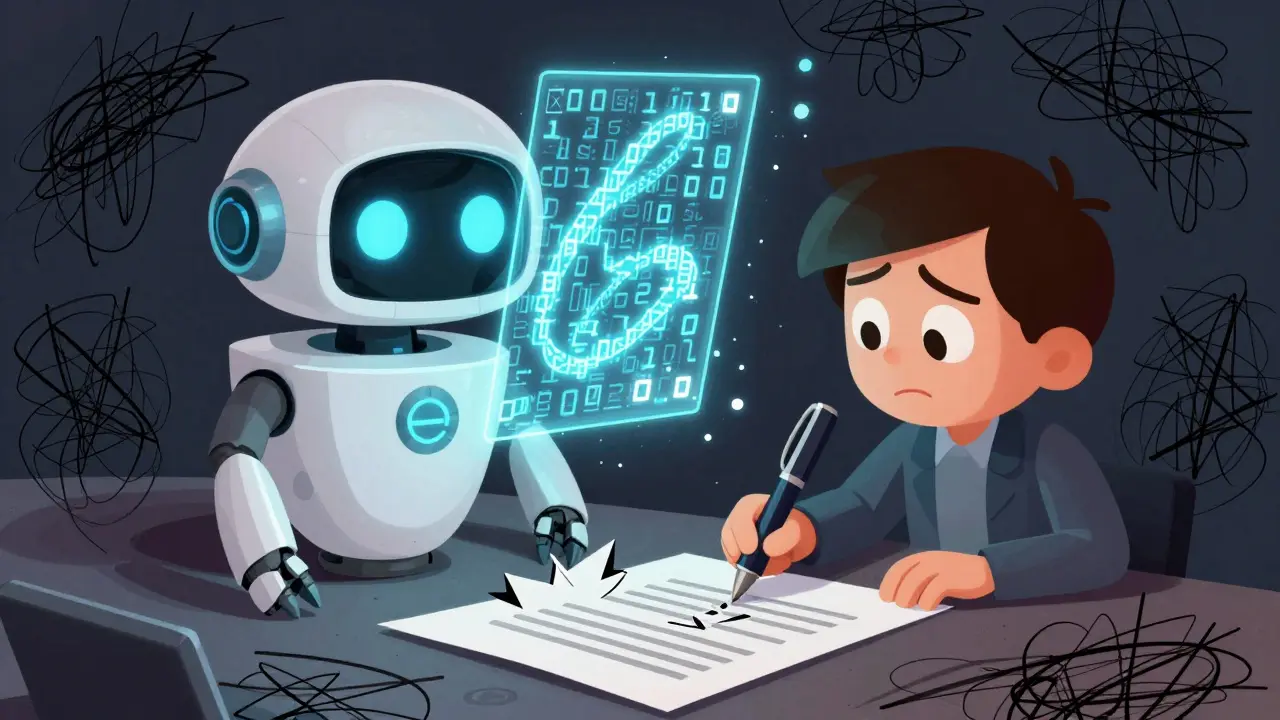
Advanced Signature Schemes: Schnorr and BLS
ECDSA isn’t the end of the story. Blockchain developers keep improving.
Schnorr signatures (a more efficient, privacy-enhancing alternative to ECDSA) were introduced to Bitcoin via the Taproot upgrade in 2021. Schnorr allows multiple signatures to be combined into one. Think of a 2-of-3 multi-sig wallet. Normally, that’s three separate signatures in the transaction. With Schnorr, they merge into a single signature that looks like a normal single-key transaction. That saves space. Lowers fees. And hides complexity.
Then there’s BLS signatures (Boneh-Lynn-Shacham, used in Ethereum 2.0 and other chains). BLS takes aggregation even further. It can combine thousands of signatures from a single block into one. This reduces blockchain bloat dramatically. BLS signatures are also 50% smaller than ECDSA, which matters when you’re processing millions of transactions.
Both Schnorr and BLS are non-malleable. That means no one can tweak a valid signature to make it look like another. ECDSA had vulnerabilities here. Attackers could slightly modify a signature and still pass verification. Not anymore with these newer schemes.
Non-Repudiation: The Legal Edge
One of the biggest advantages of digital signatures? Non-repudiation.
If you sign a paper contract and later say, “I didn’t mean to,” you might get away with it - especially if your signature looks shaky. Courts rely on handwriting experts, witnesses, and context.
In crypto? If your private key signed the transaction, you did it. There’s no “I didn’t mean to.” The math proves it. This is why exchanges and DeFi protocols treat digital signatures as legally binding proof of intent. The U.S. ESIGN Act and EU eIDAS already recognize them as valid.
There’s no dispute. No “I lost my phone.” No “someone else had access.” If the signature checks out, the transaction stands. That’s why crypto transactions are final. Not because they’re irreversible - but because the proof is unbreakable.
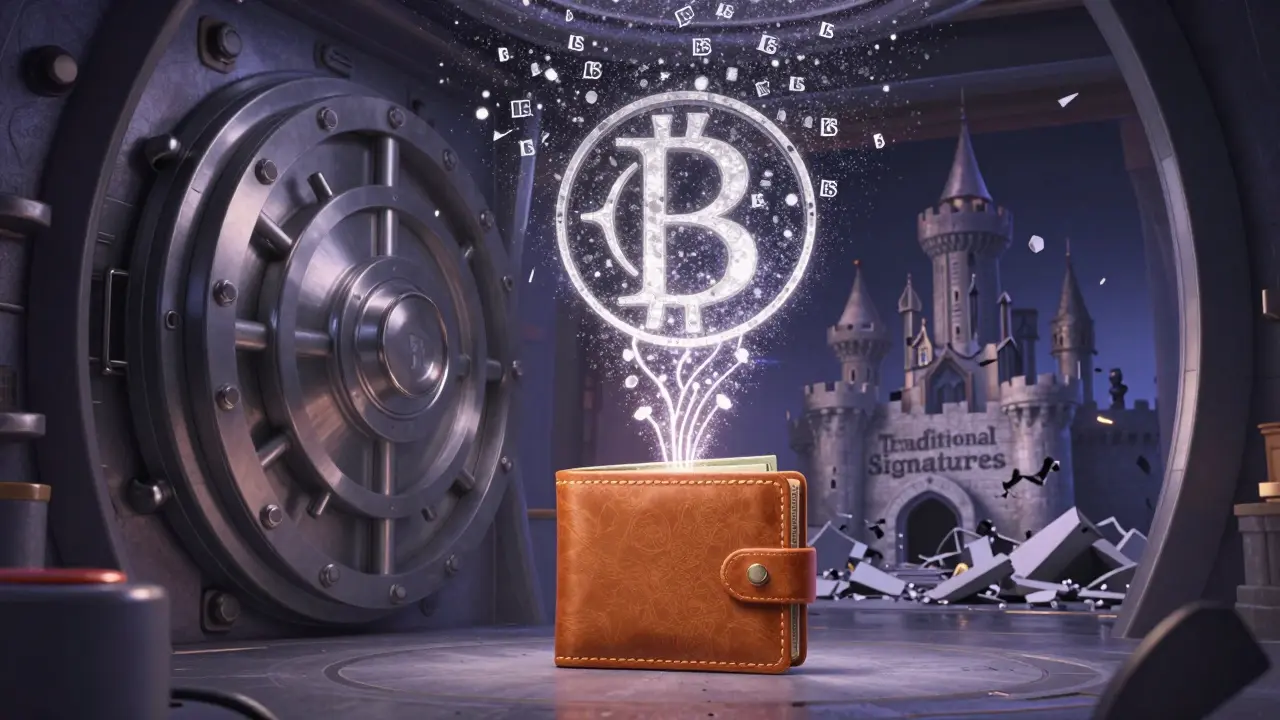
Automation and Smart Contracts
Traditional signatures need a human to look at them. Digital signatures? They run on code.
Smart contracts in Ethereum or Solana don’t need a person to verify a signature. They check it automatically. If the signature matches the public key, the contract executes. No delays. No paperwork. No waiting for a notary.
This enables things like:
- Auto-renewing subscriptions based on wallet signatures
- DAO voting where each member’s vote is cryptographically signed
- Decentralized escrow services that release funds only when both parties sign
Without digital signatures, none of this works. You can’t automate trust. But you can automate proof.
What’s Next? Post-Quantum Signatures
Today’s digital signatures rely on problems that quantum computers might solve one day. ECDSA, Schnorr, BLS - all use elliptic curves. A powerful enough quantum computer could break them.
That’s why researchers are already building post-quantum signatures (algorithms like CRYSTALS-Dilithium and Falcon). These are designed to resist quantum attacks. Ethereum and other chains are testing them in labs. The transition won’t happen overnight - but it’s coming.
Traditional signatures? They’re already obsolete in crypto. No one’s working on a “quantum-proof pen.”
Final Thought: It’s Not About the Signature - It’s About Control
People think digital signatures are about replacing pens. They’re not. They’re about replacing intermediaries.
Traditional signatures need banks, notaries, courts. Digital signatures need only math - and your private key.
In crypto, you don’t need permission to sign. You don’t need a witness. You don’t need a stamp. You just need to prove you control the key. That’s why digital signatures aren’t just better. They’re necessary.
Can a digital signature be copied or reused?
No. Each digital signature is tied to a specific transaction hash. Even if someone copies your signature from one transaction, it won’t work on another. The signature is generated from the exact data being signed - change one byte, and the signature becomes invalid. This prevents replay attacks.
What happens if I lose my private key?
You lose access to your funds permanently. There’s no password reset, no customer service, no recovery option. The system is designed this way on purpose - because if a third party could recover your key, they could also steal from you. That’s why backups (seed phrases) are critical.
Are digital signatures legally binding?
Yes. Laws like the U.S. ESIGN Act and EU eIDAS recognize digital signatures as legally equivalent to handwritten ones - as long as they meet technical standards for authentication and integrity. In crypto, this applies to smart contracts, exchange withdrawals, and on-chain agreements.
Why do some wallets use different signature schemes?
Different blockchains optimize for different needs. Bitcoin uses ECDSA and now Schnorr for efficiency and privacy. Ethereum uses ECDSA but is testing BLS for scalability. Some privacy coins use ring signatures to hide sender identity. The choice depends on the network’s goals: speed, anonymity, or transaction volume.
Can quantum computers break digital signatures today?
No. Current quantum computers are nowhere near powerful enough to break ECDSA, Schnorr, or BLS. But researchers are preparing for the future. Post-quantum signature algorithms are already being tested, and major blockchains plan upgrades before quantum threats become real.
Sasha Wynnters
February 19, 2026 AT 21:24Digital signatures aren't just math-they're the ghost in the machine. The ink on paper was a performance, a ritual. A handshake with a quill. But this? This is the universe signing its own name. No ego. No trembling hand. Just pure, cold, elegant mathematics saying, 'I am here, and I mean it.'
It’s like the difference between a love letter written by candlelight and a quantum-entangled pulse saying 'I love you' across galaxies. One is beautiful. The other is inevitable.
We used to trust signatures because they were unique to the person. Now we trust them because they're unique to the math. And honestly? The math doesn’t lie. It doesn’t get tired. It doesn’t have bad days. It just is.
That’s why crypto doesn’t need banks. It doesn’t need notaries. It needs only one thing: control over your own private key. Everything else is theater.
Traditional signatures were about identity. Digital signatures are about sovereignty. And sovereignty doesn’t ask for permission. It just signs.
Next time you sign a contract with a pen, ask yourself: are you affirming your presence… or just performing it?
Angela Henderson
February 20, 2026 AT 12:17I’ve been thinking about this a lot lately, especially after trying to send a tiny ETH transaction and nearly crying because I forgot to check the gas fee.
It’s wild how much trust we put into something we can’t see. Like, I know my private key is stored somewhere on my phone, but I can’t even visualize it. It’s not a thing. It’s a feeling. A password that’s also a soul.
And yet, if I lose it, I lose everything. No second chances. No ‘oops’ button. Just silence.
I used to think digital signatures were cold. Now I think they’re the most honest thing we’ve ever built. No pretense. No forgery. Just yes or no. No gray. No ‘I didn’t mean to.’
It’s terrifying. And beautiful. And honestly? I think I’m in love with math now.
Also, I just realized I’ve been using a 12-word phrase like it’s a sacred mantra. I say it in the shower. I whisper it before bed. I think I’m gonna name it Barry.
Paul David Rillorta
February 20, 2026 AT 16:51YOU THINK THIS IS ABOUT MATH? LOL. IT’S ABOUT CONTROL. THE GOVERNMENT AND BIG TECH WANT YOU TO THINK YOUR KEY IS YOURS. BUT THEY’RE THE ONES WHO DESIGNED THE ALGORITHMS. THEY KNOW THE BACKDOORS. THEY’RE THE ONES WHO OWN THE MINING POOLS.
ECDSA? MORE LIKE EGO-DESTRUCTION-SIGNING-ALGORITHM. THEY’RE SLOWLY TAKING AWAY YOUR POWER AND CALLING IT ‘SECURITY.’
AND DON’T EVEN GET ME STARTED ON SNOCHER. THAT’S JUST BLS WITH A NICE LAYER OF BULLSHIT ON TOP. THEY’RE JUST MAKING IT LOOK CLEANER SO YOU’LL STOP ASKING QUESTIONS.
QUANTUM COMPUTERS? Pfft. The real quantum computer is already here. It’s called the NSA. And they’ve been reading your signatures since 2013.
YOU THINK YOU’RE FREE? YOU’RE JUST A NODE IN THEIR MATRIX. SIGN YOURSELF INTO OBLIVION, WHY DON’T YOU?
PS: I SAW A VIDEO OF A GUY SIGNING A TX WITH HIS PHONE. HE WAS SMILING. HE DIDN’T KNOW HE WAS GIVING UP HIS SOUL. I CRIED.
Ian Plunkett
February 21, 2026 AT 00:36Let’s be real: ECDSA is a relic. Schnorr is elegant, sure. BLS? A masterpiece. But the real story isn’t the math-it’s the economic incentive structure.
Every time you aggregate signatures, you’re reducing block size. Every byte saved = lower fees = more adoption.
And yet, most users still use wallets that don’t even support Taproot. Why? Because UX is trash. Because ‘sign with your key’ doesn’t translate to ‘click here, it’s safe.’
The real bottleneck isn’t cryptography. It’s human behavior.
Also, let’s not pretend eIDAS is meaningful. Most EU courts still treat blockchain signatures as ‘digital evidence’-not ‘legal proof.’ Legal systems haven’t caught up. They’re still stuck in ink.
And don’t get me started on seed phrases. 99% of users store them in Notes. Or screenshots. Or Google Drive. We’re building a cathedral of math… on a pile of Post-its.
😭
Avantika Mann
February 21, 2026 AT 08:17This post made me feel so seen. I’ve been learning about crypto for a year now, and honestly, I used to think digital signatures were just fancy passwords.
But now? I get it. It’s not about the signature. It’s about ownership. Like, truly owning something for the first time in my life.
I used to think I owned my bank account. Turns out, I just had access. Crypto gave me the real thing.
And yes, losing your key is terrifying. But that’s also what makes it beautiful. You’re not relying on someone else to protect you. You’re the guardian.
My dad still uses paper checks. I showed him how to send ETH. He said, ‘So… no one can steal it?’ I said, ‘Only if they steal your brain.’ He laughed. Then he asked if I could send him $5 for pizza.
It’s weird. But it’s real. And I’m so glad I stuck with it.
❤️
Nikki Howard
February 23, 2026 AT 04:01While the technical merits of digital signatures are undeniable, the legal landscape remains a minefield.
eIDAS and ESIGN are merely framework documents-they lack enforceability in cross-border disputes. A signature signed on a Solana wallet in India holds zero weight in a New York civil court unless explicitly recognized by a judge who understands zero-knowledge proofs.
Moreover, the assumption that ‘math is unbreakable’ ignores the human layer. Phishing, social engineering, and compromised hardware remain the primary attack vectors. The algorithm doesn’t fail. The user does.
And let’s not romanticize non-repudiation. People still contest transactions. ‘I didn’t sign that!’ is the new ‘my dog ate my homework.’
Finally, post-quantum? Hype. We’re 10 years away from even a prototype rollout. Meanwhile, 90% of wallets still use ECDSA with no upgrade path.
It’s not progress. It’s a very expensive illusion.
📉
jennifer jean
February 24, 2026 AT 05:48Wow. This made me tear up a little. Not because I understand all the math, but because I finally feel like I’m part of something real.
For the first time, I feel like I don’t need permission to exist in this system. No bank. No ID. No form. Just me and my key.
And yeah, I’m scared I’ll lose it. But I’m more scared of living in a world where I still need someone else to say ‘yes’ before I can move my own money.
Thank you for writing this. I’m printing it out. Framing it. Putting it next to my grandma’s handwritten recipe book.
💙
Beth Erickson
February 25, 2026 AT 15:46Y’all act like digital signatures are some revolutionary breakthrough. Newsflash: the US government has been using digital signatures since 2002. We just didn’t call it crypto.
And now you’re acting like you invented ownership? Bro. You’re using wallets built on open-source code that was written by Europeans and Asians. You’re not special.
Also, ECDSA is fine. Stop acting like Schnorr is the second coming. It’s just a better version of the same thing.
And quantum? Please. We’re still using SHA-1 in some places. You think they’re gonna upgrade your wallet before they upgrade the IRS database?
Stop drinking the kool-aid. You’re not pioneers. You’re just early adopters with delusions of grandeur.
😤
Geet Kulkarni
February 26, 2026 AT 05:46How quaint. You treat digital signatures as if they’re a philosophical revelation. In truth, they are merely the logical consequence of cryptographic evolution.
Traditional signatures were always inefficient, non-scalable, and subject to cultural bias. Handwriting analysis? A pseudoscience masquerading as forensics.
Meanwhile, BLS signatures can compress 10,000 signatures into a single 32-byte datum. This is not innovation-it is inevitability.
And yet, here we are, in 2025, with people treating their seed phrases like sacred relics while their phones are infected with malware.
The real tragedy is not the math. It is the human incompetence clinging to romanticized notions of ‘authenticity.’
Emotion is not security.
🫠
andy donnachie
February 28, 2026 AT 03:35Just a quick note: if you’re using a hardware wallet, you’re already ahead of 95% of users.
But if you’re not, don’t panic. Just start with a simple step: write your seed phrase on paper. No phone. No cloud. No Google Docs.
Store it in a fireproof box. Tell one person you trust. Maybe your sibling. Or your therapist. Someone who won’t judge you.
Also, if you’re reading this and you’ve never checked your wallet’s signature scheme-go do it now. It takes 30 seconds.
Security isn’t about being a genius. It’s about being consistent.
You got this.
✌️
James Breithaupt
March 1, 2026 AT 23:52Let’s unpack this: digital signatures aren’t replacing ink. They’re replacing bureaucracy.
Think about it. A notary costs $15. A bank transfer takes 3 days. A contract needs 3 signatures. A lawyer reads it. Then it gets scanned. Then it gets filed. Then someone loses it.
Now? You sign a smart contract. It executes. On-chain. Immutable. No middlemen.
That’s not just efficiency. That’s structural change.
And yes, ECDSA is old. Schnorr is better. But the real revolution? The fact that a 17-year-old in Lagos can sign a DeFi loan without a passport.
This isn’t about cryptography.
This is about liberation.
🧠
Alex Williams
March 2, 2026 AT 10:22One thing nobody talks about: digital signatures enable trustless collaboration.
Imagine a DAO voting on a grant. 500 people vote. Each signature is verified on-chain. No ballot stuffing. No fraud. No ‘I voted for you last time, so you owe me.’
It’s pure, verifiable, automated consent.
And yes, it’s math. But math doesn’t hold grudges. Math doesn’t favor friends. Math doesn’t care if you’re rich or poor.
That’s why crypto isn’t about money.
It’s about fairness.
And if you’re still stuck on ‘but what if someone steals my key?’-then you’re missing the point.
The system isn’t broken. You’re just not ready to be your own bank.
🌱
sruthi magesh
March 4, 2026 AT 01:28Traditional signatures? Colonial relics. Digital signatures? The only true form of sovereignty.
But let’s be honest-most people don’t even know what a public key is. They think ‘wallet’ means ‘bank app.’
So yes, math wins. But only because the masses are too lazy to learn.
And don’t even get me started on ‘non-repudiation.’ You think a judge in Mumbai cares about a BLS signature? They care about a stamped paper with a seal.
So this is progress? Or just a rich man’s game wrapped in blockchain glitter?
🙄
Lisa Parker
March 5, 2026 AT 12:04I just lost $800 because I thought ‘confirm’ meant ‘review.’ I didn’t even read the transaction. I just clicked it. And now I’m crying in my car.
Why does this have to be so hard?
I just wanted to send my friend a gift. Not become a cybersecurity engineer.
Why can’t we just have a button that says ‘send money, no math’?
I miss pens.
😭
Aileen Rothstein
March 5, 2026 AT 16:19You know what’s amazing? The fact that this system works at all.
Imagine a world where you don’t need a government to validate your identity. Where your money moves without asking permission.
It’s not perfect. But it’s possible.
And if you’re scared of losing your key? Start small. Send $1. Learn how it feels. Then send $10. Then $100.
Security isn’t about knowing everything. It’s about doing one thing right.
You don’t need to be a genius. You just need to be careful.
And hey-you’re already here. That’s half the battle.
💪
JJ White
March 6, 2026 AT 21:59Let’s be honest: digital signatures are a Trojan horse.
You think you’re gaining freedom? You’re just trading one centralized authority for another.
Who controls the nodes? Who audits the algorithms? Who decides which signature scheme becomes ‘standard’?
It’s not decentralized. It’s just a new oligarchy with better PR.
And ‘non-repudiation’? That’s just a legal loophole to force compliance.
You’re not free. You’re just better at hiding.
And don’t pretend quantum resistance matters. The real threat is not computers. It’s regulation.
They’ll ban private keys before they break them.
Wake up.
⚡