DCA Calculator for Crypto Investments
Investment Parameters
Market Scenario Preview
Example: A $100 weekly investment in a bull market going from $30,000 to $70,000
Each $100 buys fewer coins as prices rise, but your total position grows over time
Example: A $100 weekly investment in a bear market going from $60,000 to $30,000
Each $100 buys more coins as prices fall, lowering your average cost
Investment Results
Total Investments
$0.00
How much you've invested over time
Average Cost Per Coin
$0.00
Your weighted average price per coin
Total Coins Acquired
0.0000
Total amount of crypto acquired
Key Insight: DCA automatically buys more coins when prices are low, lowering your average cost
With DCA, your average cost per coin is always less than or equal to the current price
When the price of Bitcoin drops 30% in a week, it’s easy to panic. You check your portfolio, see red numbers, and wonder if you should sell everything and wait for the bottom. But what if the real mistake isn’t buying too high-it’s stopping your investments because the market feels scary? That’s where dollar-cost averaging (DCA) becomes your quiet superpower.
DCA isn’t about guessing when the market will turn. It’s about showing up, consistently, no matter what. You invest the same amount of money at regular intervals-weekly, biweekly, or monthly-no matter if prices are soaring or crashing. Over time, you buy more shares when prices are low and fewer when they’re high. The math smooths out the ride. And in crypto, where volatility isn’t a bug, it’s a feature, this strategy isn’t just smart-it’s essential.
How DCA Works in a Bull Market
In a bull market, prices climb steadily. Bitcoin goes from $30,000 to $70,000. Ethereum hits $4,000. Everyone’s talking about FOMO. It feels like the only way to win is to buy big now.
But here’s what happens if you use DCA during this time: each $100 you invest buys fewer coins than the last. At $30,000, $100 gets you 0.0033 BTC. At $50,000, it’s only 0.002 BTC. At $70,000? Just 0.0014 BTC. Your average cost per coin rises. It feels like you’re losing ground.
But here’s the twist: bull markets last longer than bear markets. Historical data from Russell Investments shows that since 1930, bull markets have averaged 51 months. Bear markets? Just 15. That means even though you’re paying more per coin during the climb, you’re still in the game for way longer. And when prices keep rising over years, your portfolio grows-not because you timed the bottom, but because you kept adding.
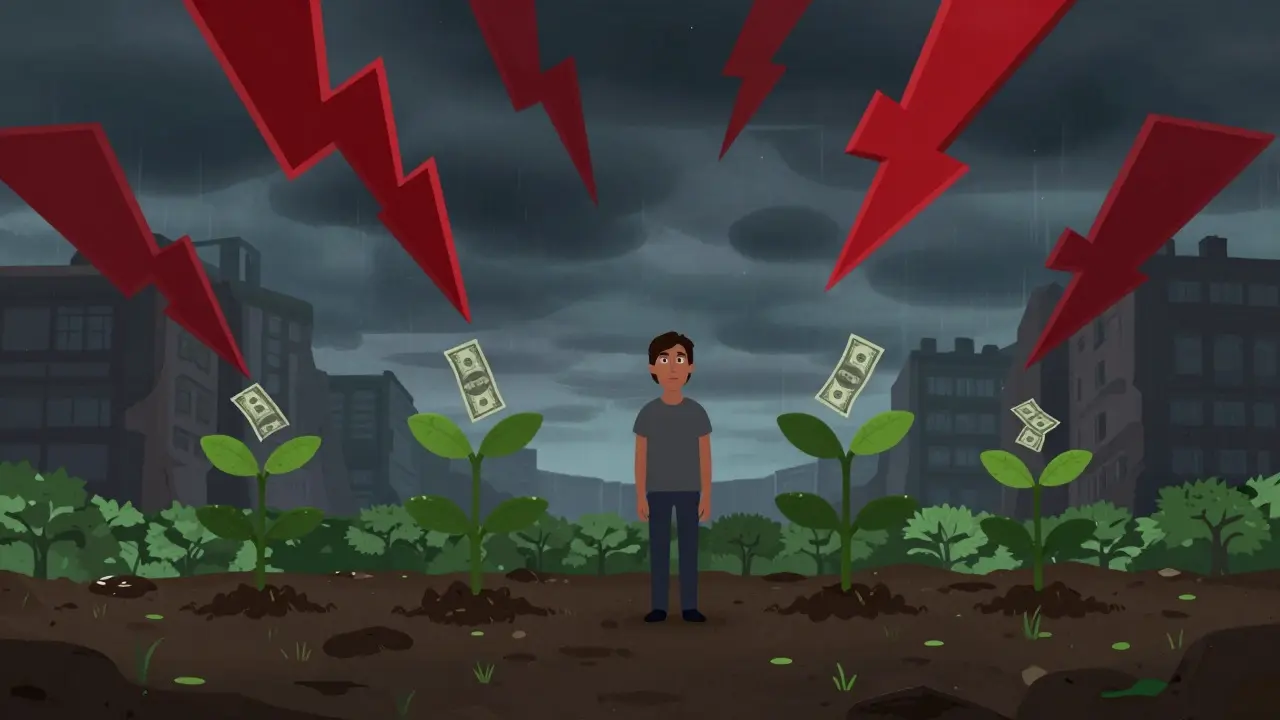
Think of it like planting trees. You don’t wait for the perfect season. You plant every spring, even if last year’s crop was small. Over time, the forest grows. DCA in a bull market isn’t about getting the best price-it’s about staying in the game so you don’t miss the biggest gains.
How DCA Works in a Bear Market
A bear market feels like a slow-motion crash. Prices drop 20%, then 30%, then 50%. News headlines scream “Crypto is dead.” Social media floods with exit stories. It’s hard to keep putting money in when everything looks like a sinking ship.
But that’s exactly when DCA shines.
When Bitcoin drops from $60,000 to $30,000, your $100 buys twice as much as before. At $15,000? Four times as much. You’re not trying to catch the bottom-you’re buying more at every step down. Your average cost per coin drops significantly. By the time the market starts recovering, you’ve already accumulated a larger position at a much lower price.
Charles Schwab’s research shows that after the 2020 pandemic crash-where markets fell 34% in 22 days-investors who stayed fully invested saw 47% returns in just 12 months. Those who waited one month to get back in? Only 26%. The biggest gains happen early in the recovery. If you stop investing during the fear, you miss the rebound.
Historical crashes tell the same story. The 1929 crash wiped out 89% of the stock market’s value. The 2008 crash saw Bitcoin’s predecessor assets fall 80%. The 2022 crypto winter dropped Ethereum from $4,800 to $1,000. But every single time, those who kept buying-through DCA-ended up ahead within 2-3 years.
DCA in a bear market doesn’t prevent losses. It turns them into opportunity. You’re not betting on the bottom-you’re betting on the recovery. And history says recovery always comes.
The Emotional Edge of DCA
The real power of DCA isn’t in the math. It’s in the mindset.
Fidelity’s behavioral research shows that most investors lose money not because they pick the wrong assets, but because they make emotional decisions. They sell during panic. They freeze during uncertainty. They wait for “signs” that never come.
DCA removes that choice. You set up an automatic transfer-$50 every Friday to your crypto wallet-and forget about it. You don’t watch charts. You don’t check Reddit. You don’t second-guess. You just show up.
That discipline is what separates long-term winners from short-term losers. In a bull market, it stops you from chasing. In a bear market, it stops you from quitting. It’s the only strategy that works whether you’re scared, excited, or indifferent.
And in crypto, where news cycles move faster than markets, that calm is priceless. When Elon Musk tweets about Dogecoin, or a major exchange gets hacked, prices swing 15% in an hour. If you’re manually buying, you’ll either panic-sell or FOMO-buy. With DCA, you’re immune.
DCA vs Lump-Sum Investing
Some people argue: “Why not just invest everything at once when prices are low?” That’s lump-sum investing. And sometimes, it works.
But here’s the problem: you have to be right about the bottom. And no one knows where the bottom is-not even the pros.
Charles Schwab analyzed 92 years of market data. They compared lump-sum investing (investing all at once) with DCA over the same period. In 67% of cases, lump-sum investing outperformed DCA-because markets trend upward over time.
But here’s the catch: that 67% only works if you invest at the right time. If you invest $10,000 on the day the market peaks? You’re underwater for years. If you invest $10,000 on the day it hits bottom? You win big.
The problem? You can’t predict either.
DCA removes that pressure. You don’t need to be right about timing. You just need to be consistent. Even if you start investing halfway through a bear market, you still end up with a lower average cost than someone who waited for “the perfect moment.”
In crypto, where volatility is extreme and fundamentals change fast, DCA is the safer bet. You don’t need to be a market wizard. You just need to be patient.
How to Set Up DCA for Crypto
Setting up DCA is simple. Here’s how to do it right:
- Choose a crypto asset you believe in long-term (Bitcoin, Ethereum, or a well-researched altcoin).
- Decide how much you can invest regularly-$25, $100, $500. Only use money you won’t need for at least 3-5 years.
- Set a schedule: weekly or monthly. Weekly gives you more price points; monthly is easier to track.
- Use a platform that supports recurring buys: Coinbase, Kraken, Bitstamp, or Plynk. Most let you automate purchases directly from your bank.
- Turn off price alerts. Don’t check your portfolio daily. Trust the process.
Pro tip: If you’re nervous about starting during a high price, begin with a smaller amount. $10 a week is better than $0. Consistency beats timing every time.

Who Should Use DCA? Who Shouldn’t?
DCA works best for:
- Long-term investors (5+ years horizon)
- People who don’t have time to monitor markets
- Those who get anxious during volatility
- Anyone building wealth slowly and steadily
DCA isn’t ideal for:
- Short-term traders looking for quick flips
- People who need cash in the next 1-2 years
- Those who can’t afford to lose money if the market stays down for years
If you’re retiring in 2027 and putting your life savings into crypto? DCA won’t save you from a multi-year bear market. But if you’re 28, earning a steady income, and want to build crypto wealth over 10 years? DCA is your best friend.
The Bottom Line
DCA doesn’t promise to make you rich overnight. It doesn’t guarantee you’ll beat the market. But it does guarantee one thing: you’ll be in the market when it turns.
In bull markets, you’ll buy fewer coins-but stay in long enough to ride the wave. In bear markets, you’ll buy more coins-and position yourself for the next big surge. The math is simple. The psychology is harder. But that’s why it works.
Markets don’t care if you’re scared. They don’t care if you think Bitcoin is dead. They move based on supply, demand, and time. And time, in the long run, favors those who keep showing up.
So don’t wait for the perfect moment. Set up your recurring buy. And let the market do the rest.
Is DCA better than buying crypto all at once?
It depends. Lump-sum investing has a higher chance of beating DCA if you invest at the exact bottom. But since no one can predict the bottom, DCA reduces the risk of buying at the top. For most people, especially in volatile markets like crypto, DCA is the safer, more reliable choice because it removes timing pressure and emotional decision-making.
Can DCA work during a crypto bear market?
Yes, and it’s often most effective then. When prices drop, your fixed investment buys more coins. Over time, your average cost per coin falls. Even if the market takes years to recover, you’ll own more at lower prices than someone who waited for the “right time.” Historical data shows markets always recover-DCA just helps you own more when they do.
How long should I use DCA for crypto?
DCA is designed for long-term investing. Five years or more is ideal. Crypto markets cycle every 3-4 years, so you need to ride at least one full cycle to see the full benefit. Stopping after 6 months or a year defeats the purpose. The power of DCA comes from consistency over time, not short-term results.
Should I DCA into Bitcoin or altcoins?
Start with Bitcoin or Ethereum-they’re the most established and least risky. Once you’re comfortable, you can add a small portion (10-20%) of altcoins. But don’t DCA into unknown tokens with no real use case. DCA works best with assets you believe in for the long haul, not speculative plays.
What if the market never recovers?
Historically, major markets always recover-even after crashes like 1929 or 2008. Crypto is newer, but Bitcoin has survived multiple 80%+ drops and come back stronger. That said, DCA only works if you’re investing in something with real value. If you’re buying a token with no users, no team, and no utility, no strategy will save you. DCA isn’t magic-it’s a tool for disciplined investing in solid assets.
Ike McMahon
December 15, 2025 AT 05:12Kathleen Sudborough
December 16, 2025 AT 11:19Vidhi Kotak
December 16, 2025 AT 14:28Kurt Chambers
December 18, 2025 AT 14:00Kelly Burn
December 19, 2025 AT 06:10John Sebastian
December 20, 2025 AT 09:53Jessica Eacker
December 22, 2025 AT 01:27Andy Walton
December 23, 2025 AT 08:10Candace Murangi
December 24, 2025 AT 17:34Jessica Petry
December 25, 2025 AT 03:07Taylor Farano
December 26, 2025 AT 14:18Madison Surface
December 28, 2025 AT 07:06Tiffany M
December 30, 2025 AT 05:13Eunice Chook
January 1, 2026 AT 04:31