The cryptocurrency ATM is a specialized kiosk that allows users to exchange fiat currency for digital assets like Bitcoin without a bank account. While these machines promise instant access to the blockchain, they have become the primary tool for a massive wave of financial fraud. In 2024 alone, victims lost over $246 million through these devices, according to data from the FBI's Internet Crime Complaint Center (IC3). This isn't just a glitch in the system; it is a coordinated exploitation of regulatory gaps and technical weaknesses.
You might think that because you can buy crypto instantly, you are safe. The reality is starkly different. These machines operate with far fewer safeguards than traditional banking ATMs. Once you send money through a crypto ATM, the transaction is irreversible. There is no chargeback button. No customer service line to freeze your funds. For scammers, this finality is the ultimate prize. For you, it means that if you make a mistake-or are tricked-your money is gone forever.
Why Crypto ATMs Are a Goldmine for Scammers
To understand why losses are skyrocketing, you need to look at how these machines work compared to standard banks. A traditional ATM operates under strict federal oversight. Banks must verify your identity, monitor for suspicious activity, and report anything unusual to authorities. Crypto ATM operators, however, often skirt these rules. Many fail to adhere to the Bank Secrecy Act obligations required of money services businesses.
This lack of regulation creates a perfect storm. Scammers prefer cryptocurrency because it is difficult to trace once the money leaves the machine. They exploit the anonymity features built into many kiosks. You walk up, insert cash, scan a QR code provided by a "friend" on the phone, and boom-your savings are transferred to an overseas wallet. The National Consumers League describes these machines as largely unregulated, which makes them favored tools for illicit actors, including transnational criminal organizations.
- No Identity Verification: Many machines allow large transactions without asking for ID.
- Irreversible Transactions: Blockchain technology does not allow refunds.
- Lack of Monitoring: Operators often ignore red flags for higher fees.
- Social Engineering: Scammers guide victims step-by-step via phone or chat.
The convenience you seek is exactly what criminals exploit. They know that once the crypto hits the network, law enforcement has very little power to retrieve it.
The Human Cost: Who Is Getting Targeted?
You might assume that only tech-savvy investors use crypto ATMs. The data tells a much darker story. According to FBI records, more than two-thirds of cryptocurrency ATM fraud victims in 2024 were over 60 years old. This represents a 99% increase in complaints from this demographic compared to previous years.
Seniors are targeted because they are often isolated and may not fully understand how blockchain technology works. Scammers pose as grandkids in emergencies, tech support agents, or even government officials. They convince victims to deposit cash into a crypto ATM to "secure" their accounts or pay fake taxes. In Arizona, residents lost $177 million in cryptocurrency fraud in 2024. Scottsdale police reported $5 million lost just in the current year. Families in Peoria lost nearly $1 million the previous year. These aren't small amounts; they are life savings wiped out in minutes.
The shame associated with being scammed often prevents victims from speaking out. You won't find many public discussions about this on social media. But the silence doesn't mean the problem is small. It means the damage is hidden, extending beyond immediate monetary loss to long-term financial instability for vulnerable individuals.

Technical Vulnerabilities: Hacking the Machine
It’s not just social engineering that puts your money at risk. The machines themselves have serious security flaws. Security researchers at IOActive discovered critical vulnerabilities in the Lamassu Douro Bitcoin ATM, one of the most common models worldwide.
In March 2024, researcher Gabriel Gonzalez published an advisory detailing multiple issues, including CVE-2024-0674. This vulnerability is severe. It allows an unprivileged user to gain root execution on the ATM simply by creating a malicious file in a specific temporary folder and triggering the update process. Once inside, an attacker can install malware, steal private keys, or manipulate transaction data.
Imagine standing at a machine, thinking you are buying Bitcoin, but the software has been compromised to send your funds to the hacker instead. These technical exploits affect the Douro model from Lamassu Industries AG. Similar issues may persist in newer versions, as IOActive’s analysis suggests that current software packages still contain risky code. This means the hardware itself cannot be trusted unless rigorously patched-a task many operators neglect.
Regulatory Crackdowns and New Restrictions
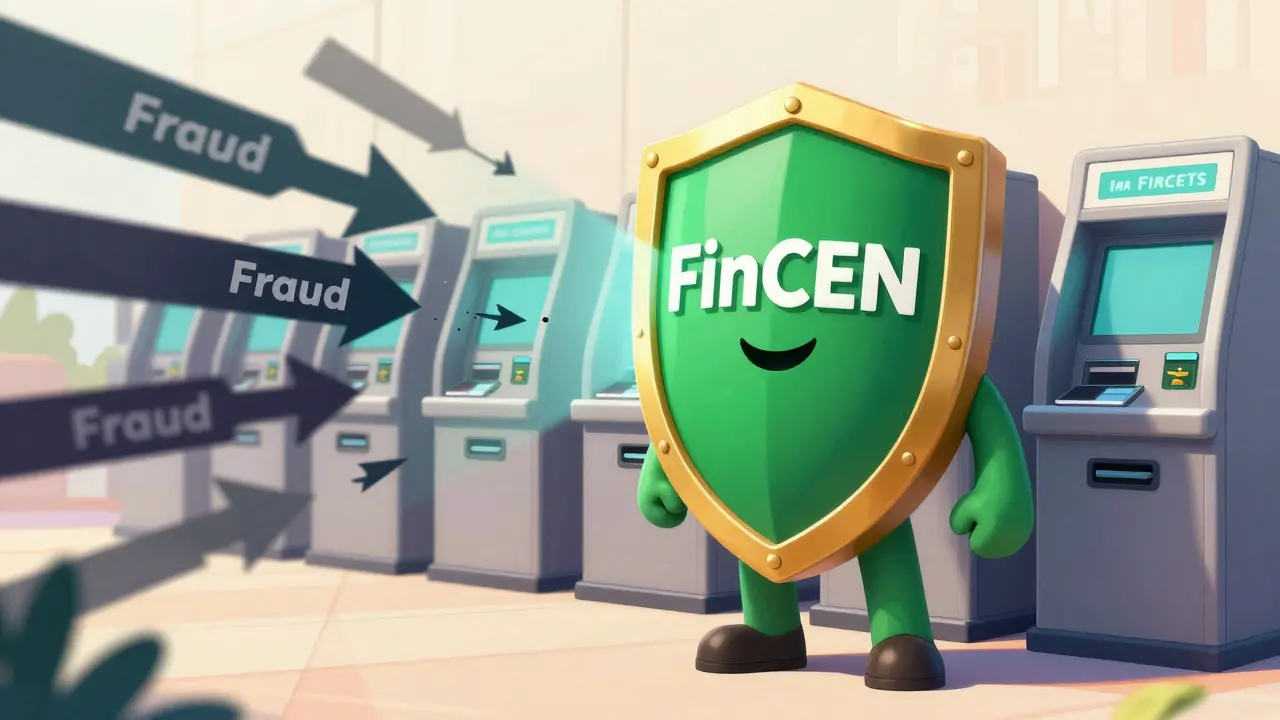
The scale of the crisis has forced governments to act. The U.S. Department of Treasury's Financial Crimes Enforcement Network (FinCEN) issued Notice FIN-2025-NTC1 on August 4, 2025. This notice formally warned financial institutions about the growing risks associated with crypto ATMs. FinCEN emphasized that convenience is being exploited by fraudsters and transnational criminal groups.
At the state level, Arizona has become a testing ground for new regulations. With approximately 600 crypto ATMs operating across the state, lawmakers introduced the Cryptocurrency Kiosk License Fraud Prevention law. Key changes include:
- Daily Transaction Limits: Reduced to $2,000 per day for new customers and $10,500 for existing customers.
- Enhanced Warnings: Operators must display clear warning systems on screens that customers must acknowledge before proceeding.
- Refund Mandates: Operators are required to issue full refunds, including fees, to new customers who report fraud within 30 days of transactions.
- Receipt Requirements: Machines must provide detailed transaction receipts.
Nancy LeaMond, AARP's executive vice president, noted that lawmakers on both sides of the aisle are eager to work on commonsense rules that balance innovation and consumer safety. At least 40 states introduced legislation regarding digital assets in 2025, with 11 states passing laws specifically targeting crypto ATMs. This bipartisan concern highlights the severity of the threat.
How to Protect Yourself from Crypto ATM Scams
If you decide to use a crypto ATM, you must take extreme precautions. The burden of security falls almost entirely on you. Here is how to stay safe:
- Never Follow Instructions from Strangers: If someone calls, texts, or chats with you telling you to use a crypto ATM, hang up immediately. Legitimate companies will never ask you to send money to a random wallet address.
- Verify the Wallet Address: Double-check the QR code and wallet address against your own records. Do not trust the screen if you are unsure.
- Start Small: Test the machine with a small amount first to ensure the transaction goes through correctly.
- Check for ID Requirements: Prefer machines that require photo identification. This adds a layer of accountability.
- Know Your Rights: Understand the refund policies of the operator. In states like Arizona, you may be eligible for a refund if you report fraud quickly.
Remember, the design philosophy of these machines prioritizes accessibility over security. That same accessibility enables fraudulent transactions. You are entering a space with minimal protection. Treat every transaction as high-risk.
The Future of Crypto ATM Security
The landscape is changing. In 2025, the implementation of TR-31 regulations established stricter requirements for key block management and encryption within ATM networks. While these apply broadly to ATM security, they indirectly benefit crypto ATMs by forcing better encryption standards.
However, experts warn that technological fixes alone are not enough. James Wyler, President of Trusted Security Solutions, identifies crypto ATM security as part of broader financial technology challenges, particularly concerning quantum computing threats that could render traditional encryption methods obsolete. The fundamental challenge remains: cryptocurrency's design principles-decentralization, anonymity, and irreversibility-inherently conflict with traditional fraud prevention mechanisms.
Long-term viability depends on balancing accessibility with security. The $246.7 million in documented losses suggests that existing approaches have failed. Continued regulatory evolution and technological improvements are necessary to protect consumers while maintaining access to digital assets. Until then, caution is your best defense.
What is the average loss from a crypto ATM scam?
While averages vary, total losses in 2024 reached $246.7 million across over 10,956 complaints. Individual losses can range from hundreds to tens of thousands of dollars, with seniors often losing significant portions of their retirement savings.
Can I get my money back if I am scammed at a crypto ATM?
Generally, no. Cryptocurrency transactions are irreversible. However, in some jurisdictions like Arizona, operators are now required to issue full refunds to new customers who report fraud within 30 days. Check local laws for specific protections.
Are all crypto ATMs unsafe?
Not necessarily, but many have significant security vulnerabilities. Models like the Lamassu Douro have known critical flaws. Always choose reputable operators that require ID verification and comply with local regulations.
Why are seniors targeted by crypto ATM scams?
Seniors are targeted due to potential isolation and less familiarity with blockchain technology. Scammers use emotional manipulation, posing as family members or authority figures, to trick victims into sending money quickly without verification.
What are CVE-2024-0674 and other Lamassu vulnerabilities?
These are critical security flaws in the Lamassu Douro Bitcoin ATM software. CVE-2024-0674 allows attackers to gain root access to the machine, potentially stealing funds or installing malware. Users should avoid machines that have not been patched against these known exploits.