When the Taliban took control of Afghanistan in August 2021, the country’s banking system didn’t just slow down-it collapsed. International sanctions froze billions in assets. ATMs ran dry. Banks stopped processing international transfers. For millions of Afghans, the only way to survive was to turn to cryptocurrency.
Bitcoin, USDT, and other digital currencies became lifelines. Families relied on them to receive money from relatives abroad. Small businesses used them to buy food and medicine. NGOs even started paying women in crypto to distribute aid. By mid-2021, Afghanistan ranked 20th globally in crypto adoption, with over $962 million in on-chain transactions in just one year. People weren’t trading for profit-they were trading to eat.
Then, in June 2022, the Taliban’s central bank issued a blanket ban on all cryptocurrency trading. No warning. No transition. Just a decree: “There is no instruction in Islamic law to approve it.” The message was clear: digital money was illegal.
From Survival Tool to Criminal Activity
The ban didn’t stop at words. Enforcement began almost immediately. In Herat, a major city near Iran’s border, police started raiding crypto exchanges. By August 2022, more than 20 businesses had been shut down. Staff members were arrested. Some were held for weeks without charges. In May 2023, eight traders were locked up for 28 days in Herat’s central prison. Their crime? Trading USDT to send money home.
Sayed Shah Sa’adat, head of Herat’s counter-crime unit, told Ariana News the crackdown was about stopping fraud. “Digital currency trading has caused a lot of problems and is scamming people,” he said. But for the people on the ground, the real scam was the ban itself. One trader, speaking to Coinspeaker, said he used to make 1-2% profit per USDT transaction. “Now I can’t afford to feed my family.”
Another man, whose brother sent him Bitcoin from the U.S., told reporters: “There’s no other way.” His wife and children depended on those transfers. No bank. No Western Union. No PayPal. Just crypto. And now, using it meant risking jail.
The Human Cost of a Ban
The Taliban’s enforcement didn’t just hurt traders. It hit the most vulnerable hardest. UNICEF reported in 2023 that over one million Afghan children were at risk of severe malnutrition. Many of those families had been receiving food payments through crypto-based aid programs. One NGO, Women’s Entrepreneurship Day Organization, had been paying 100,000 women weekly in USDT to buy groceries. The ban ended that program overnight.
There’s no official data on how many people stopped eating because of the crypto ban-but the numbers tell a grim story. By April 2023, the World Bank said 97% of Afghans were living below the poverty line. That’s not a statistic. That’s a mother choosing which child gets the last meal. That’s a father selling his phone to buy rice. And for many, crypto was the only thing standing between them and starvation.
Confusion, Contradictions, and Seizures
The Taliban’s rules didn’t make sense. Some detainees said their crypto wallets were left untouched. Others reported that police seized their entire holdings. Two men jailed in Herat told Crypto.news their Bitcoin was never taken. But a separate report from the same month said authorities confiscated digital assets during arrests. No one knew what would happen next.
The legal basis was shaky, too. The ban was framed as a religious issue-crypto was called “gambling” under Islamic law. But Islamic finance experts around the world disagree. Many scholars argue that digital currencies aren’t inherently haram if used as a medium of exchange. The Taliban’s stance wasn’t rooted in theology-it was rooted in control.
They didn’t want Afghans moving money outside their system. With sanctions cutting off access to global banking, the Taliban needed to monitor every dollar. Crypto made that impossible. So they outlawed it.
A Crackdown Built on Hypocrisy
There’s a cruel irony here. The Taliban’s own policies created the crisis that made crypto necessary. International sanctions froze Afghanistan’s foreign reserves. The world cut off its banking access. The Taliban refused to negotiate. And then, when citizens turned to crypto to survive, the regime labeled them criminals.
Even more telling: the Taliban’s crackdown targeted ordinary people, not the real threats. TRM Labs’ 2025 Crypto Crime Report (projected data) shows that groups like ISKP used crypto for terror financing-transactions ranging from $100 to $15,000. But the Taliban didn’t go after those networks. They went after a father sending $50 to his kids. A grandmother using USDT to pay for insulin. A woman trading Bitcoin to buy flour.
There’s no evidence the Taliban ever traced a single terror transaction using crypto. But they arrested hundreds of civilians. Why? Because it was easier. Because they could. Because control matters more than survival.

What Happened to the Market?
The numbers tell the story. Before the ban, Afghanistan had 40-50 active crypto exchanges. By late 2022, that number dropped to under 10. By 2023, most were gone. Herat alone saw 16 exchanges shut down in one month in 2023.
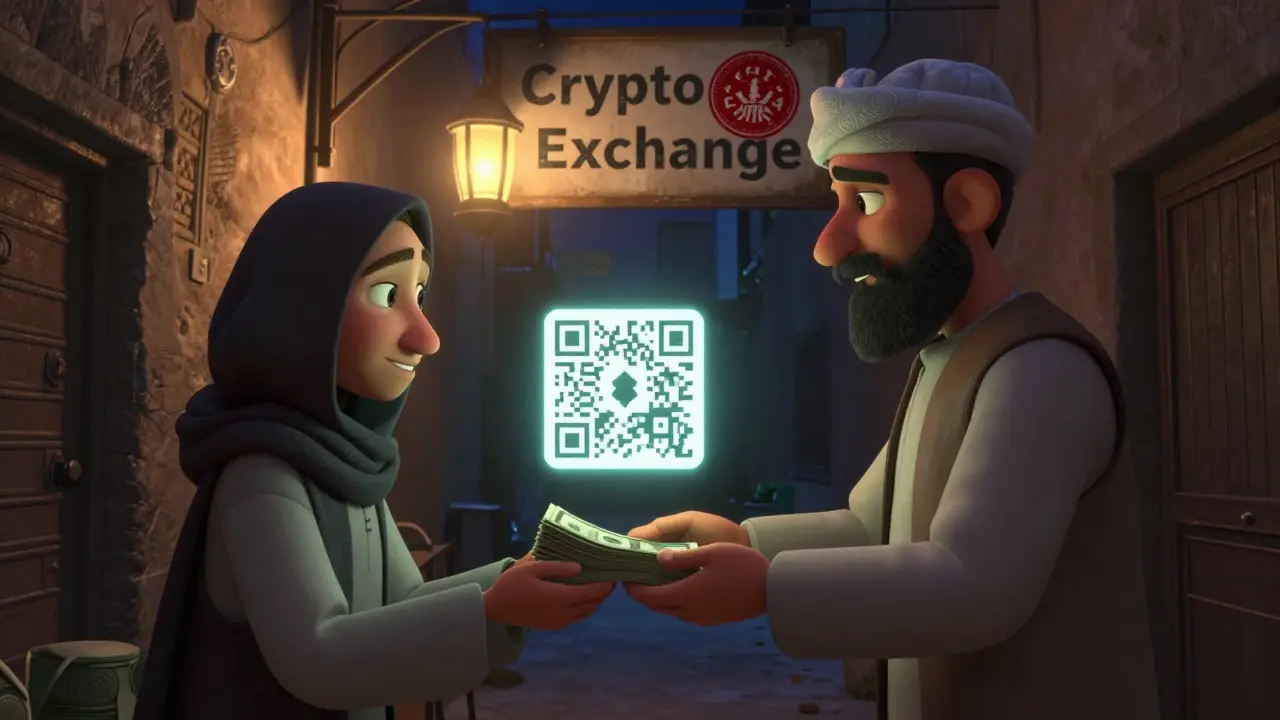
But the market didn’t disappear-it went underground. People switched to peer-to-peer trading. They used encrypted apps. They met in alleys to swap cash for Bitcoin. The risk grew. The scams grew. The fraud grew. The Taliban didn’t stop crypto-they made it more dangerous.
Chainalysis and TRM Labs both warn that crushing legitimate users doesn’t stop bad actors-it pushes them deeper into the shadows. And when legitimate users vanish, the only ones left are criminals, extremists, and the desperate.
Is There Any Hope Left?
Right now, there’s no legal way to use crypto in Afghanistan. No court challenge. No appeal. No international pressure that’s made a difference. The world has moved on. Aid organizations have scaled back. The media barely covers it anymore.
But for the people who still need it, crypto isn’t a choice. It’s a necessity. And the Taliban’s crackdown hasn’t changed that. It’s only made it deadlier.
One trader, arrested and released on bail, told a reporter: “I know I’ll get caught again. But I have to keep doing this. My children are hungry.”
That’s the truth behind the headlines. Not technology. Not speculation. Not crime. Just hunger. And the people who refuse to let their families starve.
Why did the Taliban ban cryptocurrency in Afghanistan?
The Taliban banned cryptocurrency in June 2022, claiming it violated Islamic law by promoting gambling and uncertainty (gharar). They also said it enabled fraud and allowed money to move outside government control. But the real reason was likely political: after international sanctions froze Afghanistan’s foreign assets, the Taliban needed to monitor all financial flows. Cryptocurrency made that impossible.
How many people have been arrested for using crypto in Afghanistan?
At least 13 people were arrested in Herat province alone by August 2022, with eight more detained for 28 days in May 2023. Dozens of crypto exchange staff were arrested across the country. Exact numbers aren’t available because the Taliban doesn’t publish arrest records. But reports from local media and detainees confirm the crackdown targeted hundreds of ordinary citizens-not criminals.
Did the Taliban seize people’s crypto wallets?
It’s unclear. Some detainees reported their digital assets weren’t taken. Others say police confiscated their Bitcoin and USDT holdings. The Taliban has never released a consistent policy on asset seizure. This uncertainty made the ban even more terrifying-people didn’t know if they’d be jailed, fined, or lose everything they owned.
Was cryptocurrency actually helping Afghans before the ban?
Yes. After the fall of Kabul in 2021, Afghanistan’s banking system collapsed. International remittances stopped. Chainalysis reported $962 million in crypto transactions between mid-2020 and mid-2021. Families used Bitcoin and USDT to receive money from relatives abroad. NGOs paid women in crypto to buy food. It wasn’t speculative-it was survival.
What happened to crypto trading after the ban?
Formal exchanges shut down. Over 20 businesses closed in Herat alone. But trading didn’t stop-it went underground. People now trade in secret, using encrypted apps and cash meetups. The risk is higher. The scams are more common. And the people who need it most-families relying on remittances-are now forced into dangerous, unregulated corners of the market.
Is the crypto ban still in effect in 2026?
Yes. As of early 2026, there’s no indication the Taliban has lifted the ban. Enforcement remains active, especially in major cities like Herat, Kabul, and Kandahar. The regime continues to view crypto as a threat to its control over finance-even though the ban has made life harder for millions of ordinary Afghans.
How does the crypto ban affect humanitarian aid in Afghanistan?
It’s been devastating. Before the ban, organizations like WEDO and Opengrants.io used crypto to deliver weekly food payments to 100,000 women. That program ended after the ban. Now, aid groups struggle to send money through traditional channels, which are either blocked or too slow. Many families who relied on crypto for food, medicine, and school fees have been left without any safety net.
Why didn’t the international community stop the ban?
The international community has been largely silent. Western governments have focused on counterterrorism and human rights abuses, but crypto enforcement hasn’t been a priority. Humanitarian agencies are afraid to speak out-criticizing the Taliban risks losing access to the country. As a result, the ban continues with little pressure or consequence.
George Hutchings
March 17, 2026 AT 04:51Derek Lynch
March 18, 2026 AT 22:48iam jacob
March 20, 2026 AT 04:15Jesse Pals
March 22, 2026 AT 01:43Diane Overwise
March 22, 2026 AT 11:04Patty Atima
March 22, 2026 AT 18:17Lucy de Gruchy
March 23, 2026 AT 02:05Sahithi Reddy
March 24, 2026 AT 07:38Sarah Hammon
March 26, 2026 AT 04:51Ann Liu
March 27, 2026 AT 16:28Dionne van Diepenbeek
March 28, 2026 AT 02:06Jerry Panson
March 28, 2026 AT 04:18Katrina Smith
March 29, 2026 AT 04:53Anastasia Danavath
March 30, 2026 AT 05:45anshika garg
March 30, 2026 AT 18:27Ross McLeod
March 31, 2026 AT 13:24Cheri Farnsworth
March 31, 2026 AT 17:13Arlene Miles
April 1, 2026 AT 06:59Jessica Beadle
April 1, 2026 AT 14:09Tony Weaver
April 2, 2026 AT 14:00Lauren J. Walter
April 3, 2026 AT 01:43Carol Lueneburg
April 4, 2026 AT 12:17Tobias Wriedt
April 5, 2026 AT 08:39